
Why Low Budget Travel Safety Should Be Your First Priority Before You Pack
Low budget travel safety is about protecting yourself and your belongings without spending a fortune — and the good news is that most of the best precautions cost very little or nothing at all.
Here are the most important affordable safety measures for budget travelers:
- Anti-theft gear (money belts, crossbody bags, padlocks): $5–$30
- Travel insurance: as low as $2–$4 per day, even for long trips
- Digital security: free VPNs and two-factor authentication on your existing phone
- Document protection: free — just scan and store copies in the cloud
- Location sharing: free via WhatsApp or Find My
- Emergency prep: free — enroll in the STEP program before departure
Pickpocketing is one of the most common crimes against travelers worldwide. It happens fast, in crowded places, and almost always targets people who aren’t paying attention. Traffic accidents are another leading cause of injury abroad — something most travelers never think about until it’s too late.
The reality is that most travel theft is opportunity crime. A friend gets hit by two pickpockets working both front pockets at once on a crowded subway. A bag left unclipped on a restaurant chair disappears in seconds. These aren’t random disasters — they’re predictable, and they’re preventable.
You don’t need to spend big to stay safe. You need the right cheap gear and the right habits.
This guide covers the best affordable tools and products — most under $30 — that can dramatically reduce your risk while traveling on a shoestring.
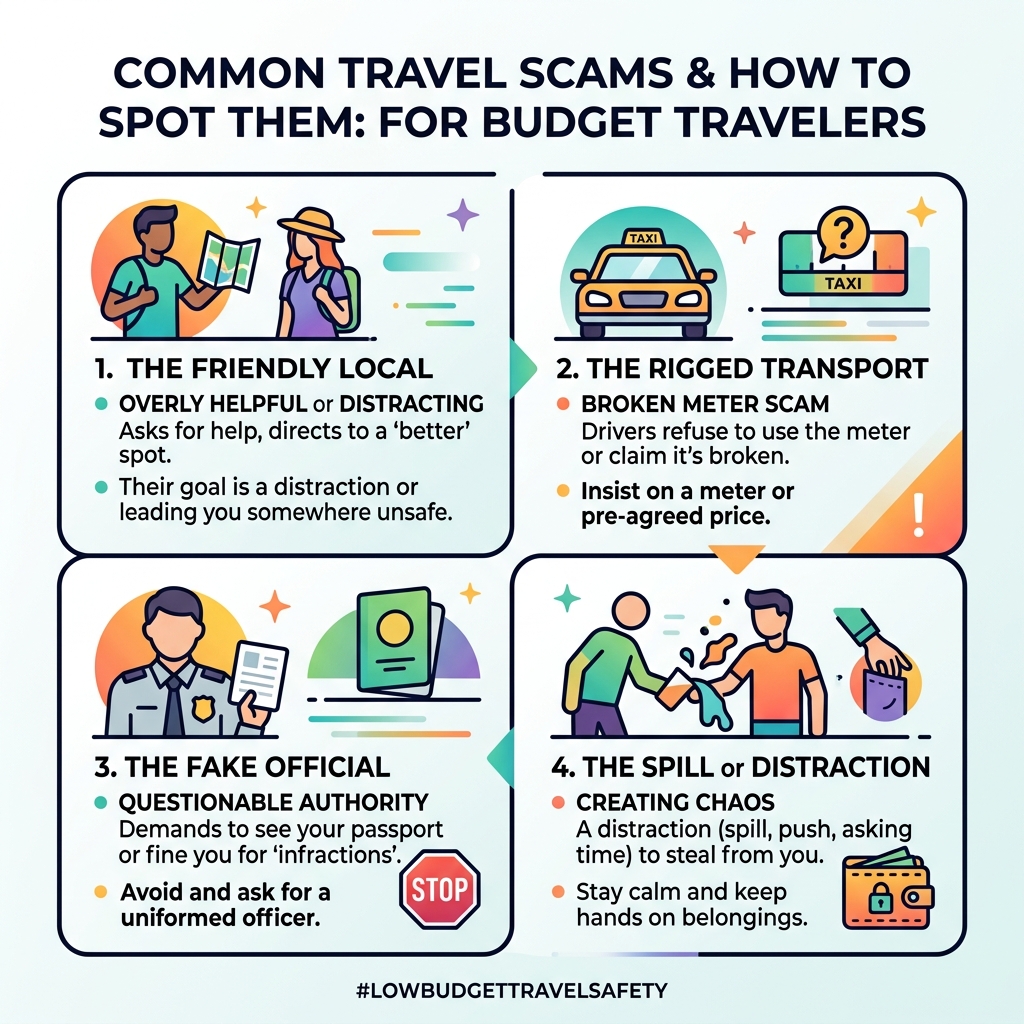
Essential Anti-Theft Gear for Low Budget Travel Safety
When we talk about low budget travel safety, we aren’t suggesting you buy a $500 slash-proof titanium backpack. In fact, looking like you’re carrying expensive “tactical” gear can sometimes make you a bigger target. The goal is to be discreet.
Opportunity crime thrives on ease of access. If a pickpocket sees a wallet bulging in a back pocket, that’s an invitation. If they see a bag zipped shut and clipped to a chair, they’ll move on to an easier mark.
One of the most effective ways to protect your cash is through concealment. Money belts and neck pouches are classic for a reason—they work. For those who want something even more low-profile, bra pockets or even “infinity scarves” with hidden zipper pockets are fantastic options under $15.
However, we need to remember that physical safety goes beyond just theft. Statistics show that Traffic accidents are a leading cause of injury for travelers. While gear helps with pickpockets, your habits—like wearing a helmet on a rented scooter or choosing licensed taxis—protect your life.

Affordable Locks and Physical Barriers
If you are staying in hostels, your most important piece of gear is a high-quality padlock. Many hostels provide lockers, but they rarely provide the lock. We recommend carrying at least two: a sturdy combination lock for your main locker and a smaller TSA-approved lock for your backpack zippers.
Why two? Because “layers” of security are key. A thief in a hostel dorm is looking for a quick grab. If your bag is locked and then locked inside a locker, they simply won’t have the time to mess with it.
For those staying in budget guesthouses or Airbnbs where the door locks feel a bit flimsy, a simple rubber door wedge (under $5) or a portable door alarm ($10-$15) can provide incredible peace of mind. Jamming a wedge under your door from the inside makes it nearly impossible for someone with a master key to surprise you while you sleep.
You can Stay safe with budget travel safety gear by investing in these small items before you leave. They take up almost no space in your bag but offer a massive return on investment in terms of sleep quality and security.
Protecting Valuables in Crowded Areas
Crowded tourist spots are the “office” for professional pickpockets. Cities like Paris (where 16.5% of global pickpocketing incidents are reported) or Rome are notorious for distraction scams.
The best gear for these areas is a crossbody bag. Unlike a standard shoulder bag that can be easily snatched, a crossbody bag stays secured to your torso. We always suggest wearing the bag in front of your body where you can keep a hand on the zipper.
If you prefer a backpack, wear it on your chest in extremely crowded subways or markets. It might look a little silly, but it’s a standard move for savvy budget travelers.
Pro Tip: Use small carabiners or “S-biners” to clip your zippers together. It won’t stop a determined thief with a knife, but it stops the “zip and dip” move where a pickpocket opens your bag while you’re looking at a monument. You can find Pickpocketing risks in crowded tourist areas detailed on government travel sites, and they almost always emphasize these simple physical barriers.
| Feature | Money Belt | Neck Pouch |
|---|---|---|
| Visibility | Completely hidden under pants | Can show a strap under thin shirts |
| Accessibility | Hard to reach (good for deep storage) | Easier to reach for tickets/passports |
| Comfort | Can get sweaty in hot climates | Can irritate the neck over time |
| Best For | Emergency cash and spare credit cards | Passport and daily spending money |
Digital Security and Managing Your Money and Low Budget Travel Safety
In 2026, your digital footprint is just as vulnerable as your physical wallet. For low budget travel safety, managing your money digitally is often safer than carrying large stacks of cash. However, using public Wi-Fi in a hostel or airport can expose your bank details to hackers.
We always recommend using a VPN (Virtual Private Network). There are many free versions, though a paid one usually costs under $10 a month and offers much better speeds. Combined with two-factor authentication (2FA) on all your financial apps, you create a digital fortress that is very hard to crack.
Secure Financial Habits on a Shoestring
How you handle cash is vital. We use the “Rule of Three” for money management:
- The Daily Wallet: A small amount of cash for the day’s meals and transport.
- The Hidden Stash: A backup card and larger bills hidden in a money belt or a secret pocket in your bag.
- The Emergency Vault: A second backup card and emergency “get out of town” cash (usually $100 USD) kept at the bottom of your luggage or in a hotel safe.
Another great trick is the “Dummy Wallet.” Carry a cheap, old wallet with a few expired credit cards and about $20 in local currency. If you are ever confronted or mugged, you hand over the dummy wallet. Most thieves will take it and run, leaving your real phone and credit cards safe in your hidden waistband.
When withdrawing money, always use indoor bank ATMs. Street ATMs are much more likely to have “skimmers” installed—tiny devices that steal your card info.
Free Tools for Low Budget Travel Safety Research
Research is the best free safety tool you have. Before we book a “suspiciously cheap” hostel, we check Numbeo to see crime statistics for that specific neighborhood. We also use Google Maps Street View to virtually walk the route from the bus station to our accommodation. Does the street look well-lit? Are there open businesses nearby?
Other essential free tools include:
- STEP (Smart Traveler Enrollment Program): A free service from the US government that sends you safety alerts and helps the embassy contact you in an emergency.
- Trip Whistle: An app that lists emergency numbers (police, fire, ambulance) for 196 countries.
- Offline Maps: Download maps on Google Maps or Maps.me so you never look lost while staring at your phone in a busy intersection.
- WhatsApp Location Sharing: If you’re traveling solo, share your “Live Location” with a friend or family member back home for a set period (like an 8-hour bus ride).
Staying Secure in Hostels and on Public Transport
Budget accommodation is the backbone of the backpacking experience, but it requires a different safety mindset. Hostels are generally very safe—often safer than cheap hotels because of the 24/7 reception and the “safety in numbers” aspect. However, theft between travelers does happen.
Safe Transit Strategies for Budget Trips
Public transport is where most “opportunity” thefts occur. Whether it’s an overnight bus in Southeast Asia or a crowded metro in Europe, your gear needs to be attached to you.
- The Top Bunk Hack: In hostels, try to get a top bunk. It’s much harder for someone to rummage through your things or grab a phone charging next to your head if they have to climb a ladder to do it.
- The Sunset Rule: We try to arrive in any new city at least two hours before sunset. Navigating a strange bus station and finding a hostel is much safer (and less stressful) in daylight. If a flight arrives at 2 AM, it’s often worth the “safety tax” to pay for an official airport taxi or stay in a nearby airport hotel until morning.
- Rideshare Verification: If you use apps like Uber or Grab, always check the license plate. Never ask “Are you for [Your Name]?” Instead, ask “Who are you picking up?” This forces the driver to confirm they have the app open with your details.
Health and Hydration Without Premium Prices
Getting sick is the fastest way to blow a travel budget. Medical insurance usually costs only $2–$4 a day, which is a steal considering a single hospital visit in some countries can cost thousands.
For daily health, street food is actually one of the best ways to eat. Because the food is cooked right in front of you at high heat, it’s often fresher than “tourist restaurant” food that has been sitting in a fridge. Look for high-turnover stalls where you see locals (especially families and local women) eating. If the grill is hot and the line is long, it’s usually safe.
Water is the other big concern. Buying bottled water every day is expensive and bad for the environment. Instead, invest in a Sawyer Mini water filter (around $20-$25). It’s small enough to fit in your pocket and filters out 99.9% of bacteria and protozoa, allowing you to drink tap water safely in most parts of the world.
Frequently Asked Questions about Low Budget Travel Safety
Is street food safe for budget travelers?
Yes, and it’s often safer than restaurants! To stay healthy, follow the “High Turnover” rule: eat at places with long lines of locals. Ensure the food is cooked to order and served steaming hot. Avoid pre-cut fruit that may have been washed in local tap water or left out in the sun.
What is the best way to hide money while traveling?
The “Rule of Three” is best: keep a small amount for the day in your pocket, a larger amount in a hidden money belt under your clothes, and a backup card/emergency cash locked in your hostel locker or hidden deep in your main bag. Never keep all your financial eggs in one basket.
Is travel insurance worth the cost for backpackers?
Absolutely. While you might skip it for a weekend trip to a neighboring city, for international travel, it is essential. At $2–$4 a day, it covers everything from a stolen phone to a $50,000 emergency medical evacuation. It is the single most important “gear” you can buy.
Conclusion
At the end of the day, the most powerful tool for low budget travel safety is your own situational awareness. No piece of gear can replace your gut instinct. If a street feels too quiet, or a stranger is being “too” helpful, it’s okay to be rude and walk away.
By combining simple, affordable gear like a $5 padlock and a $15 money belt with smart habits like the Sunset Rule and digital backups, you can explore the world with confidence. You don’t need a luxury budget to have a safe, life-changing adventure.
Here at FinanceZora, we believe that financial freedom and travel go hand-in-hand. Staying safe isn’t just about protecting your body; it’s about protecting your hard-earned savings so you can keep the journey going.
For More travel safety tips and budget hacks, stay tuned to our latest guides. Safe travels!
