Succulent Care Basics
How to Clean Succulents: Dust, Dead Leaves and Water Spots
A gentle routine for dusting succulents, removing dry leaves and handling water spots, with the right method for smooth, powdery and fuzzy leaves.
Simple Guides for Growing Healthy Succulents
Learn practical ways to water, position, repot and care for succulents with clear, beginner-friendly guides.
New to succulents? Read these four guides in order.
New to succulents? Learn the four things that decide most outcomes (light, watering by soil dryness, gritty soil and a drainage hole) and what to do in the first two weeks with a new plant.
Find out whether your window gives a succulent enough light: what direct sun, bright indirect and low light mean, a simple hand-shadow test, and the signs of too little light or too much sun.
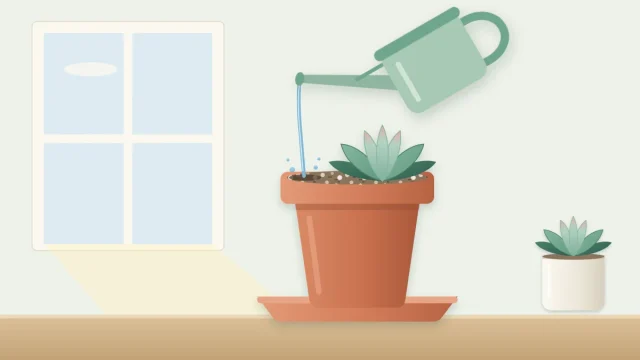
A reliable way to water succulents without a calendar: how to check that the soil has dried through, how to soak and drain the pot properly, and what changes in a cool, dim season.
What a succulent mix should contain and why: the ingredients that hold water, the ones that open the mix, a starting ratio to adjust for your home, and two quick tests for drainage.
What succulents need, easy plants to begin with and the mistakes worth avoiding.
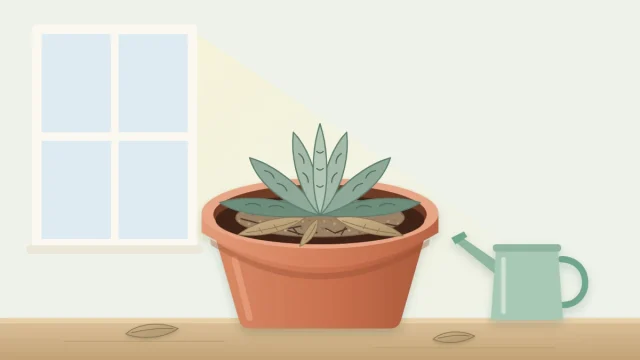
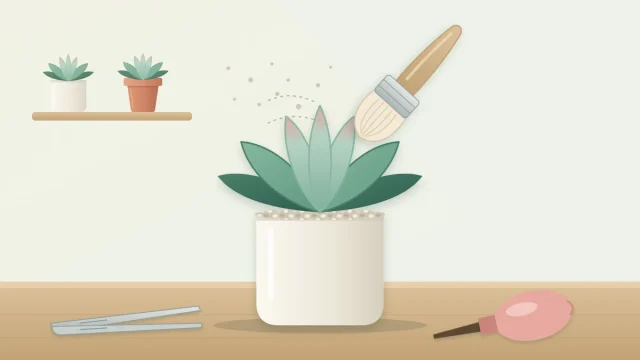
A gentle routine for dusting succulents, removing dry leaves and handling water spots, with the right method for smooth, powdery and fuzzy leaves.
Succulents need far less feeding than most houseplants, and often none. Learn when a light feed helps, when to skip it, and how to spot and flush out a buildup.
Nine widely sold succulents that tolerate beginner mistakes, with the light each needs, one thing to know about it, what the ASPCA lists for cats and dogs, and how to choose a healthy plant in the shop.
Ten common beginner errors with succulents, from watering by the calendar to ignoring early pest signs, with the reason each one matters and what to do instead.
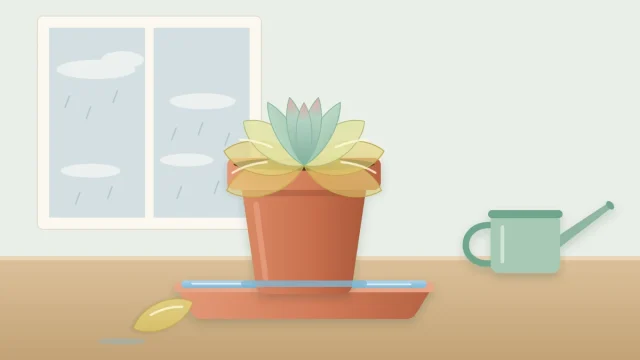
How to water by checking the soil, and how to tell too much water from too little.
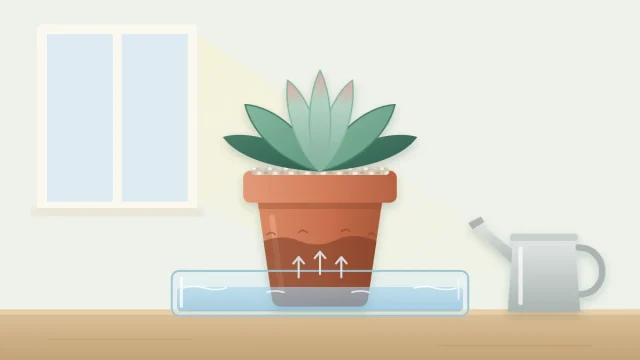
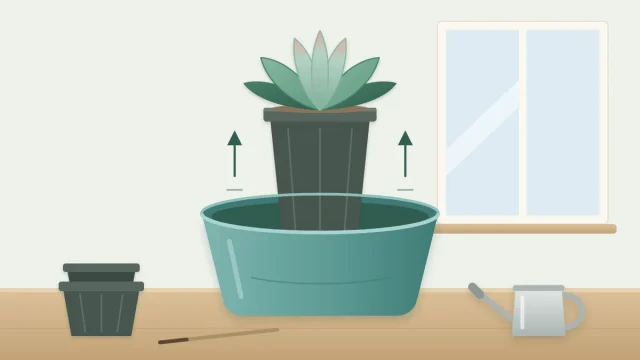
Bottom watering helps with very dry soil, tight rosettes and loose top dressing, but it is not a gentler way to water. See when to use it, the steps, and the limits to keep in mind.
Wrinkled, deflated leaves are commonly associated with thirst, but damaged roots cause the same look. Here is how to check the soil and roots first, then rehydrate a dry plant without overcorrecting.
Soft, translucent or dropping leaves are commonly associated with too much water, but no single sign proves it. Learn how to check the soil and roots, why soil stays wet, and what to do next.
A reliable way to water succulents without a calendar: how to check that the soil has dried through, how to soak and drain the pot properly, and what changes in a cool, dim season.
How much light succulents need, why they stretch and where to place pots indoors.
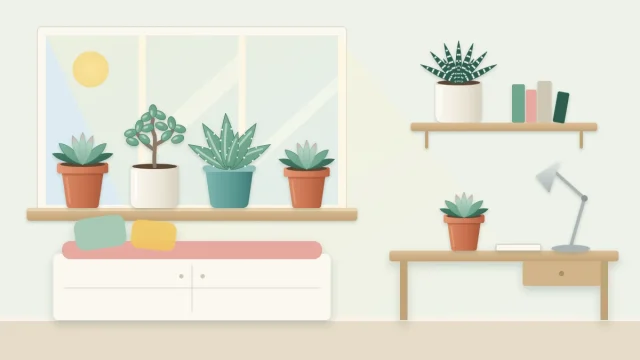
A room-by-room placement guide: which windowsills, tables, shelves and desks suit a succulent, which spots to avoid, and how to keep plants out of reach of pets and small children.
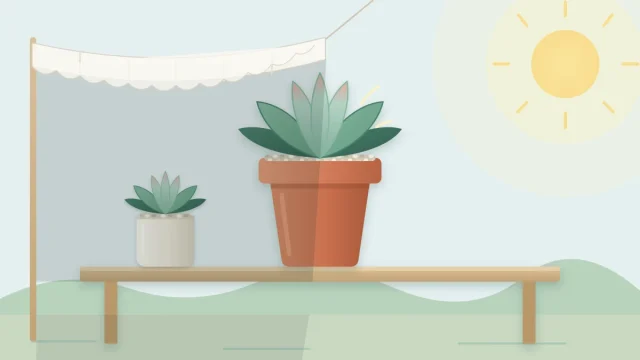
A step-by-step way to move succulents into a sunnier window or outdoors for summer: why sudden sun burns, how sunburn differs from healthy color, and a staged plan you can adapt to your plant.
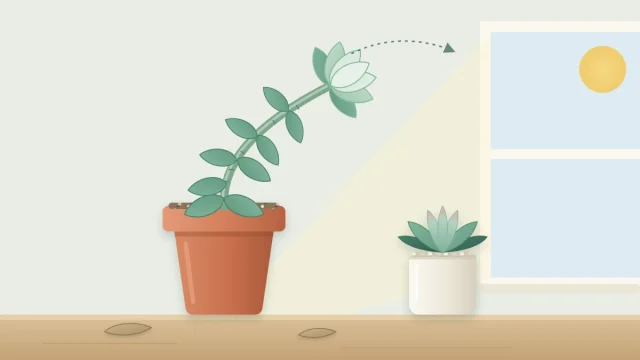
A compact rosette that turns tall, leaning and gappy is usually reaching for light. Find out what etiolation is, how to spot it early, and the realistic options for a stretched plant.
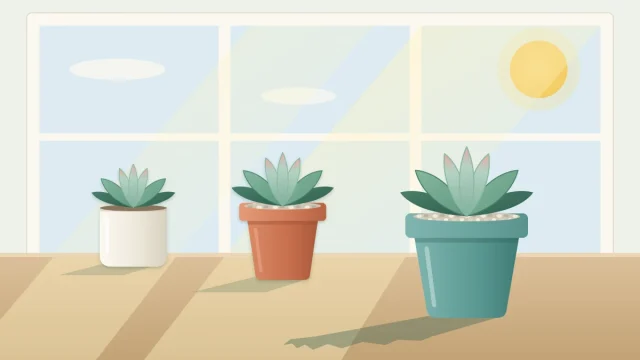
Find out whether your window gives a succulent enough light: what direct sun, bright indirect and low light mean, a simple hand-shadow test, and the signs of too little light or too much sun.
Gritty soil mixes, choosing a pot, drainage holes and repotting without rushing the plant.
Why a drainage hole matters for succulents, why a gravel layer does not replace one, and three ways to use a container with no hole, ranked from lowest to highest risk.
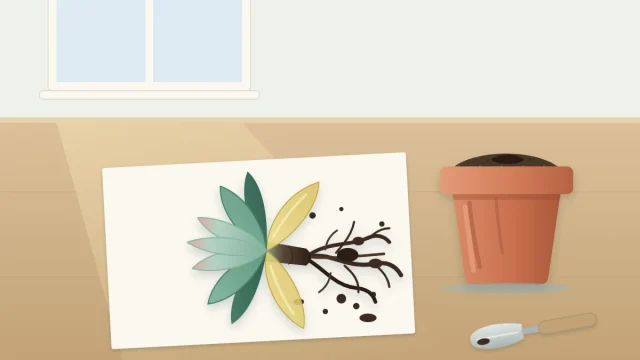
When it makes sense to look at a succulent's roots, how to slide the plant out without damage, and how to read what you find, from firm pale roots to dark soft ones.
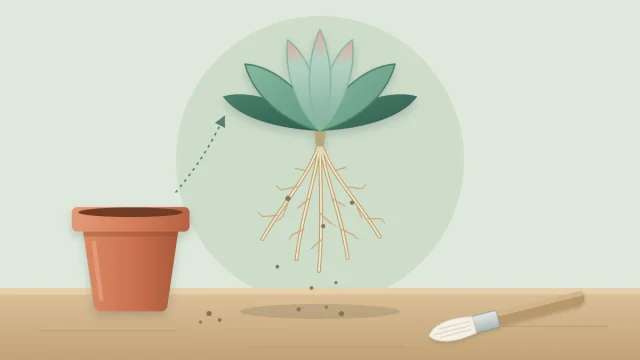
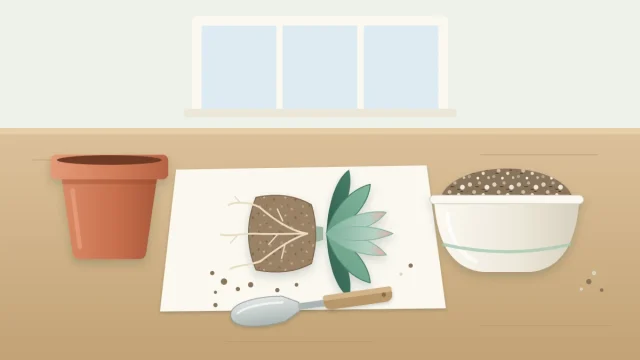
When a succulent needs a new pot, when to wait, and how to move it without harming the roots: dry soil first, fresh gritty mix, the same planting depth, and a pause before the first watering.
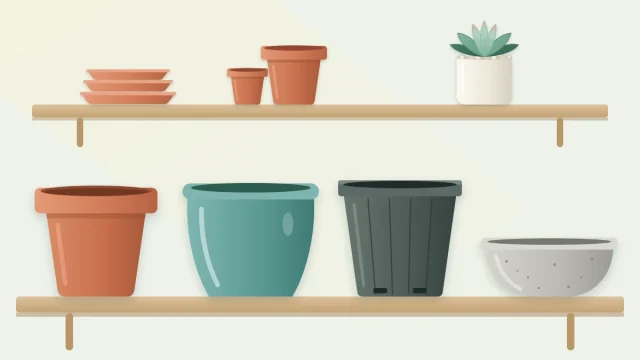
How to choose a pot for a succulent: why a drainage hole comes first, how big the pot should be, how terracotta, glazed ceramic and plastic differ, and how the pot changes watering.
Yellow leaves, leaf drop, root rot and pests: possible causes and what to check first.
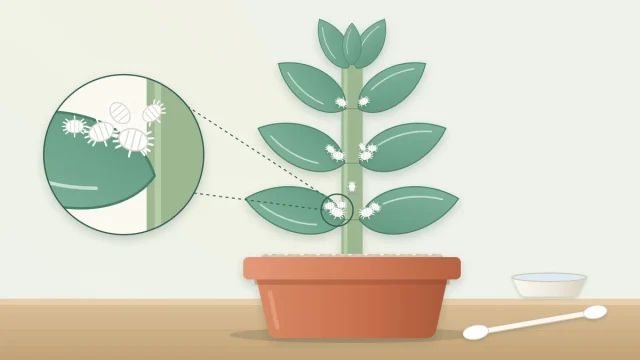
How to tell mealybugs, fungus gnats, spider mites, scale and aphids apart on succulents, and the calm first steps to take: isolate, remove by hand and adjust conditions.
What root rot is, why the signs above the soil are not proof, how to confirm it at the roots and stem base, and the steps growers commonly try, with honest limits.
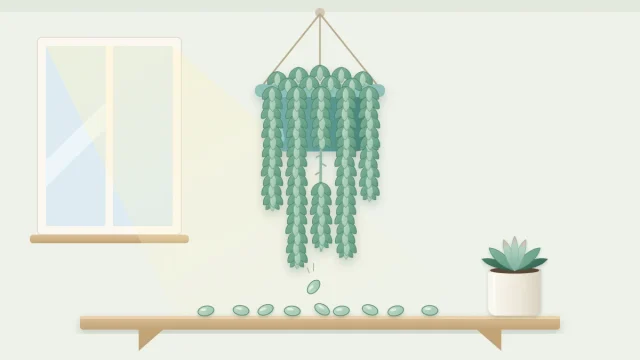
Sort succulent leaf drop by what the fallen leaves look like, whether mushy, dry or perfectly healthy, then use soil, stem and root checks to find the likely cause.
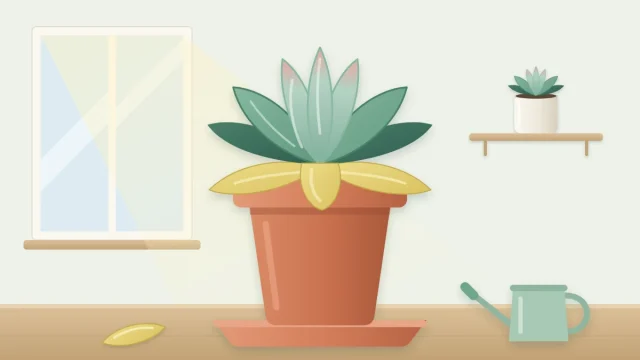
Yellow succulent leaves can come from excess water, low light, normal aging, sudden sun, tired soil, pests or root trouble. Here is what goes with each and how to check.
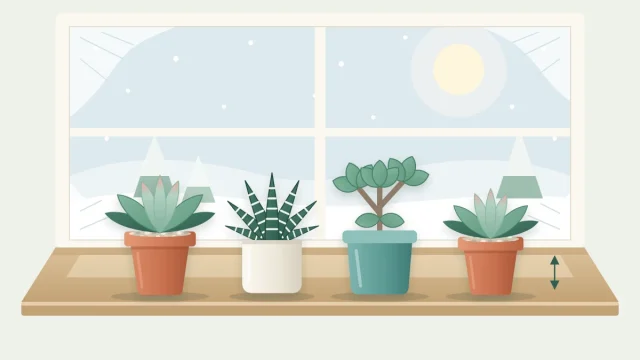
How to get indoor succulents through winter: find the brightest window, water far less and only after checking the soil, protect leaves from cold glass and heaters, and bring outdoor pots in before frost.
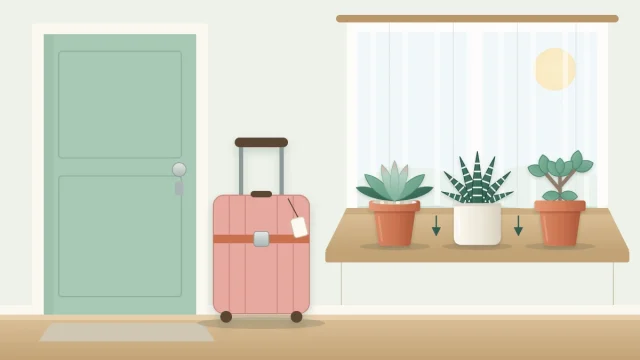
What to do with your succulents before a trip, what to tell a plant sitter, why watering gadgets are a poor fit, and how to assess your plants when you return.
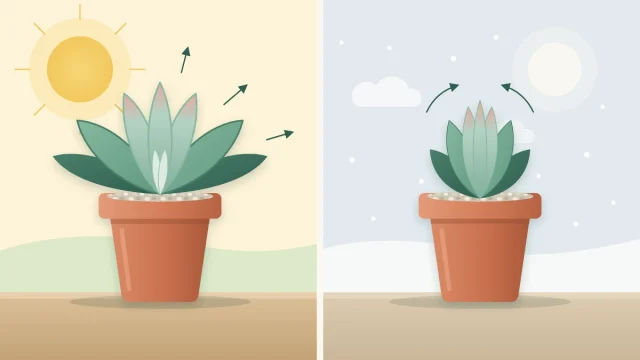
Why succulents slow down at certain times of year, how warm-season and cool-season growers differ, and what to change in watering, feeding and repotting while a plant rests.
How to tell mealybugs, fungus gnats, spider mites, scale and aphids apart on succulents, and the calm first steps to take: isolate, remove by hand and adjust conditions.
A gentle routine for dusting succulents, removing dry leaves and handling water spots, with the right method for smooth, powdery and fuzzy leaves.
Succulents need far less feeding than most houseplants, and often none. Learn when a light feed helps, when to skip it, and how to spot and flush out a buildup.
Every guide is listed on one page, from watering and light to soil, pots and common problems. All of them are free to read, with no sign-up needed.