
Why Every Traveler Needs a Travel Safety Kit
A travel safety kit is a compact collection of first aid supplies, medications, and key documents that helps you handle medical emergencies and minor health issues when you’re far from home.
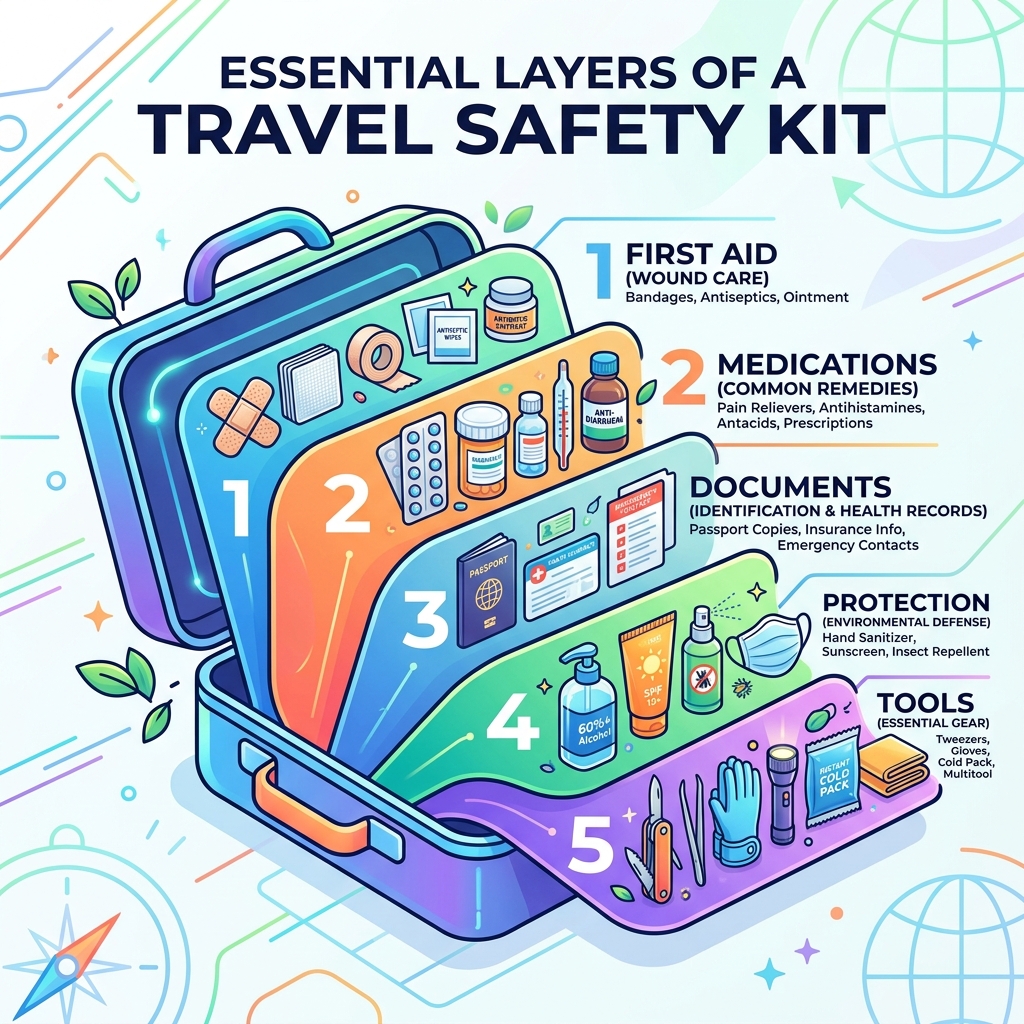
Here’s what a solid travel safety kit should cover:
- Wound care – bandages, gauze, antiseptic wipes, medical tape
- Medications – pain relievers, antihistamines, antacids, anti-diarrheal pills
- Tools – tweezers, thermometer, disposable gloves, instant cold pack
- Documents – passport copies, insurance info, emergency contacts, immunization records
- Protection – hand sanitizer (60%+ alcohol), sunscreen (SPF 15+), insect repellent
Think about what happens when you get a bad cut in a remote area, or food poisoning in a country where you don’t speak the language. That’s when a travel safety kit goes from “nice to have” to absolutely critical.
The American College of Emergency Physicians and the CDC both encourage travelers to pack a first aid or travel health kit before any trip. And it’s not just for adventure travelers — common travel injuries include allergic reactions, dehydration, insect bites, falls, and stomach illness.
Here’s another reason to take this seriously: about half of all Americans take a prescription medicine every day. If you’re one of them, being caught without your medication in an unfamiliar place is a real risk.
The good news? Building a travel safety kit doesn’t have to be expensive or complicated. Whether you’re doing a weekend road trip or heading overseas, the right kit gives you peace of mind — and keeps more money in your pocket by avoiding costly emergency pharmacy runs abroad.
What is a Travel Safety Kit and Why is it Essential?
At its core, a travel safety kit is your mobile insurance policy against the unpredictable. It isn’t just a box of Band-Aids; it is a curated set of tools designed to maintain your health, manage chronic conditions, and provide an immediate response to injuries when professional medical help is miles (or hours) away.
We often think of travel as a series of highlights, but the reality is that our bodies are under stress when we move. Changes in climate, diet, and activity levels make us more susceptible to illness. According to Johns Hopkins Medicine, a well-prepared kit allows you to manage minor issues independently, preventing them from escalating into trip-ending emergencies.
Common Travel Injuries and Risks
Based on data from the CDC and medical experts, here are the most frequent issues travelers encounter:
- Minor Trauma: Cuts, scrapes, blisters from walking, and fractures from falls.
- Environmental Issues: Sunburn, heat exhaustion, and insect bites (which can carry diseases).
- Gastrointestinal Distress: Traveler’s diarrhea, “stomach flu,” and acid reflux from new cuisines.
- Respiratory Problems: Seasonal allergies, coughs, and congestion from airplane air or new environments.
- Serious Emergencies: Allergic reactions (anaphylaxis), asthma attacks, or even cardiac events.
Being self-sufficient isn’t just about being “tough”; it’s about being smart. When you have your own supplies, you don’t have to hunt for an open pharmacy in a foreign city at 3 AM.
Core Essentials for Your Basic Travel Safety Kit
Every kit needs a solid foundation. Whether you are staying in a five-star hotel or a mountain hut, these items are non-negotiable. We recommend keeping these in a durable, water-resistant pouch that is easily accessible in your luggage.
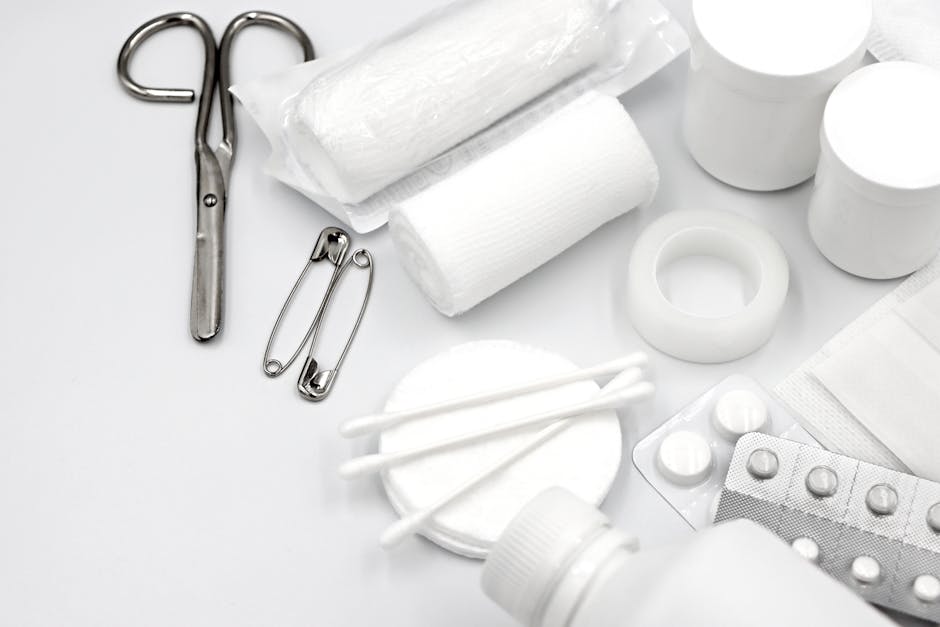
According to the Cleveland Clinic, your basic kit should include these 25 essential items, but let’s focus on the heavy hitters:
- Adhesive Bandages: A variety of sizes for different cuts and “butterfly” bandages for deeper gashes.
- Antiseptic Wipes & Ointment: To clean wounds and prevent infection. Look for wipes with at least 60% alcohol.
- Sterile Gauze & Medical Tape: For larger wounds that a standard bandage won’t cover.
- Tweezers: Essential for removing splinters, glass, or even ticks.
- Digital Thermometer: Ensure it is a non-mercury, battery-operated version.
- Disposable Gloves: To protect both the patient and the person providing care.
- Instant Cold Pack: Perfect for treating bumps, bruises, or minor sprains on the go.
Essential Medications for Every Travel Safety Kit
Medication management is where many travelers stumble. We suggest organizing your meds into four categories:
- Pain & Fever: Acetaminophen or Ibuprofen for headaches and muscle aches.
- Stomach Relief: Antacids for indigestion, anti-diarrheal medication (like Loperamide), and laxatives for “traveler’s constipation.”
- Allergies & Respiratory: Antihistamines for hay fever or hives, and cough suppressants.
- Motion Sickness: Particularly important if your trip involves winding roads or boat travel.
Expert Tip: Always keep medications in their original packaging. This helps you track expiration dates and dosages, and it’s often a legal requirement when crossing international borders. We also recommend packing an extra 5-7 day supply of any daily prescriptions in case of flight delays or unexpected trip extensions.
Critical Documents and Personal Safety Items
Your kit isn’t complete without the “paperwork” that proves who you are and what your body needs. The CDC’s Pack Smart guide emphasizes that information is just as valuable as physical medicine.
- Passport Copies: Keep a physical copy in your kit and a digital copy on your phone.
- Insurance Information: Include your policy number and the international emergency contact number for your provider.
- Emergency Contact Card: A list of people to call, including your primary doctor back home.
- Medical Alert Bracelet: If you have a chronic condition (like diabetes or a severe allergy), this is a literal lifesaver.
- Water Purification Tablets: Essential if you find yourself in an area where the local water supply is questionable.
Customizing Your Kit for Destinations and Activities
One size does not fit all in travel safety. A weekend in Paris requires a very different setup than a week in the Amazon.
| Feature | Urban Travel Kit | Remote/Wilderness Kit |
|---|---|---|
| Primary Risk | Blisters, headaches, indigestion | Trauma, dehydration, infection |
| Wound Care | Standard Band-Aids, antiseptic | Heavy gauze, SAM splints, tourniquet |
| Medication | OTC pain relief, antacids | Broad-spectrum antibiotics, rehydration salts |
| Tools | Tweezers, thermometer | Whistle, signal mirror, multi-tool |
| Specialty | Hand sanitizer, masks | Water filters, snake bite kits |
International and Family Considerations
When traveling internationally, research your destination’s specific risks. Are you going to a high-altitude region? Pack Acetazolamide. Heading to a malaria-prone area? Ensure you have your prophylaxis and high-strength insect repellent (30-50% DEET for adults).
For those traveling with children, safety is paramount. Ensure all medications have child-safe caps and are stored in a locked or out-of-reach section of your bag. Include age-appropriate dosages (liquid forms or chewables) and extra items like rehydration solutions specifically for infants.
Specialized Gear for High-Risk Travel Safety Kits
If your itinerary includes hiking, camping, or exploring areas with venomous wildlife, you need to upgrade your travel safety kit. According to the CDC Yellow Book, remote travel requires “expanded” supplies.
- SMART Bandages: These are specialized compression bandages used for snake or spider bites (common in places like Australia). They feature visual indicators to show when the correct pressure is applied.
- Emergency Whistle & Signal Mirror: If you get lost or injured off-trail, these are your primary tools for being found.
- Space Blanket: A lightweight, reflective blanket to prevent hypothermia if you’re stranded overnight.
- Multi-tool & Headlamp: For gear repairs and navigating in the dark.
How to Organize, Maintain, and Use Your Kit Effectively
A kit is useless if you can’t find what you need in the heat of the moment. We recommend a modular approach.
- Color-Coding: Use different colored pouches for different needs (e.g., Red for trauma/bleeding, Blue for hygiene, Green for info/documents). This allows for the quickest reaction time.
- Water-Resistant Containers: Use a durable, soft-sided case that can be squeezed into a backpack but won’t let moisture in.
- The “Annual Audit”: Every year (or before every major trip), check your expiration dates. Toss anything that’s past its prime and restock what you’ve used.
- Accessibility: Never pack your travel safety kit at the very bottom of your checked luggage. Keep a “mini” version in your carry-on or daypack.
Knowledge is Power
Having the gear is only half the battle. We strongly suggest taking a basic first aid course before any major adventure. To complement your physical kit, download the Red Cross First Aid mobile app. It provides step-by-step instructions for emergencies even when you’re offline.
Additionally, we recommend all U.S. citizens enroll in the Smart Traveler Enrollment Program (STEP). This free service connects you with the nearest U.S. Embassy or Consulate, providing safety updates and helping them reach you in an emergency.
Frequently Asked Questions about Travel Safety Kits
What are the TSA and customs rules for carrying medications?
TSA generally allows all medications (pills, liquids, and gels) in carry-on luggage, even if they exceed the 3.4oz limit, provided they are declared at security. However, international customs can be stricter. Some countries prohibit certain stimulants or painkillers. Always check with the U.S. Embassy of your destination country and keep everything in its original labeled bottle.
Should I buy a commercial kit or build a DIY travel safety kit?
Commercial kits (like those from Adventure Medical Kits) are great because they are professionally curated and compact. However, a DIY kit allows for 100% customization. If you have specific allergies or chronic conditions, building your own ensures you have exactly what you need without paying for “filler” items.
How often should I update my travel safety kit?
We recommend a full review every 12 months. Medications lose potency over time, and adhesive bandages can lose their “stick” in humid or hot environments. Always restock immediately after a trip if you used any supplies.
Conclusion
At FinanceZora, we believe that being prepared is the best way to save money and stay safe. A medical emergency abroad can be a massive financial drain, but a well-stocked travel safety kit acts as your first line of defense. By spending a little time and money now, you’re protecting your future self from unnecessary stress and expense.
Before you head out on your next journey, run through this final checklist:
- Is your kit tailored to your specific destination?
- Are all medications in their original bottles?
- Do you have digital and physical copies of your documents?
- Does everyone in your travel group know where the kit is kept?
Safe travels, and remember—it’s better to have it and not need it than to need it and not have it!
For more practical tips on choosing the best gear for your adventures, check out our comprehensive guide to travel gear.
