Haworthia Care: An Easy Succulent for Lower Light
A plant guide to zebra haworthia and its relatives: the bright indirect light they prefer, how to water thick roots that dislike wet soil, the small pots and gritty mix that suit them, and what offsets and leaf changes mean.
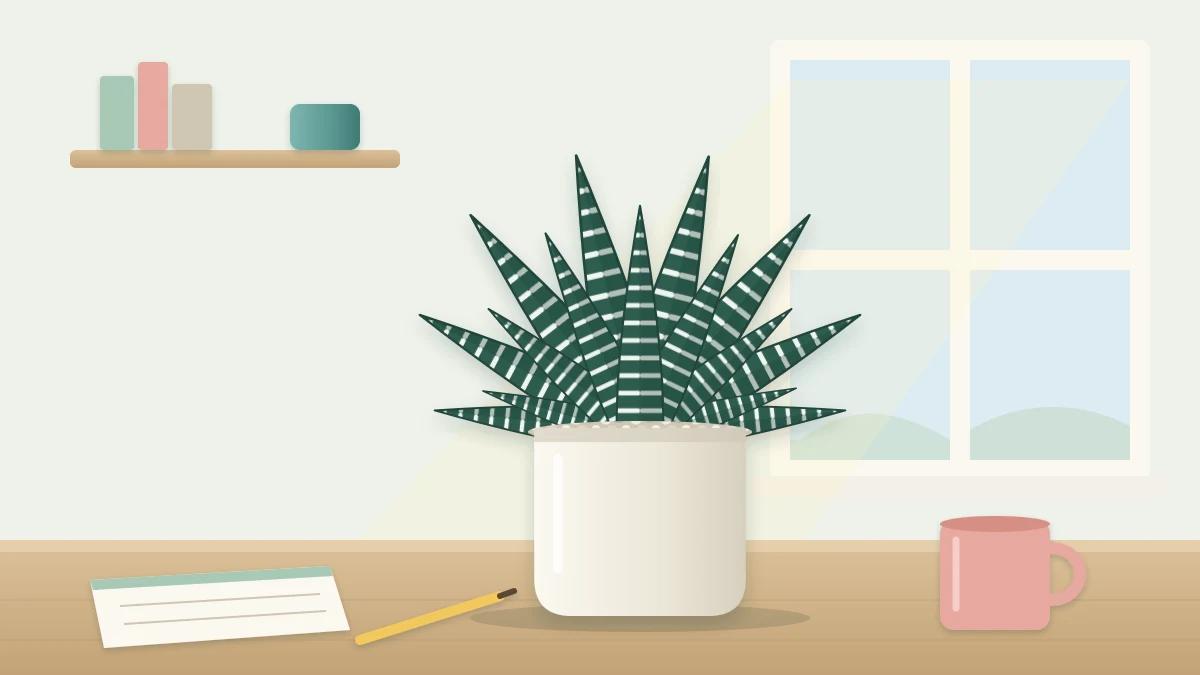
Not every home has a sun-drenched windowsill, and not every succulent demands one. Haworthias are small, slow, tidy plants that accept gentler light than most of their relatives, which makes them one of the easiest succulents to keep looking good indoors.
Haworthia care is simple once you know two things about the plant: it prefers bright indirect light to hot sun, and its thick roots dislike sitting in wet soil. The rest of this guide builds on those two points.
What haworthias are
Haworthias are small succulents native to southern Africa. The best known is the zebra haworthia, a clump of dark green, pointed leaves banded with raised white stripes. You may see it and its close relatives labeled Haworthiopsis, the name botanists now use for this group; garden centers still use both names, and the care is the same.
Other kinds look quite different. Some have soft, plump leaves with translucent tips, often called windows, that let light into the leaf. All of them stay small and grow slowly, and most form clumps over time. University of Wisconsin Extension has a good overview of the group.
Light: bright but gentle
Bright indirect light suits haworthias best. A spot close to a sunny window but out of the hottest rays, or a sill that gets morning sun only, is ideal. They tolerate less sun than echeverias and other rosette types, and they hold their shape in positions where those plants would stretch.
Tolerating lower light is not the same as liking darkness. In a dim corner far from any window, a haworthia survives for a time but grows very little, loses contrast in its markings and may lean or lengthen. A desk within a few feet of a window is fine; a shelf across the room usually is not. For help comparing spots, see where to put succulents indoors.
Good to know
Harsh direct sun, especially hot afternoon sun through glass, can turn the leaves reddish, bronze or brown. Mild color change usually reverses in gentler light, but dry, pale scorched patches are permanent. Increase light gradually.
Water: soak, then let it dry
Haworthias have thick, fleshy roots that store water and rot if they stay wet. Water thoroughly until it drains from the drainage hole, empty the saucer, then wait until the soil has dried through before watering again. In gentler light the pot dries slowly, so the wait is often longer than you expect. Check with a finger or a wooden skewer rather than going by the calendar; the guide on how to water succulents describes the checks.
The plant gives its own cues. When well watered, the leaves are firm, full and spread open. When it has been dry for a while, the leaves may look thinner, feel less firm, or curl inward so the plant seems to close up. That is a prompt to check the soil. If it is dry at depth, water. If it is still damp and the leaves are soft, look at the roots instead, because damaged roots produce a similar look.
Try to keep water from sitting in the center of the plant, and water less in winter when light is low.
Small pots and a gritty mix
A haworthia needs very little room. Choose a pot just slightly wider than the plant, with a drainage hole. A small volume of mix dries faster, which is exactly what those thick roots need. The guide to the best pots for succulents compares materials and shapes.
Fill it with a gritty, fast-draining mix: a bagged succulent mix opened up with pumice or perlite works well. A thin top dressing of fine gravel keeps the lowest leaves off damp soil and sets off the stripes nicely.
Because growth is slow, repotting is an occasional job. Move the plant when the clump fills the pot edge to edge or the mix has broken down and stays wet. When you do, you may notice some old roots have dried up while new ones have formed; trim away only what is clearly dead.
Offsets and clumps
Most haworthias produce offsets, small plants that emerge around the base of the parent. Over a few years these fill the pot and form a dense, attractive clump.
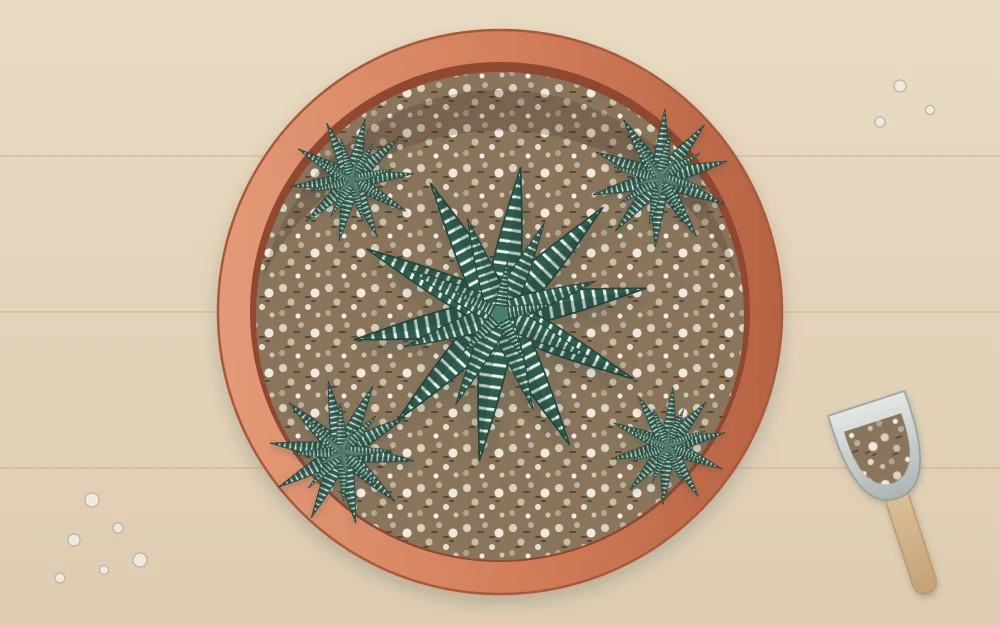
You can leave a clump alone for a long time. If it becomes crowded, lift it at repotting time and gently pull away offsets that have their own roots, then pot them separately.
Temperature, feeding and flowers
Ordinary room temperatures suit haworthias well. They are not frost hardy, so as a rough guide bring any outdoor pots in before nights drop toward 40°F (4°C). Keep them back from cold glass in winter and away from hot vents.
Feeding is optional. If you fertilize, do it lightly in the growing months, dilute well below the label rate for other houseplants and follow the product label.
Now and then a mature plant sends up a long, thin, wiry stalk with small pale flowers. They are modest rather than showy. Cut the stalk off near the base once the flowers fade.
Troubles and what to check
Each of these has more than one possible cause, so use them as prompts rather than verdicts.
- Brown or dry leaf tips. Often seen after strong sun or a long dry stretch, and sometimes just age on the oldest leaves.
- Soft, mushy or translucent leaves at the base. Commonly associated with soil that has stayed wet. Unpot the plant and inspect the roots.
- Pale, lengthening growth. One possibility is too little light; move the plant closer to a window.
- A plant that wobbles in its pot. The roots may have died back, from wet soil or from a long drought. Check them and repot into fresh gritty mix if needed.
- White cottony tufts. Often mealybugs, which can hide deep between the leaves and around the roots. Isolate the plant and remove what you can by hand.
Haworthias, pets and desks
Small size, slow growth and tolerance of indirect light make a haworthia a natural choice for a desk near a window, a bedside table or a narrow sill. It is on the list of the best succulents for beginners for those reasons.
The ASPCA lists haworthia as non-toxic to dogs and cats; see the ASPCA entry for haworthia. A plant listed that way is still not food, and any plant can upset a stomach if chewed, so keep it out of reach and contact a veterinarian or poison control if a pet or child eats part of one.
Frequently asked questions
Can haworthia grow in low light?
It tolerates lower light better than most succulents, but it still needs a reasonably bright position to grow well. Near a window with indirect light is ideal. In a truly dim corner it tends to stall, lose the contrast in its markings and slowly lean or lengthen toward the nearest light.
Why is my haworthia turning red or brown?
Reddish, bronze or brown coloring is often a response to strong direct sun, and usually eases when the plant moves to gentler light. A long dry stretch can add to it. Check how much direct sun reaches the plant and whether the soil is dry at depth before changing anything else.
Why are my haworthia's leaves curling inward?
Leaves that thin out and curl toward the center commonly mean the plant has used up its stored water. Check the soil at depth: if it is dry, water thoroughly. If the soil is still damp, inspect the roots, since roots damaged by wet soil can no longer supply the leaves.