How to Water Succulents: When, How Much and How to Tell
A reliable way to water succulents without a calendar: how to check that the soil has dried through, how to soak and drain the pot properly, and what changes in a cool, dim season.
At a glance
What you need
- Wooden skewer or chopstick
- Watering can with a narrow spout
- Saucer or tray
- Room-temperature water
- Paper towel for blotting rosettes
Most advice on how to water succulents starts with a number of days, and that is where it goes wrong. Two plants of the same kind can need water at very different intervals depending on where and how they are grown.
What works is a method instead of a date: check whether the soil has dried through, water thoroughly when it has, and let it drain. This guide explains how to tell when a plant needs water, how much to give and what changes through the year.
Why there is no watering calendar
A succulent needs water when the soil around its roots has dried out, and how long that takes depends on at least ten things:
- Species. Thick-leaved plants store more water than thin-leaved ones, and different kinds grow at different times of year.
- Pot size. A large volume of soil holds more water and dries more slowly than a small one.
- Pot material. Unglazed terracotta lets moisture escape through its walls. Glazed ceramic and plastic do not.
- Soil. A gritty mix dries much faster than dense, peaty potting soil.
- Drainage. A pot with a clear drainage hole sheds extra water. One without keeps it.
- Temperature. Warm conditions speed up drying and growth. Cool ones slow both.
- Humidity. Soil dries slowly in damp air and quickly in dry air.
- Light. A plant in strong light uses more water than one in a dim spot.
- Season. Most succulents use far less water when they are resting.
- Indoor or outdoor conditions. Sun, wind and rain outdoors change everything about how a pot dries compared with a sheltered windowsill.
As an example of the range, a small terracotta pot in a warm, bright window might dry within a week or so, while the same plant in a cool, dim room can stay damp for several weeks. That is why the checks below matter more than any date.
How to tell when a succulent needs water
Use more than one check. The soil surface dries long before the rest, so it tells you little.
Test the soil at depth
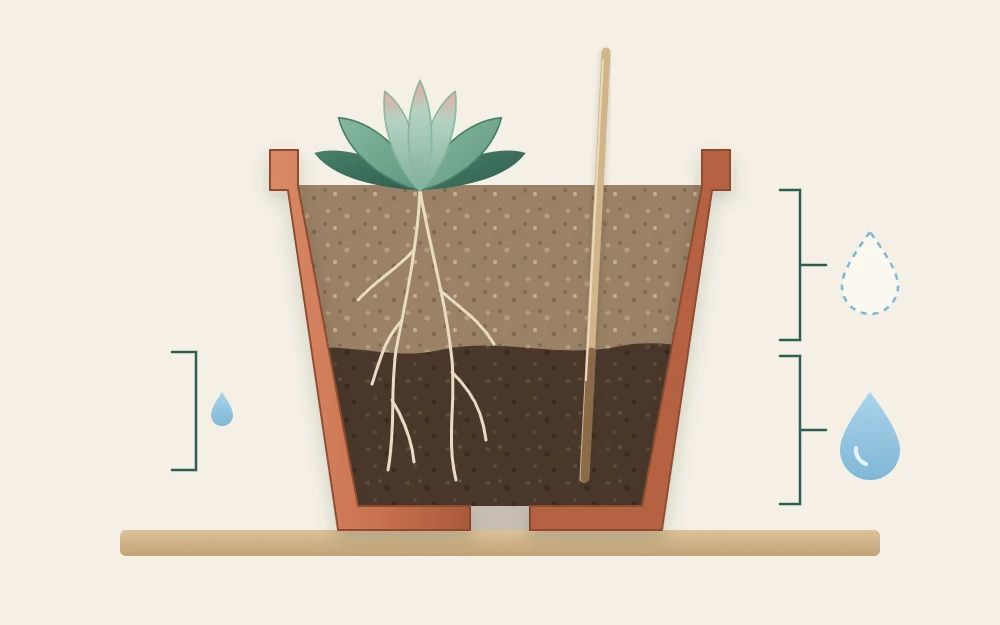
Push a finger into the soil as far as it will go. In a small pot, that reaches most of the way down. In a deeper pot, slide a wooden skewer or chopstick to the bottom, near the edge to avoid the main roots, leave it for a few seconds and pull it out. A clean, dry skewer suggests dry soil. A darker, damp skewer with soil clinging to it means there is still moisture below.
Feel the weight of the pot
Lift the pot right after watering, then again when you know it is dry. Wet soil is noticeably heavier, and a quick lift soon tells you a lot.
Check leaf firmness
Well-watered leaves feel firm and full. When a plant has drawn on its reserves, the leaves often feel slightly softer and may show fine wrinkles. Use this as a supporting clue only, because soft leaves can also be associated with roots damaged by wet soil. If the leaves are soft and the soil is still damp, do not add more water.
When the soil is dry to the bottom and the pot feels light, it is time to water.
The soak and dry method, step by step
- Confirm the soil is dry using the checks above.
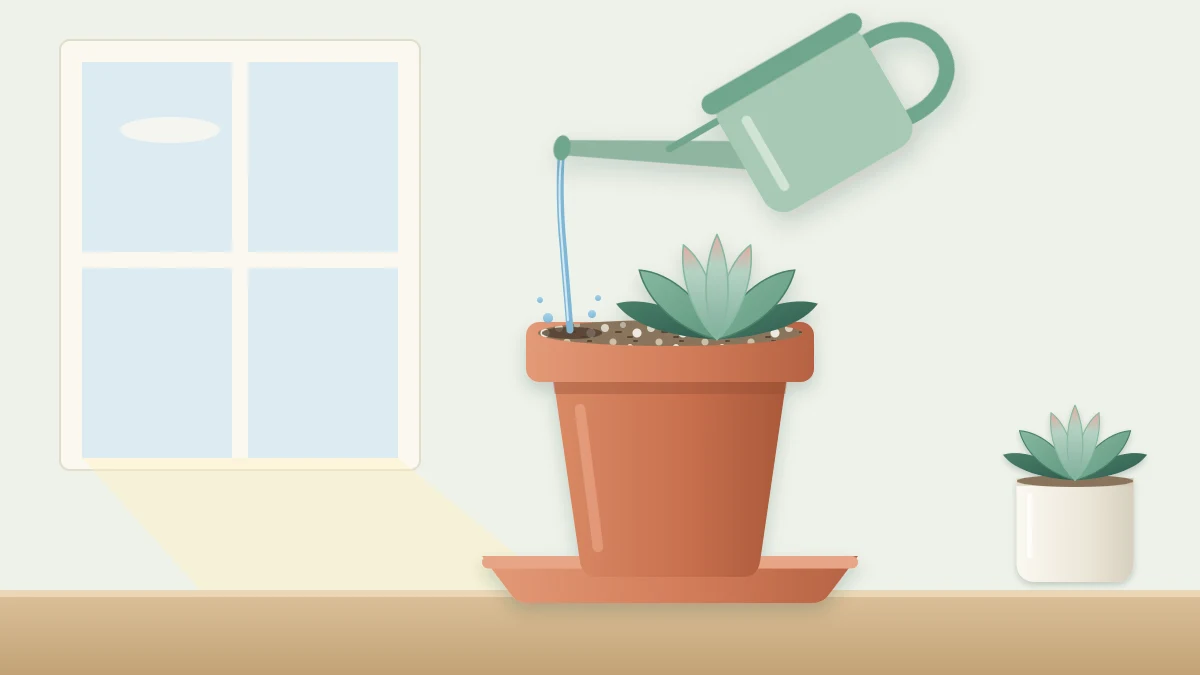
- Water at the soil. Aim a narrow spout at the soil surface and pour slowly, moving around the pot so the whole root ball is wetted.
- Keep going until water runs from the drainage hole. That shows the water has reached the bottom instead of wetting only the top layer.
- Let the pot drain for several minutes.
- Empty the saucer or cachepot so the pot is not left standing in water.
- Wait until the soil has dried through before you water again.
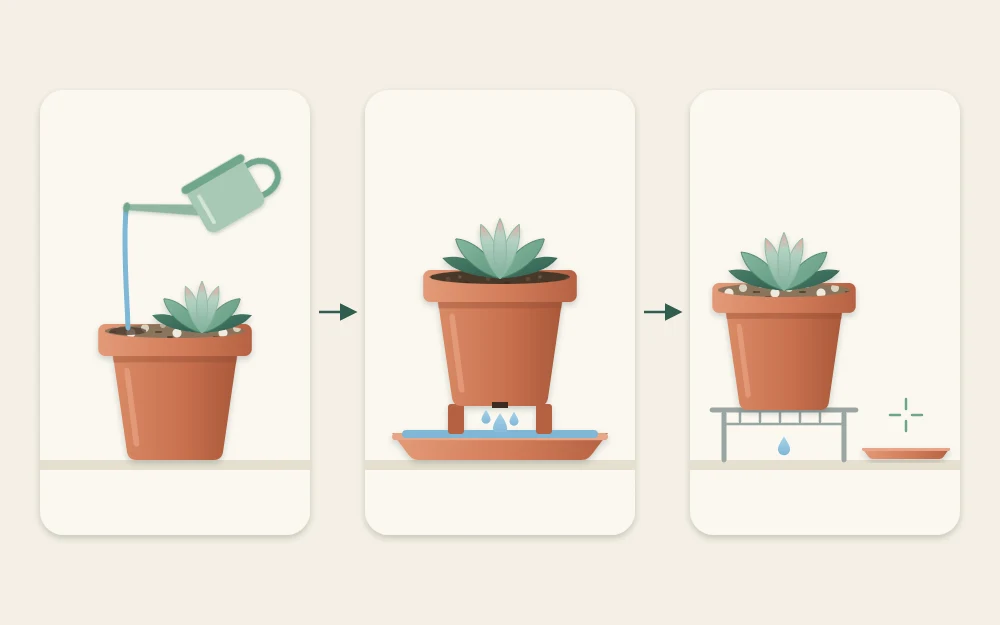
How much water that takes depends on the pot, so judge by the runoff, not by a measured amount. Small frequent sips are the thing to avoid, because they wet only the top of the soil. For general background on watering container plants, see University of Maryland Extension on watering indoor plants.
Water the soil, not the rosette
Pour under the leaves where you can. Water that collects in the center of a rosette can sit there for a long time indoors, where there is little air movement, and that is commonly associated with rot at the growing point. Water drops can also leave marks in the farina, the powdery coating on some leaves, and it does not grow back on old leaves.
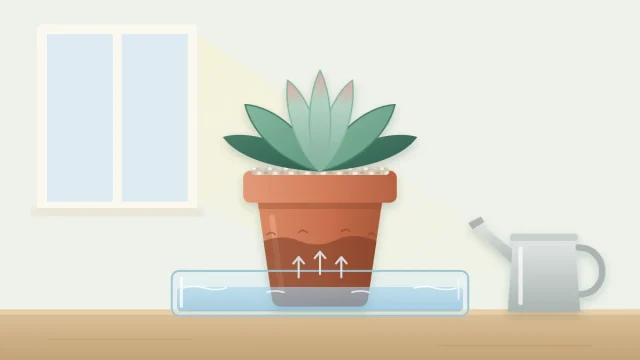
If water does pool in a rosette, tip the pot gently or blot it with the corner of a paper towel. For tight clusters where a spout will not fit, bottom watering is a useful alternative.
What changes in a cool, dim season
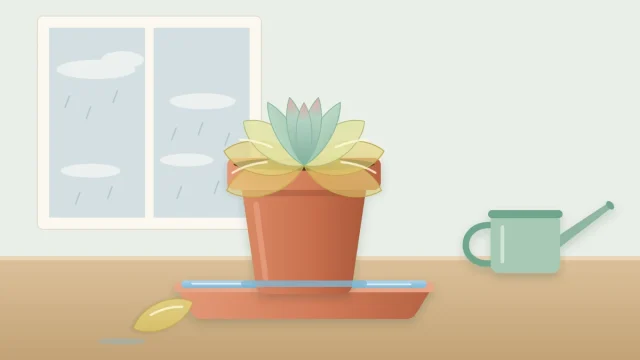
When days are short and temperatures drop, most succulents slow down or rest. They use less water, and the soil dries more slowly, so the gap between waterings often grows much longer. Keep using the same checks and let them set the pace.
A few points help in this part of the year:
- Wet soil combined with cold is harder on roots than dry soil, so lean toward waiting.
- Water earlier in the day, so the surface and any splashed leaves dry before the cooler night.
- Some succulents do most of their growing in the cooler months, so watch for new growth as well as the season.
Soil and pot make the method work
Soak and dry depends on water being able to leave. In dense soil, or a pot with no drainage hole, a thorough soak can keep roots wet for far too long. If your soil stays damp at depth for weeks in good light, the mix is the thing to change, not the amount of water. The guide to succulent soil explains what a fast-draining mix contains.
When the signs are unclear
Soft, yellow or wrinkled leaves can each have several causes, and too much and too little water can look alike at first. Check the soil at depth, the roots if you can, the light and any recent changes before you decide.
The symptoms and recovery steps are covered separately: see the guide to an overwatered succulent if the soil has been staying wet, and the guide to an underwatered succulent if it has been dry for a long time.
Frequently asked questions
How often should you water a succulent?
There is no single interval that fits every plant. It depends on the species, pot, soil, light, temperature, humidity and season. Check the soil with a finger or wooden skewer and water only when it is dry to the bottom of the pot. That may be fairly soon in summer and much longer in winter.
Should I mist succulents instead of watering them?
Misting is not a substitute for watering. It wets the leaves and the top of the soil without reaching the roots, and damp leaves in still indoor air are commonly associated with rot and marks. Water the soil thoroughly and let it dry through between waterings.
Is tap water fine for succulents?
In most homes, tap water at room temperature works. Hard water can leave pale mineral deposits on the soil surface, the pot or the leaves over time. If that bothers you, watering at soil level keeps it off the leaves, and rainwater is an alternative where you can collect it.