Best Succulents for Beginners: 9 Forgiving Plants
Nine widely sold succulents that tolerate beginner mistakes, with the light each needs, one thing to know about it, what the ASPCA lists for cats and dogs, and how to choose a healthy plant in the shop.
A first succulent should be a plant that gives you time to learn. Some kinds shrug off a missed watering, an imperfect window or a clumsy repotting; others collapse at the first mistake. Starting with the tolerant ones makes the whole hobby more enjoyable.
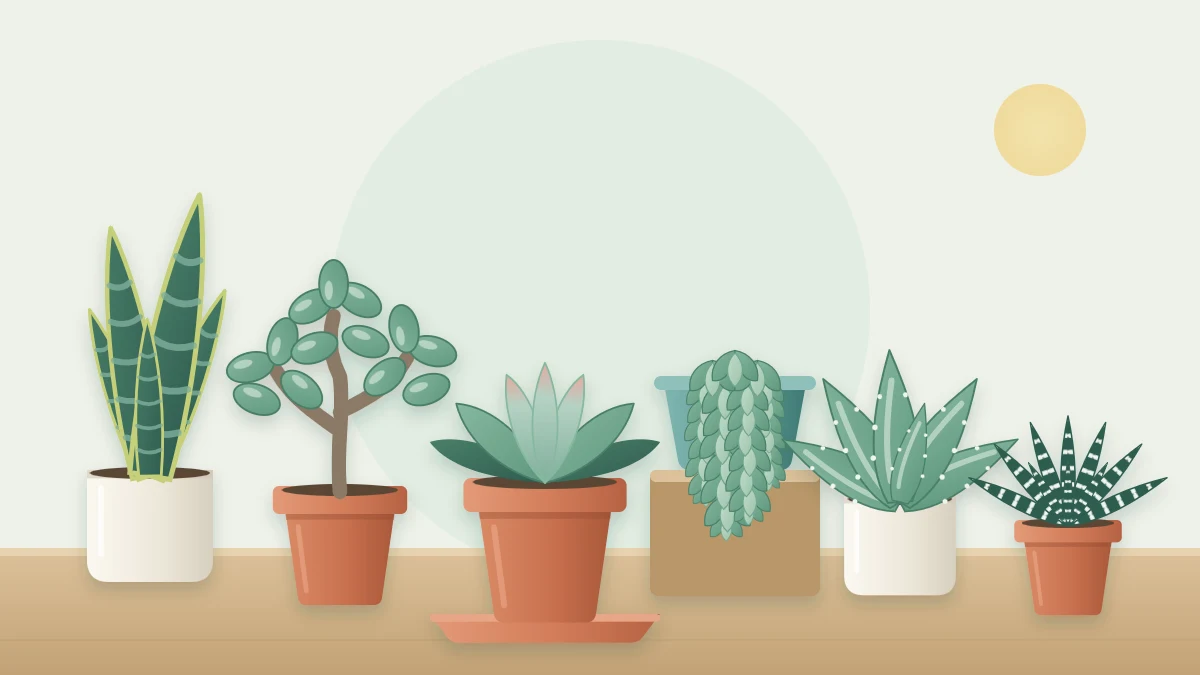
The best succulents for beginners share three traits: they are widely sold, they show clearly when something is off, and they recover once you correct it. Here are nine that fit, with the light each one needs and one thing worth knowing before you bring it home.
What makes a succulent forgiving
No plant is indestructible, and every one on this list can still rot in soil that stays wet. What sets these apart is margin. They store plenty of water, so a late watering does little harm, and most tolerate ordinary household conditions. Match the plant to the light you actually have and you remove the most common cause of failure. If you are new to all of this, read the overview of succulent care for beginners first.
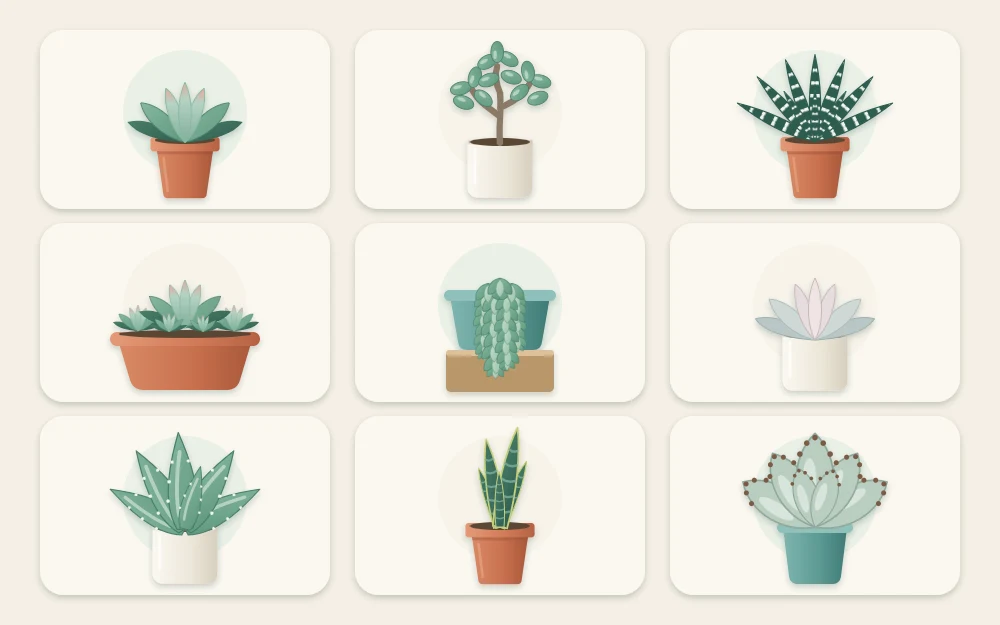
Rosette types for bright spots
1. Echeveria
The classic flat rosette, in blue-green, gray, pink or purple tones. Echeveria wants a lot of light, ideally a sunny sill, and stretches quickly without it. It handles dry soil well. Most stay small enough for a 4 in (10 cm) pot for a good while. One thing to know: the powdery coating on many kinds marks when touched, so handle the plant by its pot. More in the echeveria care guide.
2. Ghost plant
Pale, pearly gray-pink rosettes on stems that slowly lengthen and trail. Ghost plant takes strong light and is very tolerant of drought. One thing to know: the leaves snap off at a light touch, so place it where it will not be brushed.
3. Hens and chicks (sempervivum)
Tight rosettes that surround themselves with offsets. Sempervivums are cold-hardy plants and do best outdoors or in the very brightest indoor spots; in ordinary room light they tend to stretch and fade. One thing to know: a rosette that flowers dies afterward, but its offsets carry on.
Upright and tree-like plants
4. Jade plant
Thick stems and glossy oval leaves that grow slowly into a small tree. Jade likes bright light with some direct sun and tolerates dry soil far better than wet. It can live for many years and grow large and top-heavy. One thing to know: it needs a weighty pot as it grows. See the jade plant care guide for pruning and shaping.
5. Aloe vera
Upright, fleshy, toothed leaves in a loose fan or rosette. Aloe vera prefers bright light, and can turn brownish if moved abruptly into hot sun. It stores a great deal of water and resents soggy soil. One thing to know: it produces offsets freely and a single plant can fill its pot within a few seasons.
6. Snake plant
Stiff, sword-shaped leaves that stand upright. Snake plant is the most shade-tolerant plant on this list and accepts spots well back from a window, though it grows faster in good light. One thing to know: its usual downfall is too much water in low light, so let the soil dry through completely.
Small plants for sills and desks
7. Zebra haworthia
A compact clump of dark, pointed leaves banded with white. It prefers bright indirect light and copes with less sun than the rosette types, which makes it a strong choice for a desk near a window. It stays only a few inches tall. One thing to know: harsh direct sun can turn it reddish or brown. Details are in the haworthia care guide.
8. Panda plant
A kalanchoe with soft, gray-green, felted leaves edged in brown. It likes bright light and is tolerant of dry spells. One thing to know: water the soil rather than the fuzzy leaves, which hold moisture and can mark.
9. Burro’s tail
Long trailing stems packed with plump, bead-like leaves, best in a hanging pot in bright light. It tolerates drought well. One thing to know: the leaves drop at the slightest knock, so choose its position once and then leave it alone.
Light needs and pet listings at a glance
If cats or dogs share your home, check a plant’s status before you buy. The table below gives the light each plant needs and what the ASPCA lists for it. You can confirm any entry in the ASPCA plant list.
| Plant | Light | What the ASPCA lists for cats and dogs |
|---|---|---|
| Echeveria (blue echeveria) | Very bright, some direct sun | Listed as non-toxic |
| Ghost plant | Very bright, some direct sun | Listed as non-toxic |
| Hens and chicks | Full sun, best outdoors | Listed as non-toxic |
| Jade plant | Bright, some direct sun | Listed as toxic |
| Aloe vera | Bright | Listed as toxic |
| Snake plant | Low to bright | Listed as toxic |
| Zebra haworthia | Bright indirect | Listed as non-toxic |
| Panda plant (a kalanchoe) | Bright | Kalanchoe is listed as toxic |
| Burro’s tail | Bright | Listed as non-toxic |
Good to know
A plant the ASPCA lists as non-toxic is still not food: any plant can upset a stomach if chewed. Keep all of them out of reach, and contact a veterinarian or poison control if a pet or child eats part of one.
How to pick a healthy plant in the shop
A good start matters more than the species. Take a minute with each candidate:
- Shape. Choose compact growth with leaves close together. Long gaps along the stem suggest the plant has been kept in poor light.
- Leaves. Look for firm, plump leaves. Pass over plants with soft, translucent or blackened leaves near the base.
- Pests. Check the leaf joints and undersides for white cottony tufts or fine webbing.
- Soil. Soil that is soaked, moldy or green on top hints at a plant kept too wet.
- Pot. Make sure there is a drainage hole, or plan to move the plant into a pot that has one.
- Extras. Avoid plants with glued-on top dressing or painted leaves, which make care harder.
What is left off this list
Cacti are succulents too, and several are easy to live with, but they have their own needs and are left for another site. String of pearls and other thin-stemmed trailers are also missing on purpose: they are lovely and far less tolerant of watering errors. Come back to them once one of the nine above has done well for you for a year.
Frequently asked questions
What is the easiest succulent to keep alive indoors?
It depends on your light. In a bright window, jade plant and zebra haworthia are both very tolerant. In a dimmer room, snake plant copes better than most. All three store plenty of water, so the main risk is watering too often rather than too little.
Which beginner succulents does the ASPCA list as non-toxic to cats and dogs?
The ASPCA lists blue echeveria, haworthia, hens and chicks, burro's tail and ghost plant as non-toxic to dogs and cats. That listing does not make them edible, since any plant can upset a stomach if chewed, so keep them out of reach and call a veterinarian if a pet eats part of one.
Should I start with one succulent or several?
Two or three different kinds is a good start. You learn faster by comparing how they respond to the same window and the same care, and one struggling plant is less discouraging. Keep each in its own pot at first so you can water and move them individually.