Succulent Light Requirements: How Much Light Do They Need?
Find out whether your window gives a succulent enough light: what direct sun, bright indirect and low light mean, a simple hand-shadow test, and the signs of too little light or too much sun.
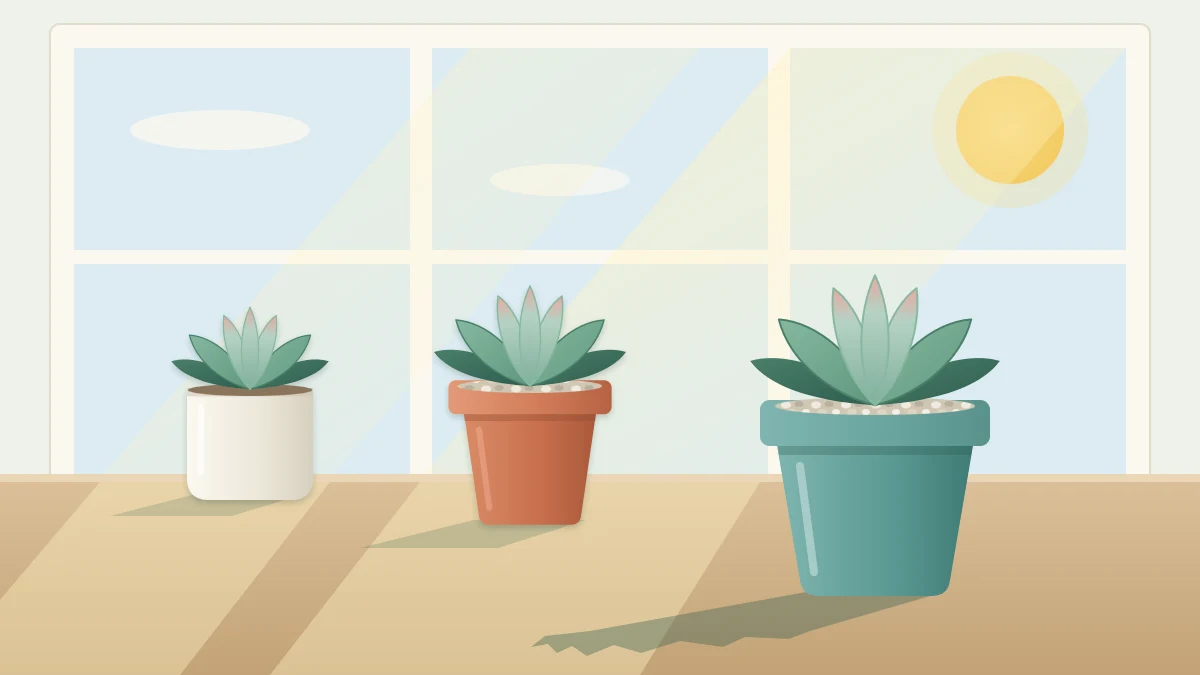
Light is the one thing a succulent cannot store. It can sit out a dry spell on the water in its leaves, but it has nothing in reserve for a dim room, and a spot that looks bright to you may be far dimmer than the plant needs.
Succulent light requirements are easier to meet once you can describe the light you actually have. This guide explains the common light terms in plain language, what changes the light at a window, a quick test you can do with your hand, and what a plant looks like when it gets too little or too much.
Direct sun, bright indirect light and low light
Plant labels use three broad terms. They describe what reaches the leaves, not how bright the room feels.
- Direct sun means the sun’s rays land on the plant itself. If you can see the sun from where the plant sits, it is in direct sun.
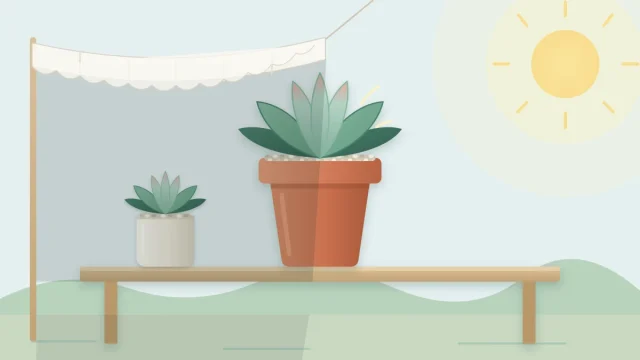
- Bright indirect light means a strongly lit spot where the rays do not hit the leaves: just beside a sunny window, or behind a sheer curtain.
- Low light means a spot well back from a window, or beside one that sees little open sky. You can read there comfortably, but shadows are faint.
Most rosette succulents, such as echeveria and hens and chicks, grow best with some direct sun each day plus bright light for the rest of it. Very few succulents grow well in low light for long, though some put up with it better than others.
What changes the light at your window
Two windows of the same size can deliver very different amounts of light. Four things account for most of the difference.
Window direction
In the Northern Hemisphere, a south-facing window generally gets the most sun through the day. An east-facing window gets gentler morning sun, and a west-facing one gets stronger, hotter afternoon sun. A north-facing window gets the least and rarely any direct sun. In the Southern Hemisphere, north and south swap roles.
Distance from the glass
Light falls off quickly as you move into a room. A plant on the sill can receive several times more than the same plant on a table a few feet (about a meter) back, even though your eyes adjust and both spots seem bright.
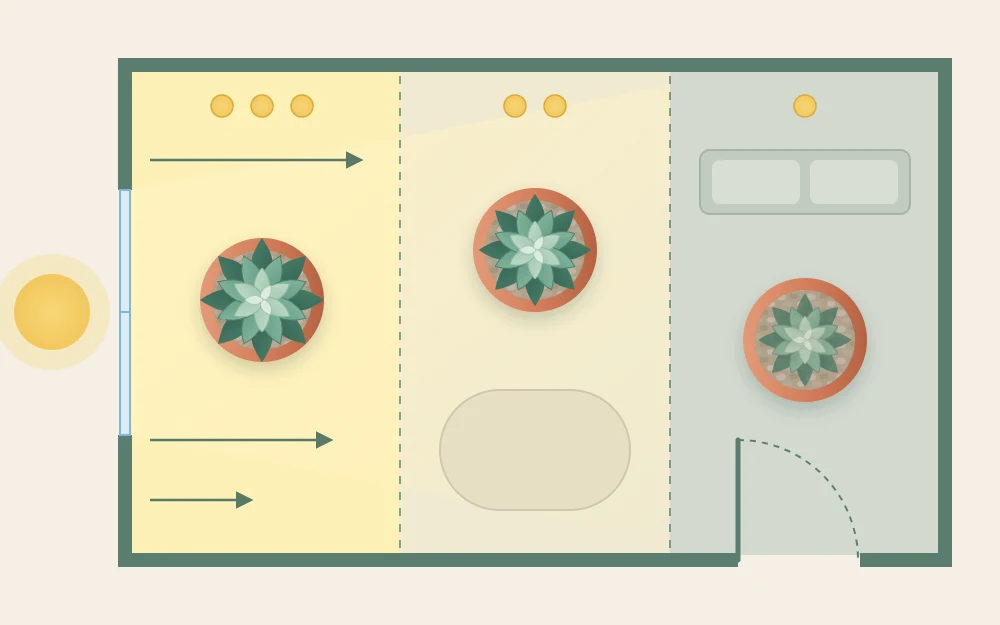
Obstructions
Trees, neighboring buildings, roof overhangs, insect screens, tinted or dirty glass and curtains all take a share. A south window shaded by a porch roof may give less than an open east window.
Season
In winter the days are shorter and the sun sits lower, so total light drops, although the low sun can reach deeper into a room. In summer the sun is high and strong, and a sill behind glass can get very hot. A spot that works in one season may need adjusting in another.
For more on how indoor light is described and measured, see University of Maryland Extension on lighting for indoor plants.
The hand-shadow test
You can get a rough reading without any equipment. Around the middle of a clear day, hold your hand about 12 in (30 cm) above the place where the plant sits, between it and the window, and look at the shadow.
- A crisp, dark shadow with clear edges: direct sun or very bright light.
- A soft shadow with blurred edges: bright indirect or medium light.
- A faint shadow or none: low light.
Treat the result as a rough check, not a measurement. It changes with the hour, the weather and the season, so repeat it at different times of day before you settle on a spot. Choosing between rooms and sills is covered in the guide to where to put succulents indoors.
Signs of too little light
A succulent short of light changes shape slowly, over weeks. The usual signs appear together:
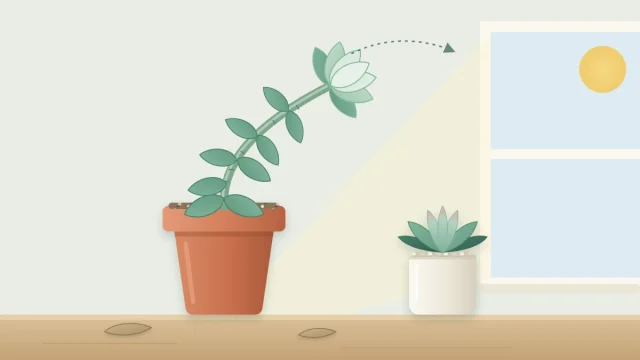
- Stretching. The stem lengthens and the gaps between leaves widen. This is called etiolation.
- Paling. Leaves turn a lighter green and lose red, pink or purple tints.
- Leaning. The whole plant tilts toward the window.
- Flattening. Rosette leaves point outward or downward instead of cupping upward.
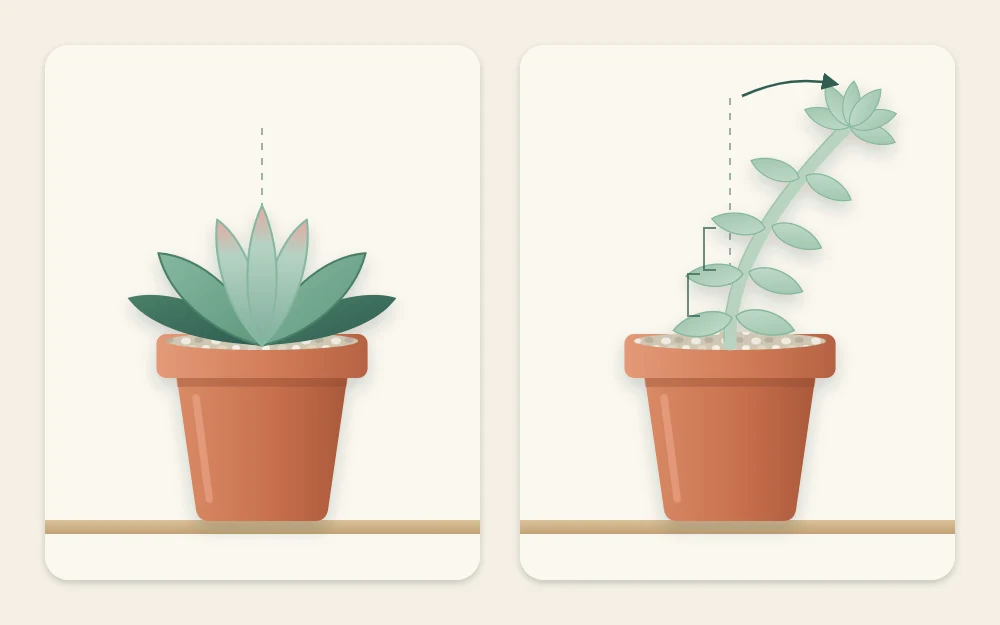
Pale color on its own has other possible causes, so look for the change in shape as well. Stretched growth does not shrink back when the light improves, although new growth comes in compact. What to do with a plant that has already stretched is explained in the guide to leggy succulents.
Signs of too much sun, too fast
Succulents build up tolerance to strong sun gradually. A plant moved straight from a shop shelf or a dim room into hours of direct sun can scorch within a day or two. Sunburn commonly shows as bleached, white, tan or brown patches on the side of the plant facing the sun. The patches are dry, not mushy, and they do not heal, though the plant usually grows past them.
The same plant can often take that much sun once it has had time to adjust. The powdery coating on some leaves, called farina, helps protect them, so avoid rubbing it off.
Good to know
Increase direct sun in small steps over a couple of weeks or more, especially when moving plants outdoors or to a hot west or south window. The guide to acclimating succulents to sun gives a step-by-step approach.
Light needs differ by species
Not every succulent wants the same light. As a broad guide:
- Higher light: echeveria, hens and chicks, most sedums and other colorful rosettes. Indoors, they usually need your sunniest window to stay compact.
- Bright light with some direct sun: jade plant and aloe, which often do well with a few hours of gentler sun.
- Lower light tolerance: haworthia and snake plant. They generally do well in bright indirect light and cope with dimmer spots better than most, although they grow slowly there and can scorch in harsh sun.
Tolerating lower light is not the same as preferring darkness. Every succulent still needs a spot near a window.
Reading your plant over time
The plant itself is the best light meter you have. After a move, watch the new growth for a few weeks. Compact new leaves with good color suggest the spot is working. Wider gaps, paler leaves or a lean suggest it needs to be closer to the glass or at a brighter window.
Turn the pot a quarter turn now and then so all sides get light and the plant grows evenly.
Frequently asked questions
Can succulents live in a room with no direct sun?
Some can. Haworthia and snake plant generally manage in bright indirect light close to a window. Rosette types such as echeveria usually stretch and fade without some direct sun. If your brightest spot gives only a faint hand shadow at midday, expect slow, stretched growth from most kinds.
Which window is best for succulents?
In the Northern Hemisphere, a south-facing window usually gives the most light, with east and west windows next and north last. Direction is only part of it, though. Trees, buildings, overhangs and distance from the glass can matter just as much, so check the light you actually get.
Can a succulent get too much sun?
Yes, particularly when the change is sudden. A plant moved quickly into strong direct sun can develop bleached or brown dry patches on the exposed side. Most succulents handle more sun after a gradual introduction, but a hot window in midsummer can still be too intense for lower-light kinds such as haworthia.