How to Acclimate Succulents to Brighter Light Without Sunburn
A step-by-step way to move succulents into a sunnier window or outdoors for summer: why sudden sun burns, how sunburn differs from healthy color, and a staged plan you can adapt to your plant.
At a glance
What you need
- Sheer curtain for indoor windows
- Shade cloth or lightweight garden fabric
- A spot in bright shade
- A spot with morning sun
- Wooden skewer for checking the soil
Most succulents enjoy plenty of light, so it seems odd that sunshine can damage them. Yet a plant moved straight from a dim shelf to a hot windowsill or a sunny patio can scorch within a day or two. The fix is simple: acclimate succulents to sun in stages instead of all at once.
This applies whenever the light takes a big step up. That includes a move to a sunnier window, a summer outdoors, a new plant brought home from a shaded shop shelf, or a stretched plant being given better light.
Why sudden strong sun burns leaves
Leaves adapt to the light they grow in. Growth made in low or filtered light is typically thinner and softer, with less of the protective pigment and surface coating that sun-grown leaves build up. Put that tissue in intense light and it is damaged before the plant can adjust.
Species matters less than history here. A succulent that would thrive in direct sun all day can still burn if it has spent the last few months indoors. Light outdoors is also far more intense than light inside, even at a bright window, so the jump from house to garden is larger than it appears.
Sunburn versus healthy color
Many succulents develop red, pink, orange or purple tones in strong light. This blush, often called sun stress, is a normal response and fades again in lower light. Sunburn is dead tissue and it is permanent.
| What you see | Sunburn | Color from strong light |
|---|---|---|
| Appearance | Bleached, tan or brown patches that turn dry and rough | Even blush, often strongest at leaf tips and edges |
| Where | On the side or top facing the light | Across the whole plant |
| Speed | Within hours or days of a change | Gradually, over weeks |
| Over time | Marks do not heal | Fades if the light drops |
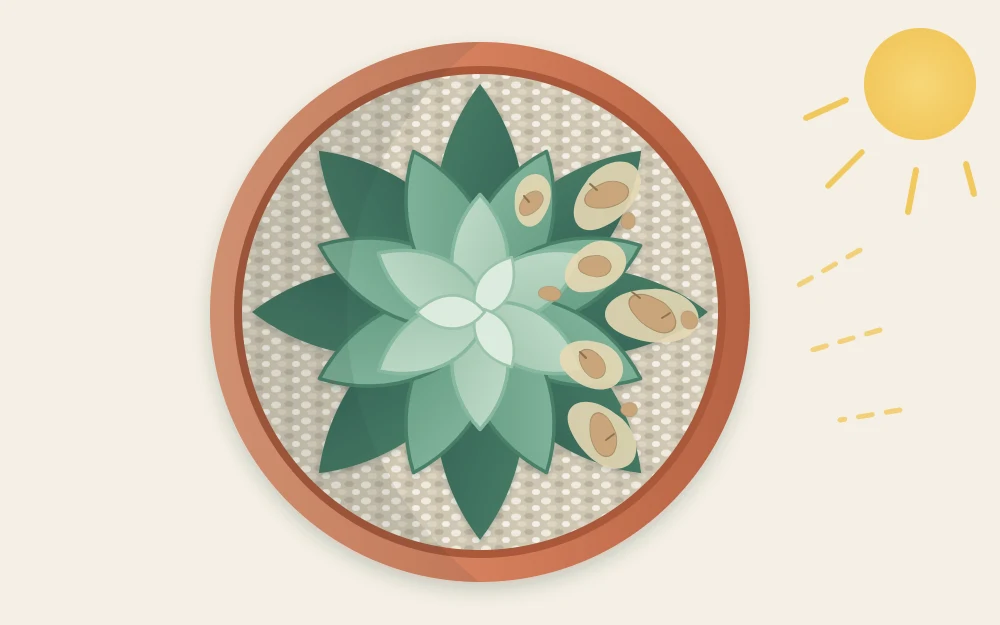
Pale or brown marks have other possible causes too, including pests, cold and physical damage. Check whether the marks sit on the side facing the light and whether they appeared soon after a move. If they do not fit that pattern, the overview of common succulent problems can help you narrow it down.
Before you start
Know roughly how much light the plant can use in the end. Echeverias, sedums and sempervivums generally take a lot of direct sun once adapted, while haworthias and gasterias prefer bright indirect light and may never be comfortable in hot afternoon sun. The guide to succulent light requirements sorts the common types.
Start when the plant is in reasonable shape. A plant that is badly dehydrated or freshly repotted is under enough stress already, so give it time to settle first.
A gradual plan in stages
Allow a couple of weeks at least, and longer for a plant coming from very low light or heading into strong summer sun. The stages below are a pattern to adapt, not a timetable.
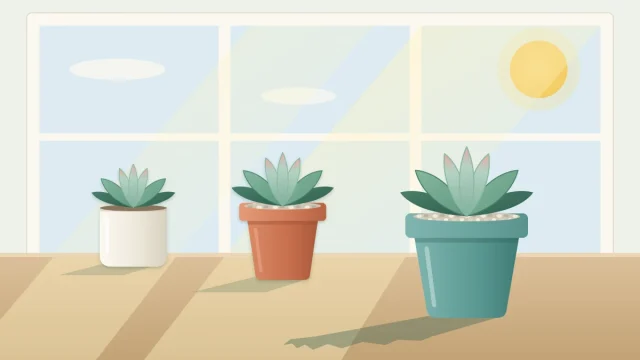
- Bright shade. Begin somewhere bright with no direct sun: back from a sunny window, behind a sheer curtain, or outdoors under a porch roof or a tree. Leave the plant there for several days.
- Gentle morning sun. Move it to a spot that gets an hour or two of early sun, which is cooler and weaker than midday or afternoon sun. In the Northern Hemisphere an east-facing position usually provides this.
- Longer exposure. Every few days, lengthen the time in direct sun a little, as long as the leaves look unchanged.
- The final position. Move to the full exposure you were aiming for only after the plant has handled the stage before it without marks.
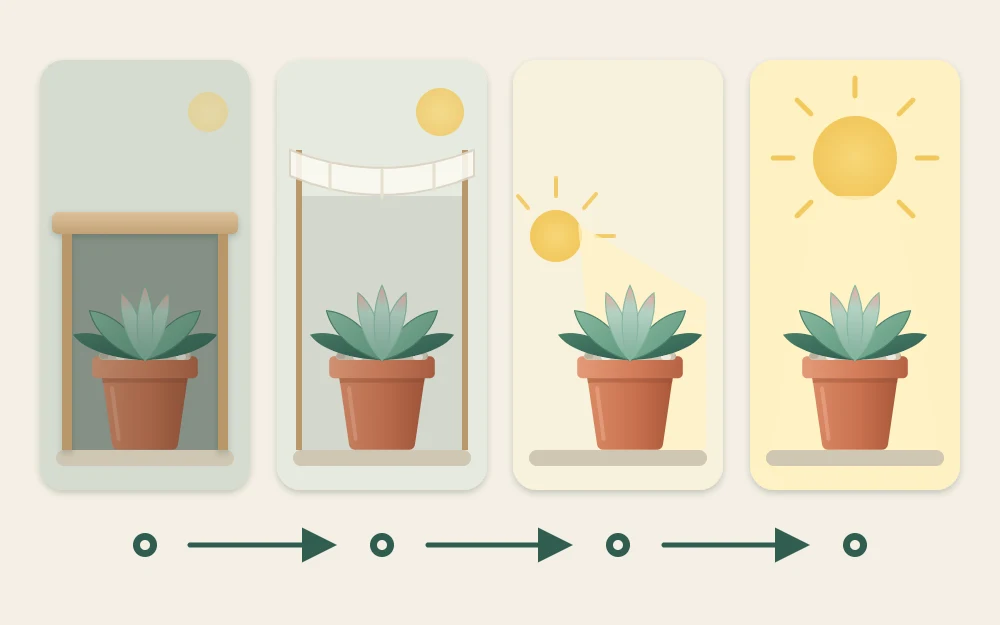
Look at the plant daily during the change. If pale patches appear or the leaves look bleached, go back one stage and stay there longer. Slow down as well during a heat wave or a run of very clear days, when the same position delivers much more light and heat than it did the week before.
Tip
A plant in more sun dries out faster than it did in shade. Check the soil at depth more often during the move, and water thoroughly once it has dried through.
Sheer curtains and shade cloth
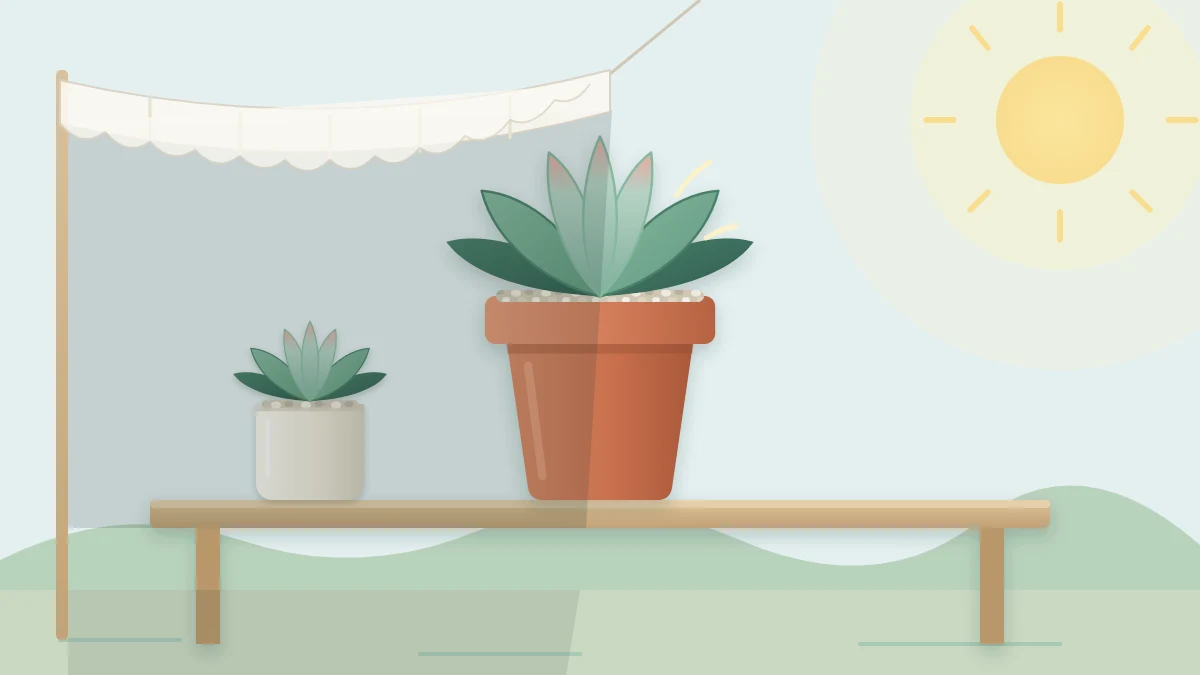
When you cannot shift the pot from place to place, soften the light instead. Indoors, a sheer curtain across a sunny window filters direct sun. Draw it during the brightest hours for the first week or so, then leave it open a little longer every few days.
Outdoors, shade cloth stretched over a frame does the same job. Lightweight garden fabric or the dappled shade of a taller plant also works. In hot, dry climates some growers leave shade cloth in place through the whole summer, because afternoon sun there can be too much even for adapted plants.
Watch the heat behind glass
Light is only half of it. The space between a curtain or blind and a sunny window can get very hot, and so can a closed sunroom or a windowsill above a radiator. Leaves touching hot glass may scorch even on a plant that is used to the light.
Keep leaves a little way off the pane, and give the room some air movement on hot days. Dark pots in full sun heat up too, which can stress the roots.
Moving outdoors for summer
Wait until cold nights have passed. As a rough guide, many tender succulents are happier outside once nights stay above about 50°F (10°C), though hardiness varies widely by species. Then follow the same stages, beginning in full outdoor shade.
Use pots with a drainage hole and no saucer underneath, so rain can run straight through. In a long wet spell, move the pots under cover.
The reverse trip needs planning as well. Bring plants in before nights turn cold in fall, and expect them to need your brightest window. The guide to succulent care in winter covers that season.
Good to know
Sunburned patches do not heal, but a scorched leaf still feeds the plant. Leave it in place unless it turns soft, and let new growth gradually replace it. Avoid rubbing the powdery farina off leaves, since it helps shield them from strong light.
Frequently asked questions
How long does it take to acclimate succulents to full sun?
Plan on a couple of weeks at least, and longer for a plant coming from very low light or going into strong summer sun. The plant sets the pace. If the leaves stay unmarked you can keep adding exposure every few days; if pale patches appear, step back and slow down.
Will sunburned succulent leaves recover?
The burned patches are permanent and will not turn green again. The plant itself usually carries on if the growing center is undamaged. Move it back to gentler light, leave the marked leaves in place while they are still firm, and let new growth replace them over the following months.
Can succulents get sunburned through a window?
Yes. A plant moved from a dim spot to a sunny window can scorch, particularly in summer or where leaves touch hot glass. Heat building up behind the pane adds to the stress. Use a sheer curtain at first, keep leaves off the glass and increase the exposure in steps.