Succulent Care in Winter: Light, Water and Cold Windows
How to get indoor succulents through winter: find the brightest window, water far less and only after checking the soil, protect leaves from cold glass and heaters, and bring outdoor pots in before frost.
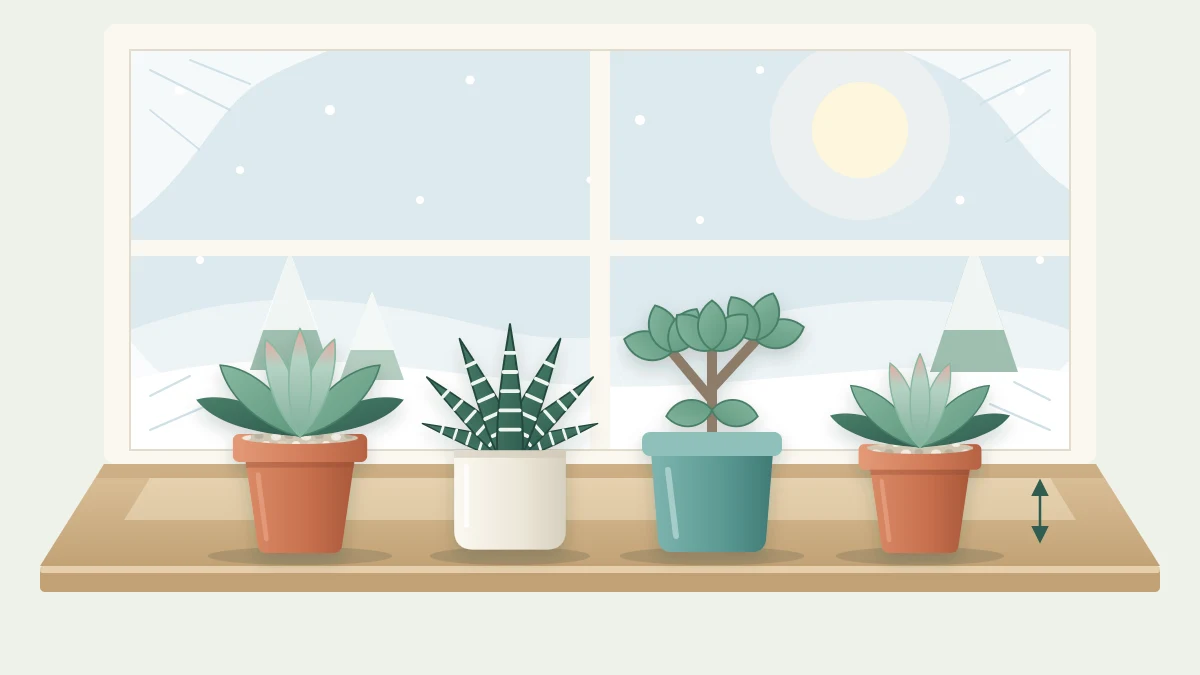
Winter is the season when indoor succulents most often lose their looks. The days are short, the sun sits low, and the same windowsill that kept a rosette tight and colorful in July now delivers a fraction of the light. Succulent care in winter is about working with that shortage instead of fighting it.
Three things change: how much light the plant gets, how fast its soil dries, and how extreme the temperatures become right at the window. Adjust for those and most succulents reach spring in good shape.
What winter changes for an indoor succulent
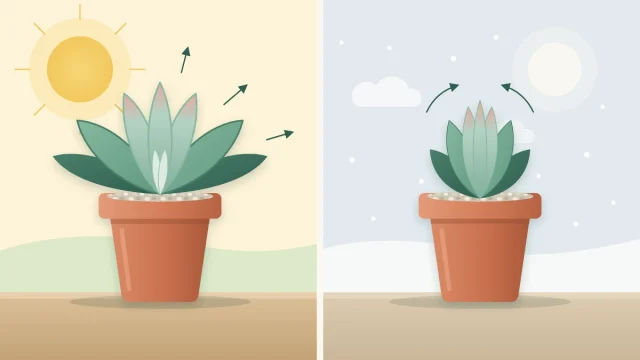
Light drives growth. With less of it, many succulents slow down or pause, use less water and stop making much new tissue. This slowdown is normal and is explained in the guide to succulent dormancy.
Trouble starts when care does not slow down with the plant. Summer-style watering in winter light leaves the soil wet for long periods, and a warm room encourages weak growth that the light cannot support.
Give plants the brightest spot you have
In the Northern Hemisphere, an unobstructed south-facing window usually provides the most winter light, followed by west and east. A plant that needed some distance from a south window in summer can often sit right in it during winter, since the sun is far weaker.
- Clean the window glass inside and out; a film of dirt removes light you cannot spare.
- Pull back sheer curtains and blinds during the day.
- Turn pots a quarter turn now and then so growth does not lean to one side.
- If no window is bright enough, a grow light is the usual supplement.
The guide on where to put succulents indoors compares window directions and positions in more detail.
Water far less, and still by checking
A succulent that is barely growing, in cool and dim conditions, draws very little water from its pot. Soil that dried within a week or so in summer may stay damp for several weeks in winter. There is no winter timetable that fits every plant, because pot size, soil, room temperature and light all change the answer.
Keep using the same test as the rest of the year: water only when the soil has dried all the way through, checked at depth with a finger or wooden skewer, and confirmed by the lighter weight of the pot. Then wait a little longer than you would in summer if the leaves are still firm. The full method is in the guide on how to water succulents.
- Water in the morning, so the surface has the day to dry.
- Use water at room temperature, not icy water straight from a cold tap.
- Empty the saucer or cachepot after the pot has drained.
- Do not fertilize while the plant is not growing.
Tip
Rooms with the heating running can be very dry, and small pots near a heat source may dry faster than you expect. That is why checking each pot works better than applying one rule to the whole collection.
Cold glass and heater blasts
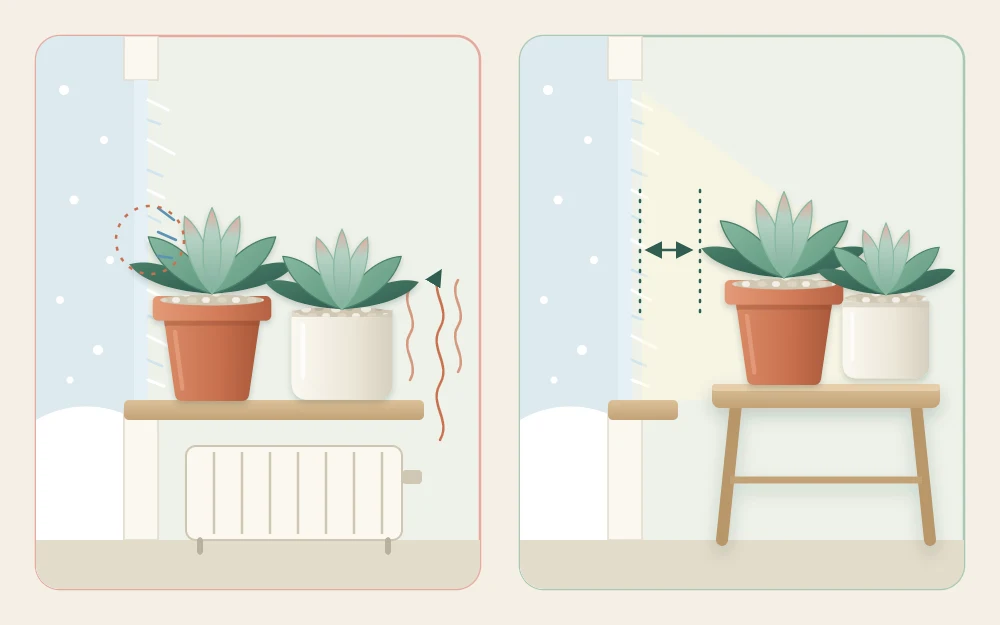
The air right at a window can be much colder than the room, particularly at night and behind closed curtains. Leaves that touch freezing glass can be damaged, with soft, translucent or dark patches appearing later. Cold damage looks similar to other problems, so consider where the plant has been standing before you decide on a cause.
- Set pots back 1 to 2 in (2.5 to 5 cm) from the glass, or onto a small stand, so no leaf touches the pane.
- On very cold nights, move plants off the sill, or make sure they are on the room side of the curtain.
- Keep plants out of the direct stream of a heating vent, radiator or space heater. Hot, dry air dehydrates leaves and encourages weak growth.
As a rough guide, many common succulents are comfortable at ordinary room temperatures and tolerate cooler nights, down to around 50°F (10°C), when their soil is dry. A bright, cool room often keeps them more compact than a warm, dim one.
Expect little growth and some stretching
Do not judge a succulent by its winter performance. Little or no new growth is expected, and some rosettes fade from their summer colors toward plain green as the light drops.
Some etiolation is also common: the center of the rosette lifts, new leaves sit farther apart and the plant leans toward the window. Stretched growth does not shrink back, but more light limits how far it goes. Keeping the plant cooler and on the dry side slows the growth that stretches, while extra water and fertilizer tend to speed it up.
Bringing outdoor pots inside before frost
Most common succulents, including echeverias, jade plants, aloes and kalanchoes, are not frost hardy and can be badly damaged by a single freezing night. Sempervivums (hens and chicks) and some sedums are the well-known exceptions and usually stay outdoors all winter in suitable climates, provided their soil drains well. Check the hardiness of your particular plant if you are unsure.
For tender plants, do not wait for the first frost warning. As a rough guide, start moving them when nights regularly fall toward 40 to 50°F (about 4 to 10°C).
- Inspect every plant for pests: leaf joints, undersides of leaves, the soil surface and the bottom of the pot.
- Remove dead leaves and debris, and wipe the pot.
- Keep the newcomers apart from your indoor plants for a few weeks if you can.
- Give them the brightest position available. Indoor light is far weaker than outdoor light, so expect some lower leaves to drop while they adjust.
- Cut back watering right away, since the pots will dry much more slowly inside.
Once they are in, they follow the same routine as the rest of your indoor succulents.
Easing back into stronger light in spring
As days lengthen, you will see new growth at the center of the rosettes and the soil drying faster. Let those signs, not the date, tell you when to water more often and when to resume any feeding.
Leaves grown in weak winter light burn easily. Whether you are shifting a plant to a sunnier window or back outdoors after the last frost, increase its exposure gradually over a couple of weeks, starting with bright shade or gentle morning sun. Tan or white patches that appear after a sudden move are commonly associated with sunburn and do not heal, though new growth will come in normally.
Frequently asked questions
How often should I water succulents in winter?
There is no fixed interval, because pot size, soil, room temperature and light all change how fast a pot dries. Expect much longer gaps than in summer. Water only after the soil has dried all the way through, checked at depth with a finger or skewer, and when the pot feels light.
Can succulents stay outside in winter?
Most common ones cannot where it freezes. Echeverias, jade plants, aloes and kalanchoes are not frost hardy and should come inside before cold nights arrive. Sempervivums and some sedums tolerate frost and usually stay out in suitable climates if their soil drains well. Check your specific plant's hardiness.
Why do succulents stretch in winter?
Stretching, or etiolation, is commonly associated with too little light, and winter daylight indoors is much weaker and shorter. Move the plant to your brightest window, clean the glass, and keep it cooler and drier so it grows less. A grow light can help where no window is bright enough.