Indoor Succulent Care: Growing Succulents Inside Year-Round
How a home differs from a succulent's natural setting, and what to change because of it: light, soil mix, pot size, watering, airflow and feeding, plus a short monthly check routine.
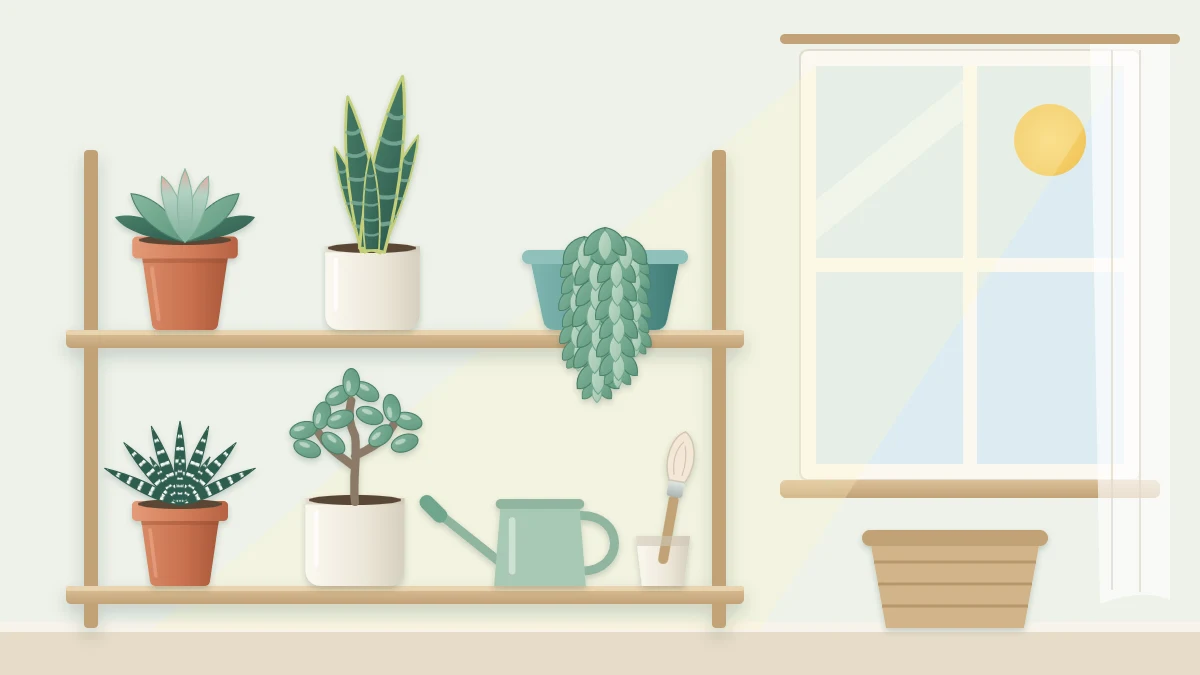
A succulent on a windowsill lives in a very different world from one on a sunny hillside. The light is weaker, the air barely moves, the temperature hardly changes, and the soil in its pot stays damp far longer. Good indoor succulent care is mostly a matter of adjusting for those four differences.
None of it is complicated. Once you see why a house is a tricky place for a plant built for sun and drought, the right choices about light, soil, pots and water follow almost by themselves.
How indoors differs from a succulent’s natural setting
Most succulents come from open, bright places where rain is occasional and the ground drains fast. Their thick leaves and stems store water to carry them through dry spells. Inside a home, four things change at once:
- Far less light. Even a bright room delivers a small share of the light available outdoors, and it comes from one side.
- Still air. There is no breeze to dry the leaves and the soil surface.
- Steady warmth. Rooms stay at much the same temperature day and night, summer and winter, so the plant gets few seasonal signals.
- Soil that dries slowly. With less light, less air movement and less growth, a pot holds moisture for a long time.
The practical result is a plant that uses water slowly and wants every bit of light you can give it. Each section below is a response to that.
Give it the brightest spot you have
Light is the limit for nearly every indoor succulent. A sill in your sunniest window is usually the right place, and a position a few feet back is a compromise that only some kinds accept. When light is too low, plants stretch: stems lengthen, leaves space out and rosettes flatten or lean. This is called etiolation, and the stretched growth does not shrink back.
If your home has no bright window, a lamp made for plants can fill the gap. For help matching plants to sills, tables and shelves, see the guide on where to put succulents indoors.
Use a grittier mix and a smaller pot
Because indoor soil dries slowly, the mix and the pot have to do more of the work. Three choices help:
- A fast-draining mix. A bagged succulent mix is a starting point; many growers open it up further with pumice or perlite so water runs through and air reaches the roots. Clemson Cooperative Extension explains what the common ingredients in indoor mixes do.
- A pot with a drainage hole. Without one, extra water has nowhere to go and collects around the roots. If you like a decorative container, use it as a cachepot: keep the plant in a plain pot with a hole and lift it out to water.
- A snug pot. A pot only slightly wider than the root ball holds less wet soil than an oversized one, so it dries sooner. Unglazed terracotta also lets moisture escape through its walls.
Water only after the soil has dried
Indoors, the usual mistake is watering by habit. A plant in modest light simply does not use water quickly, and roots that sit in damp mix for long stretches are prone to rot. Many indoor succulents need water much less often than the same plants would outdoors in summer, and less again in winter, when light is weakest and growth slows.
So check before you water. Push a finger or a wooden skewer down into the soil; if it comes out damp or with dark mix clinging to it, wait. Lift the pot too, since a dry pot feels noticeably lighter. When the soil has dried through, water thoroughly until it runs from the drainage hole, then empty the saucer. That soak and dry approach is laid out step by step in the guide on how to water succulents.
As a sense of scale only: a small terracotta pot in a warm, sunny window might dry within a week or so, while the same plant in a cool, dim room can stay damp for several weeks. The soil decides, not the calendar. Their tolerance for dry soil also makes succulents forgiving when you travel, and the guide to succulent care while on vacation explains how to prepare.
Add air movement and turn the pots
Stale, humid air keeps soil wet and gives pests and mold an easier time. You do not need a wind tunnel. Spacing pots so they do not touch, opening a window in mild weather or running a small fan on low across the room is enough to keep air moving.
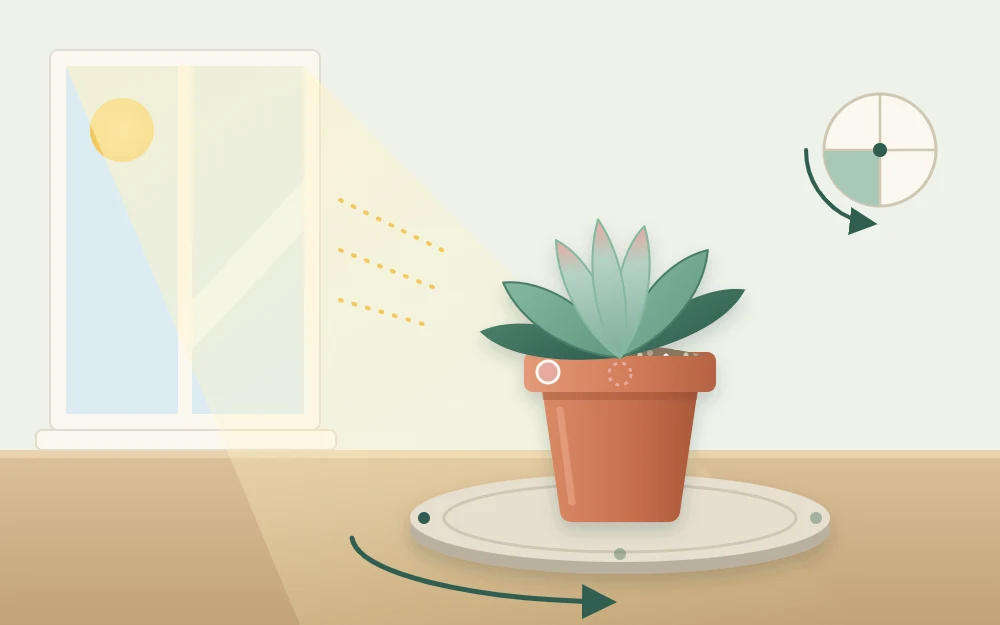
Because indoor light comes from one direction, plants lean toward the glass. Give each pot a quarter turn every time you check the soil and growth stays more even.
Go lightly with fertilizer
Succulents growing in indoor light are slow, and slow plants need little feeding. Too much fertilizer in low light tends to push weak, stretched growth rather than sturdy leaves. If you feed at all, do it during the brighter months when the plant is visibly growing, dilute well below the label rate for other houseplants, and follow the product label.
Which kinds cope best indoors
Some succulents accept indoor light far more readily than others. As a rough guide:
- More tolerant: haworthias, gasterias, snake plants and jade plants generally manage in bright indoor positions without losing their shape quickly.
- More demanding: echeverias and other tight rosettes, along with most colorful sun-stressed kinds, need a very bright sill or a plant lamp to stay compact.
- Better outdoors: hens and chicks (sempervivum) are cold-hardy plants that rarely thrive for long inside.
If you are choosing a first plant with your rooms in mind, the list of the best succulents for beginners describes forgiving options and what each one needs.
A short monthly check
Once a month, spend a few minutes looking over each plant properly. Small problems are much easier to deal with early.
- Look at the shape. New growth that is paler, longer or leaning suggests the plant wants more light.
- Feel the leaves. Firm and plump is the normal state. Soft, wrinkled or translucent leaves each have several possible causes, so check soil moisture at depth before you act.
- Inspect for pests. Look in the leaf joints and under the leaves for white cottony tufts or fine webbing. Isolate any plant that looks suspect.
- Tidy up. Remove dried leaves from the base and from the soil surface.
Frequently asked questions
Can succulents live indoors all year?
Many can, as long as they get enough light. Haworthias, gasterias, snake plants and jade plants generally adapt well to a bright indoor position. Tight rosette types such as echeveria need a very sunny sill or a lamp made for plants, and cold-hardy hens and chicks usually do better outside.
Do indoor succulents need less water than outdoor ones?
Usually, yes. Lower light, still air and slower growth mean a pot indoors dries far more slowly than one outside in summer sun. Rather than following a calendar, check that the soil has dried through with a finger or wooden skewer, and expect the gaps between waterings to lengthen in winter.
Should I mist my indoor succulents?
Misting is not a useful way to water them. It wets the leaves and the top of the soil without reaching the roots, and moisture sitting in a rosette in still indoor air can encourage rot. Water the soil thoroughly when it has dried through, and let the excess drain away.