Succulent Dormancy: How Growth Changes With the Seasons
Why succulents slow down at certain times of year, how warm-season and cool-season growers differ, and what to change in watering, feeding and repotting while a plant rests.
A succulent that grew steadily for months and then seems to stop is not necessarily in trouble. Most succulents grow in bursts, with an active season and a quieter one, and succulent dormancy is simply the name for that quieter stretch.
Understanding the pattern clears up a lot of confusing advice, including why some guides talk about “summer growers” and “winter growers”. It also changes how you care for the plant, because a resting succulent uses far less water and no fertilizer.
What dormancy means for a succulent
In the wild, succulents live through seasons that are too dry, too hot or too cold for growth. They cope by slowing down: they stop making new leaves, draw on the water stored in their tissues and wait for better conditions.
For most houseplant succulents, “dormancy” is a strong word for what happens. The plant rarely shuts down completely. It is more accurate to think of a dial that turns between active growth and rest, with a lot of in-between. That is why this guide mostly talks about a plant slowing or resting.
Warm-season and cool-season growers
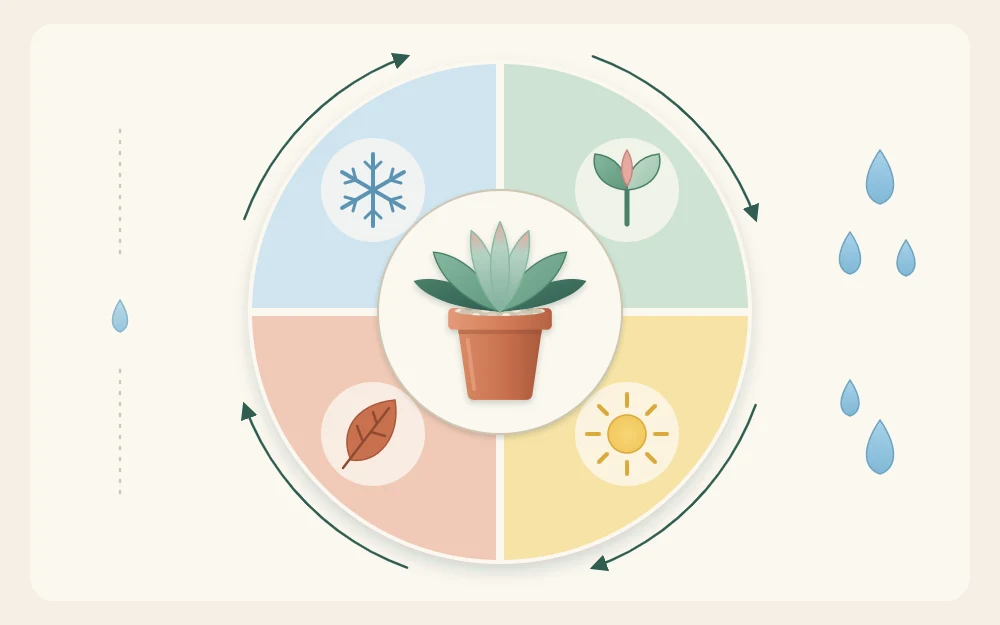
Many popular succulents do most of their growing in the warm, bright months and slow down in winter. Echeverias, jade plants, most sedums, aloes and many kalanchoes are commonly placed in this group.
Others come from regions with mild, damp winters and hot, dry summers. They grow most in the mild, cool parts of the year, typically fall and spring, and rest in summer heat. Aeoniums are the best-known example, and many haworthias lean the same way.
The common labels are a little misleading. “Winter growers” do not grow in freezing weather; they grow in cool, mild conditions and slow down when it gets either hot or truly cold. “Summer growers” may also pause during the hottest weeks.
Good to know
Lists that sort succulents into summer and winter growers often disagree with one another, and plants grown indoors do not always follow them. Treat a list as a starting hint and let your own plant’s behavior decide.
Signs that a plant is resting
These signs are commonly associated with a rest period, especially when several appear together at a time of year that fits:
- No new growth. The center of the rosette or the stem tips stay the same for weeks.
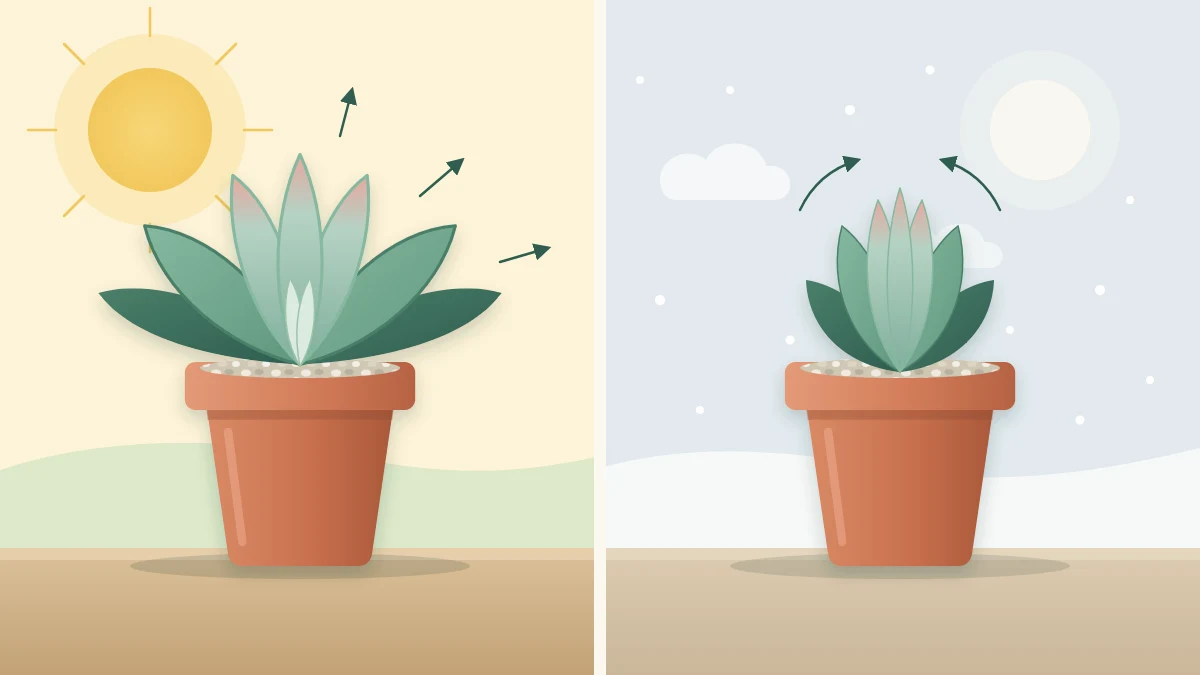
- Rosettes closing. Aeoniums and some other rosette plants pull their leaves inward into a tighter cup, which reduces the surface exposed to sun and dry air.
- Soil that dries more slowly. A plant that is not growing takes up less water, so the same pot stays damp for longer than it did a few months earlier.
- Some lower leaves drying. A few old leaves may be shed as the plant draws on its reserves.
Resting or struggling?
A pause in growth has several possible causes, and rest is only one of them. Low light, a root problem, a recent move or repotting, and pests can all stall a plant.
A resting plant looks stable. Its leaves stay firm, its color holds and nothing gets worse from one week to the next. A struggling plant keeps changing: leaves turn soft or translucent, the stem darkens, growth stretches toward the window, or leaves drop from the upper part of the plant.
If you are unsure, check three things before you assume dormancy: whether the soil is still wet at depth, whether the roots look healthy, and whether the light or temperature around the plant changed recently.
How care changes during rest
Water less
A plant that is not growing uses little water, and wet soil around idle roots is the main risk of the rest period. The method does not change, only the interval: you still check that the soil has dried through before watering, and you will find that the gaps become much longer. The guide on how to water succulents explains how to check. For winter in particular, see the advice on caring for succulents in winter.
Do not stop completely for months unless you know the plant needs it. Small pots and thin-leaved plants can dry out too far, so watch for leaves that wrinkle and stay wrinkled.
Hold fertilizer
A resting plant cannot use extra nutrients, and they build up in the soil instead. Save any feeding for the period of active growth; the guide to fertilizing succulents covers the timing.
Avoid repotting if you can
Roots that are not growing are slow to recover from disturbance and slow to dry the fresh mix around them. The start of the active season is the better time. A real problem, such as suspected rot or pests in the soil, is a reason to repot whatever the season.
Leave the plant in peace
Keep the light as good as you can and resist the urge to fix a plant that is only resting.
Why indoor plants blur the pattern
Indoors, the seasonal signals are muddled. Room temperature stays fairly steady all year, so the plant never gets a clear cold or hot season. Meanwhile, winter daylight through a window is much weaker and shorter than summer daylight.
The result is often a plant that keeps growing slowly in a warm room without enough light to support it, which shows up as pale, stretched growth. Cooler conditions and restrained watering in the darker months help keep growth compact. A cool-season grower, on the other hand, may barely rest at all in an air-conditioned home in summer.
Learn your own plant’s rhythm
Because lists and indoor conditions are both unreliable, observation is the most dependable guide.
- Note when new leaves appear and when they stop. A line on a calendar or a dated snapshot is enough.
- Notice how long the soil takes to dry at different times of year.
- Watch the shape of the rosette: open and flat, or closed and cupped.
- Adjust care to what the plant is doing now, not to the month.
After one full year you will know when each of your plants wakes up and when it slows down, and that knowledge is worth more than any chart.
Frequently asked questions
How do I know if a succulent is dormant or dying?
A resting plant stays stable: leaves remain firm, color holds and nothing worsens from week to week. A plant in trouble keeps changing, with soft or translucent leaves, a darkening stem or leaves dropping from the top. Check soil moisture at depth, the roots and any recent changes before deciding.
Do succulents go dormant indoors?
They often slow down, but the pattern is less clear than outdoors. Steady room temperatures remove the cold or hot signal, while winter light through a window is much weaker. Many indoor succulents keep growing slowly in winter and stretch as a result, so watch the plant, not the calendar.
Should I water a dormant succulent?
Yes, but much less often. A resting plant uses little water, so the soil takes longer to dry and the gaps between waterings grow. Keep checking that the soil has dried through first, and water if leaves wrinkle and stay wrinkled. Small pots usually need more attention than large ones.