Jade Plant Care: Light, Water and Pruning Basics
How to grow a sturdy, tree-like jade plant: the light it needs, how to tell when to water, why a heavy pot matters, how to prune for a thick trunk, and what to check when leaves drop.
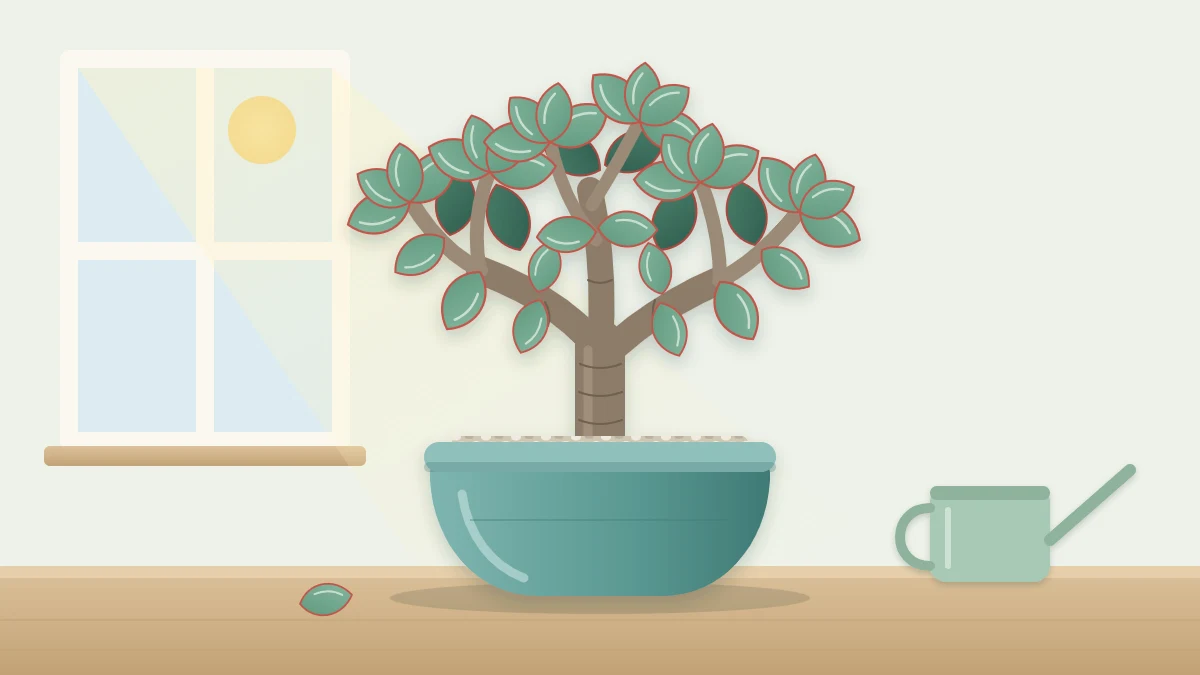
A jade plant is one of the few houseplants that can stay with you for decades. Given light and patience, the small cutting-sized plant from the shop slowly thickens into a miniature tree with a woody-looking trunk and a rounded crown of glossy leaves.
Good jade plant care comes down to three things: enough light to keep growth sturdy, restraint with the watering can, and a little pruning to build a strong shape. This guide takes them in that order.
Meet the jade plant
Jade plant, Crassula ovata, is a succulent shrub native to South Africa. It has thick, fleshy stems and smooth oval leaves held in opposite pairs. Both store water, which is why the plant tolerates dry spells so well.
Growth is slow and tree-like. The stems thicken and turn brown and bark-like with age, and a well-kept plant can live for many years and be handed on. See University of Wisconsin Extension for more background.
Light: bright, with some direct sun
Jade plants want bright light, and indoors that generally means a sill or a spot right beside a sunny window with some direct sun each day. In strong light the leaves stay close together, the stems thicken and the leaf edges often flush red. That red rim is a normal response to sun, not a problem.
In low light a jade becomes lanky: long, thin stems, widely spaced leaves and branches that droop under their own weight. If yours looks that way, move it closer to the glass gradually, since leaves used to dim conditions can scorch in sudden hot sun. The guide to succulent light requirements explains how to judge a spot.
Water: let the soil dry
A jade plant is far more easily harmed by wet soil than by dry soil. Its roots are prone to rot when the mix stays damp, particularly in cool, dim conditions. Water thoroughly, let the excess drain from the drainage hole, empty the saucer, and then wait until the soil has dried through before you water again. See how to water succulents for the full method and the ways to test the soil at depth.
The leaves give you a cue. Well-watered leaves are firm and plump. Leaves that look slightly wrinkled or feel soft and thin suggest it is time to check, but do check rather than assume. If the soil is dry all the way down, the plant is probably thirsty. If the soil is still wet and the leaves are soft, the roots may be struggling, and more water would make matters worse.
Expect the plant to use much less water in winter, when light is weak and growth slows.
A heavy top needs a heavy pot
All that water stored in the leaves and stems makes a mature jade surprisingly heavy above the soil, while its root system stays fairly small. Tall plants in light plastic pots tip over easily.
Choose a weighty pot with a wide base and a drainage hole; ceramic or terracotta works well. Keep the pot only a little wider than the root ball, because a large volume of mix stays wet for too long. Use a gritty, fast-draining mix. Jades are comfortable slightly root-bound and need moving up only occasionally; when the time comes, the guide on how to repot succulents walks through it.
Tip
If a jade leans, look at the light before you reach for a stake. A plant that is turned regularly and pruned to balance its crown usually stands on its own.
Pruning to shape and thicken
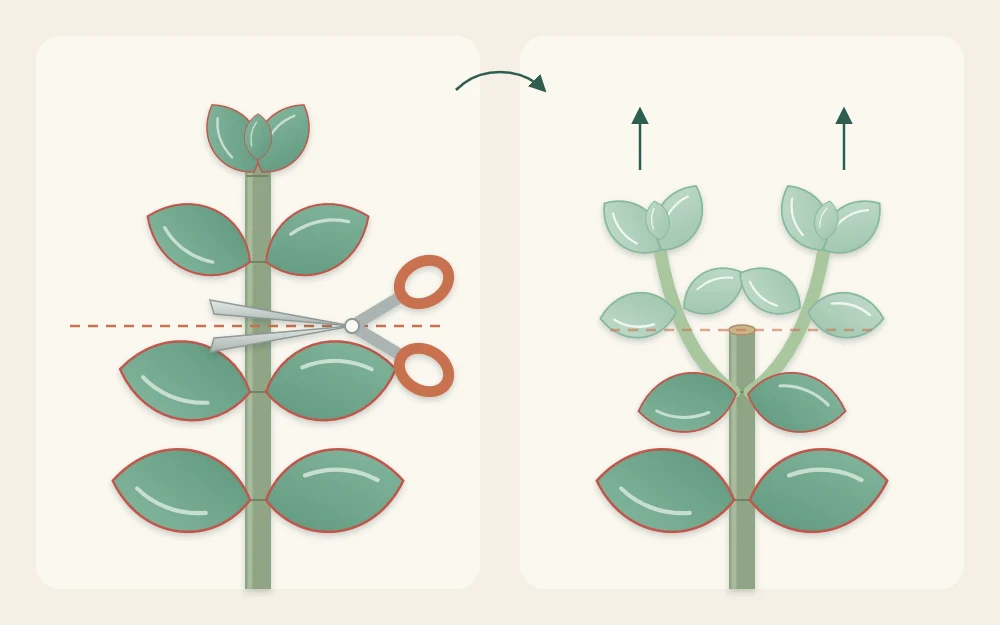
Pruning is what turns a floppy jade into a sturdy little tree. Each time you shorten a stem, the plant usually responds by producing new shoots just below the cut, often one from each side. More branches mean a fuller crown, and a shorter, lighter top lets the trunk thicken and carry the weight.
The best time is spring or early summer, when the plant is growing and recovers quickly.
- Look at the whole plant. Find stems that are long, drooping or crossing, and decide where you would like branching.
- Pinch soft tips. On young plants, nip out the newest pair of tiny leaves at a stem tip with your fingernails. This is enough to make the stem branch.
- Cut thicker stems above a leaf pair. Use clean, sharp scissors or pruners and cut just above a pair of leaves or one of the ring-like marks on the stem.
- Go gradually. Remove no more than about a quarter of the plant at a time, then let it respond before you cut again.
- Let the cuts dry. The cut ends seal over within a few days. Keep them dry until they do.
Why leaves drop
A jade sheds an old leaf now and then, usually from the lower or inner branches, and that is normal. Many leaves falling in a short time has several possible causes, and the leaves alone cannot tell you which one applies:
- soil that has stayed wet, especially if fallen leaves are soft or yellow;
- soil left dry for a very long stretch, often with shriveled leaves;
- too little light, commonly after a move to a dimmer room;
- a sudden change, such as a cold draft, a hot vent or a new location.
Check the soil at depth, think about what changed recently and look at the stem base. The guide to succulent leaves falling off works through the checks in more detail.
Pests to watch for
Mealybugs are the pest most often found on jade plants. They look like small white cottony tufts tucked into the joints where leaves meet the stem. Inspect those joints whenever you check the soil.
If you find them, isolate the plant, then wipe or pick the insects off by hand and repeat the inspection over the following weeks, since a few are easily missed. If you decide to use a pesticide, check that the label lists both your pest and your plant, and follow the label exactly.
Jade plants, pets and children
The ASPCA lists jade plant as toxic to dogs, cats and horses; the ASPCA entry for jade plant has the details.
Good to know
Keep a jade where pets and small children cannot chew it, and pick up fallen leaves and prunings promptly. If a pet or child eats part of the plant, contact a veterinarian or poison control.
Frequently asked questions
How do I make my jade plant's trunk thicker?
Thickening takes time, strong light and pruning. Give the plant bright light with some direct sun, and shorten long stems above a leaf pair during spring or early summer. A shorter, lighter crown with more branches lets the trunk bulk up gradually over several growing seasons.
Why are the edges of my jade plant's leaves turning red?
Red leaf edges are a common response to strong light and are not usually a concern on an otherwise firm, healthy plant. The color often fades if the plant moves to a dimmer spot. If reddening comes with shriveled leaves, check whether the soil has been dry for a long time.
Is jade plant toxic to cats and dogs?
The ASPCA lists jade plant as toxic to dogs, cats and horses. Keep it out of reach of pets and small children, clear away fallen leaves and prunings, and contact a veterinarian or poison control promptly if a pet or child eats any part of the plant.