Succulent Leaves Falling Off: Why It Happens
Sort succulent leaf drop by what the fallen leaves look like, whether mushy, dry or perfectly healthy, then use soil, stem and root checks to find the likely cause.
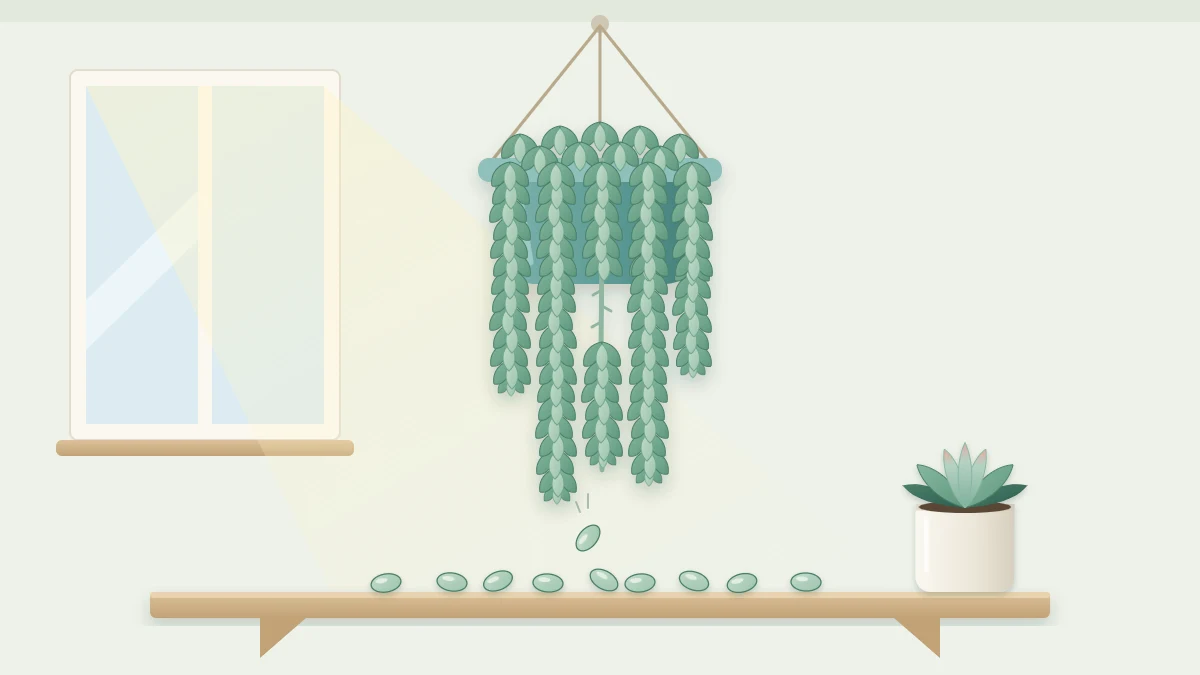
You brush past the pot and three leaves land on the shelf, or you find a small pile under the plant in the morning. Succulent leaves falling off is one of the most common worries for new growers, and it does not have a single explanation. Too much water, too little water, a knock, a sudden change in conditions and ordinary aging can all end with leaves on the table.
The quickest way to sort them is to stop looking at the plant for a moment and look at the leaves that fell. Their color, firmness and where they came from narrow things down considerably.
Read the fallen leaves first
Pick up a few dropped leaves and note how they feel and where on the plant they came from.
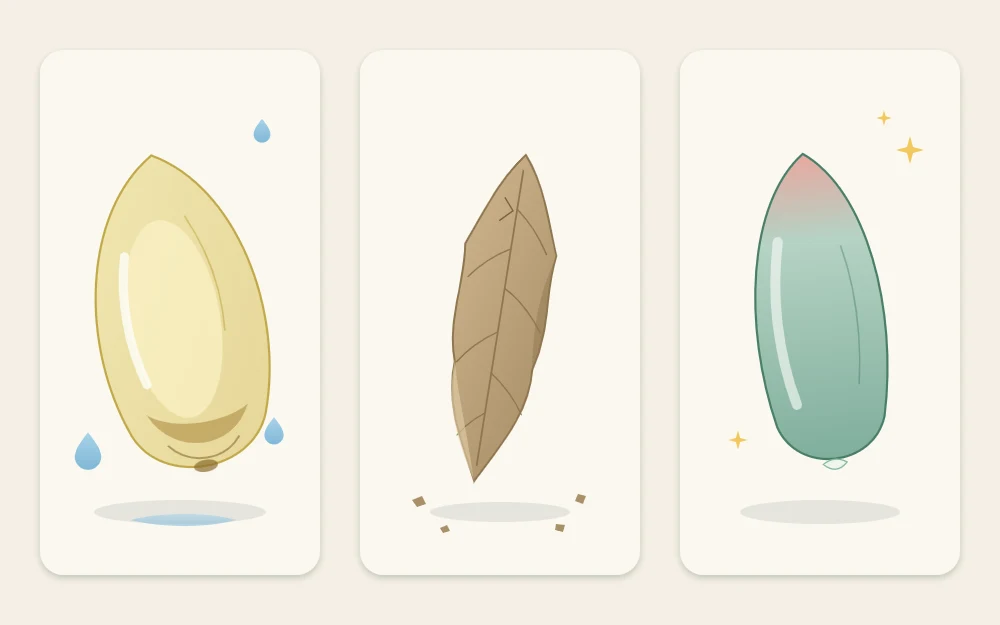
| Fallen leaves are | Often associated with | Check next |
|---|---|---|
| Swollen, mushy, yellow or translucent | Excess water or soil that stays wet | Soil at depth, stem base, roots |
| Dry, flat and papery, from the base | Normal aging, or drought if many go at once | How many, how fast, and the upper leaves |
| Firm, green and healthy-looking | Handling, a bump, a fragile species | Where the pot sits and what touches it |
| Mixed, many at once after a change | A move, cold draft, heat or repotting | What changed in the past week or two |
Plump, mushy or translucent leaves
Leaves that are swollen, pale yellow or slightly see-through, and that drop at the lightest touch, are commonly associated with excess water. The lower leaves usually go first.
That is one possibility, not a verdict. Leaves damaged by cold can also turn soft and translucent before falling. Three checks help:
- Soil. Push a skewer toward the bottom of the pot. Damp soil long after watering supports the excess-water explanation.
- Stem. Press the base gently. It should be firm. Dark, soft or wet tissue suggests rot has reached the stem.
- Roots. If the stem is doubtful, slide the plant out. Dark, limp roots and a sour smell fit the same picture.
If the checks agree, stop watering and let the soil dry through while you read the guide to an overwatered succulent, which covers what to do next. If the soil is dry and the plant sat near a cold window, cold is the more likely cause.
Dry, papery leaves at the base
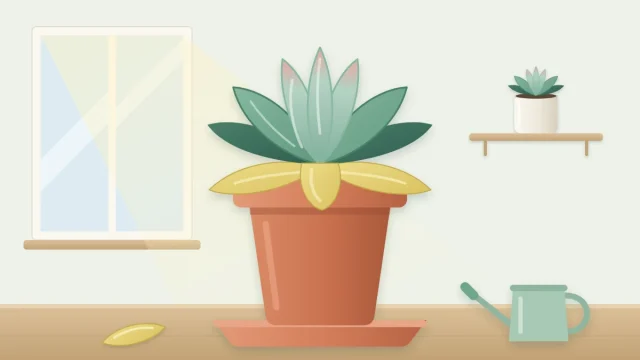
A thin, dry, tan or brown leaf that comes away from the very bottom of the plant is usually an old leaf the plant has finished with. Succulents grow from the center or the tip and retire leaves from the base, drawing the water and nutrients back out first. One or two at a time, with firm growth above, is normal and needs no response.
The same kind of leaf in larger numbers can point to drought. When a succulent goes without water for a long time it uses up its lower leaves faster to keep the growing point alive. Signs that fit: the remaining leaves are wrinkled, thinner than usual or soft in a deflated way, the soil is dry to the bottom, and the pot feels very light. The guide to an underwatered succulent explains how to confirm this and bring the plant back gradually.
Healthy-looking leaves that were knocked off
If the fallen leaves are firm, green and no different from those still attached, the plant may be fine and the cause mechanical. Some succulents hold their leaves very loosely. Burro’s tail is the usual example: its bead-like leaves detach at a brush of a sleeve. Ghost plant and several other trailing or stacked species behave similarly.
Look at where the pot sits. A plant beside a walkway, behind a curtain that gets drawn daily, on a sill a pet uses, or one that is turned and handled often will shed more.
Tip
For loose-leaved species, choose a spot where nothing brushes the plant, and move it by holding the pot, not the stems. When it needs repotting, working with the soil dry makes the plant easier to handle. See University of Wisconsin Extension on burro’s tail for more detail on that plant.
Firm leaves can also drop from a plant under stress, so do not stop here if the loss continues with no one touching the pot. Run the soil and stem checks anyway.
Sudden drop after a move, cold draft or heat
A succulent that sheds a number of leaves within days, when it had been stable, has often experienced an abrupt change. Common ones include being carried home from a store, a move between indoors and outdoors, a spot beside an open winter window or an exterior door, a place directly over a heating vent, a hot car, or a recent repot.
The leaves in this case can look healthy, or show damage that matches the cause: soft and glassy after cold, dry and scorched after intense heat or sun. Think back over the past week or two for what changed.
If a change explains it and the stem is firm, the usual course is to give the plant stable conditions in bright indirect light, hold off on extra water or fertilizer, and wait. Reacting with several more changes tends to prolong the shedding.
What to do in each case
- Soft leaves, wet soil: withhold water, check the stem and roots, and improve drainage if the mix stays wet.
- Dry leaves, a few at a time: nothing. Clear the fallen ones away so they do not hold moisture against the stem.
- Dry leaves in number, dry soil: water thoroughly and return to judging by how dry the soil is at depth.
- Firm leaves, bumped: relocate the pot and handle it less.
- Sudden drop after a change: keep conditions steady and watch the new growth.
When a bare stem is only cosmetic
Leaves do not regrow on the bare part of a stem. Over time many succulents develop a length of naked stem below a healthy rosette or cluster simply through ordinary aging. If that stem is firm and dry and the top is growing, the plant is healthy; the change is one of appearance only.
A firm, healthy fallen leaf from some species can root and form a new plant if left on dry mix, though results vary. A bare stem is a concern only when it is soft, dark, shriveled along its length, or when the top above it is declining. For other symptoms appearing alongside leaf drop, the overview of common succulent problems lists what to check.
Frequently asked questions
Why do succulent leaves fall off when I touch them?
It depends on the leaves. If they are swollen, pale and soft, excess water is one common explanation and the soil is worth checking at depth. If they are firm and green, the species may simply hold its leaves loosely, as burro's tail and ghost plant do.
Will leaves grow back on a bare succulent stem?
Not on the bare section itself. New leaves form at the growing tip, and some species also send out side shoots or offsets lower down over time. A firm bare stem under a healthy top is an appearance issue, not a sign that the plant is failing.
Is it normal for a succulent to lose its bottom leaves?
Yes, when it happens slowly. Old leaves at the base dry to a thin, papery state and come away as new ones form at the center. It becomes worth investigating when many leaves go at once, or when the leaves that fall are soft and swollen instead of dry.