Best Pots for Succulents: Size, Material and Shape
How to choose a pot for a succulent: why a drainage hole comes first, how big the pot should be, how terracotta, glazed ceramic and plastic differ, and how the pot changes watering.
The pot you choose does more than hold the plant upright. It decides how much soil surrounds the roots, how quickly that soil dries and where extra water goes, and all three shape how the plant grows.
The best pots for succulents share a few plain features: a drainage hole, a size close to the root ball and a material that suits your conditions. Looks come after those. This guide takes each choice in turn so you can judge any container you pick up.
Start with a drainage hole
A drainage hole is the one feature that is hard to do without. It lets extra water leave the pot, so you can water thoroughly and know the roots will not be left sitting in a pool at the bottom.
Turn the pot over before you buy it. One hole in the center is enough for a small pot. Wider pots and bowls drain better with several. If the hole is large, a piece of mesh or a shard laid loosely over it keeps the mix from washing out without blocking the flow.
Containers with no hole can be made to work, but they need a different approach and more care with water. That is covered in the guide to pots without drainage holes.
Choose a size close to the root ball
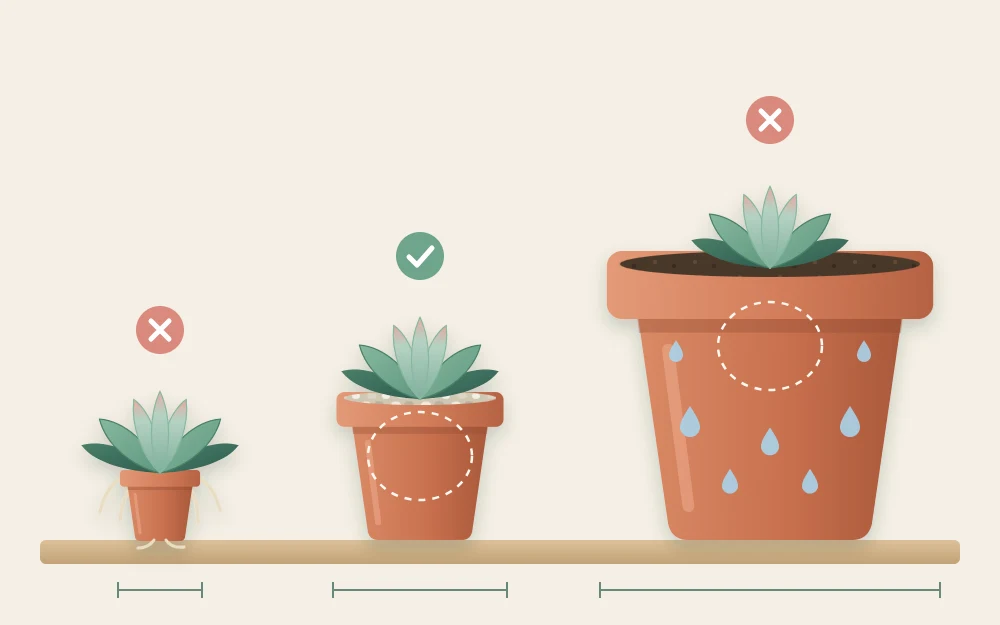
For most succulents, a pot roughly 1 to 2 in (2.5 to 5 cm) wider than the root ball is a good fit. That leaves room for a season or two of growth without surrounding the roots with a large mass of unused soil.
Size matters because soil that has no roots in it dries slowly. In an oversized pot, the plant draws water from only a small part of the soil, and the rest stays wet for a long time. Roots that sit in wet soil are more prone to rot.
A pot that is too small has its own drawbacks. It dries out very fast, the plant can become top-heavy and tip over, and roots circle the inside or grow out of the hole. A tight fit is not an emergency for a succulent, but it is a signal to move up one size.
Compare pot materials
Material changes how quickly a pot dries, because some materials let moisture pass through the walls and others seal it in.
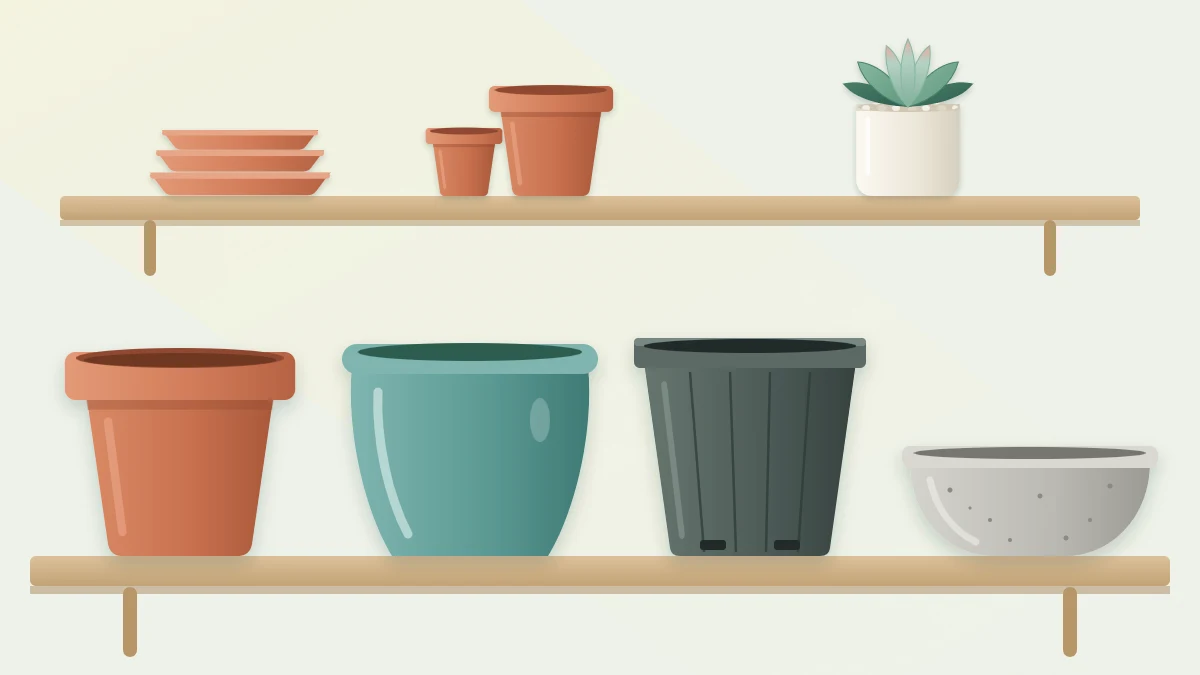
| Material | How fast it dries | Weight | Good for |
|---|---|---|---|
| Unglazed terracotta | Fast: moisture escapes through the walls | Medium to heavy | Beginners, humid or cool homes, plants prone to rot |
| Glazed ceramic | Slower: the walls are sealed | Heavy | Bright, warm spots and tall, top-heavy plants |
| Plastic | Slower: the walls are sealed | Light | Hot, dry conditions, hanging pots, use inside a cachepot |
| Concrete or unglazed stoneware | Moderate, varies with thickness and finish | Very heavy | Outdoor displays and large, stable plantings |
None of these is wrong. Unglazed terracotta is forgiving because it helps the soil dry and shows moisture as a darker color on the outside. Glazed ceramic and plastic hold moisture longer, which can help in hot, dry air and calls for a grittier mix and longer waits in a cool or dim room.
Metal and glass are harder to use. Metal can heat up quickly in direct sun, and most glass containers have no hole, so treat both as decorative outer pots.
Shallow or deep: match the roots
Many small rosette succulents, such as echeveria and hens and chicks, have fine roots that stay fairly near the surface. They suit shallow pots and bowls, where there is no deep layer of soil staying wet below the roots.
Other plants need more depth. Some haworthias and aloes grow thick, fleshy roots that reach downward, and tall plants such as a mature jade need a deeper, heavier pot to stay upright. Trailing kinds usually have modest roots and do well in a pot that is not deep but is stable enough to balance the stems hanging over the edge.
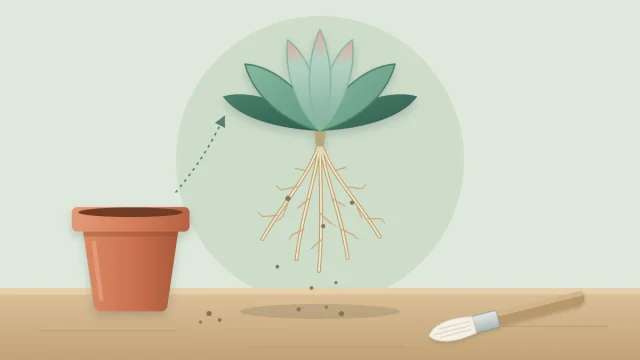
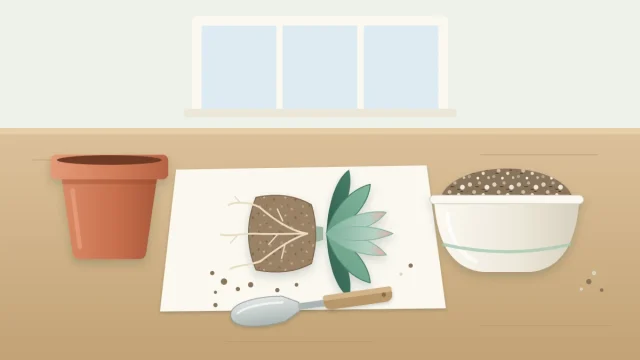
The simplest way to judge is to look at the roots when you take the plant out of its old pot. Choose a new pot about as deep as the root ball plus a little room beneath it. The process is explained in the guide on how to repot succulents.
Saucers and cachepots
A saucer protects furniture, but it should not become a reservoir. After watering, let the pot drain for a few minutes, then tip out whatever has collected. Standing water keeps the bottom of the soil wet.
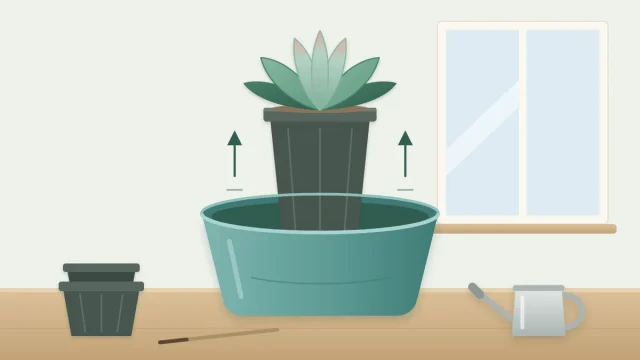
A cachepot is a decorative outer pot with no hole. It lets you use a container you like while the plant stays in a plain pot that drains. To make it work:
- Pick a cachepot slightly wider than the inner pot so you can lift the plant out easily.
- Take the inner pot to the sink to water it, and let it drain fully before you put it back.
- Check the bottom of the cachepot now and then for trapped water.
- Remember that the outer pot blocks airflow around the inner one, so the soil may dry more slowly.
How the pot changes watering
Because size and material control drying, two identical plants in different pots will not need water at the same time. A small unglazed terracotta pot in a sunny window may dry in days, while a large glazed pot in the same spot can stay damp at depth for much longer.
That is why it helps to check each pot on its own instead of watering a whole shelf together. Push a finger or a wooden skewer down into the soil, feel the weight of the pot, and water only the ones that have dried through.
Pot and soil also work as a pair. If you prefer sealed materials such as glazed ceramic, use a grittier, faster-draining mix to balance them. The guide to succulent soil explains how to adjust a mix for the pot and for your home.
A quick checklist before you buy
- Drainage: at least one open hole in the base.
- Width: only a little wider than the root ball.
- Depth: matched to the roots, shallow for fine-rooted rosettes and deeper for thick-rooted or tall plants.
- Material: faster-drying terracotta if your home is cool, humid or dim; sealed materials if conditions are hot and dry.
- Stability: heavy and wide enough at the base that the plant will not tip.
- Saucer: one that is easy to empty.
If a pot meets those points, its color and style are entirely up to you.
Frequently asked questions
What size pot does a succulent need?
A pot a little wider than the root ball suits most succulents, roughly an inch or two of extra width as a guide. Much larger pots hold soil the roots cannot reach, which stays wet for a long time. Move up one size at a time as the plant grows.
Are terracotta pots better for succulents?
Unglazed terracotta is a forgiving choice because moisture escapes through its walls, so the soil dries faster. That helps in cool, humid or dim homes. It is not the only option: glazed ceramic and plastic work well too, provided they have a drainage hole and you allow for slower drying.
Can I plant several succulents in one pot?
Yes, if they have similar light and water needs and the container drains. A shared bowl holds more soil than a single small pot, so it tends to dry more slowly. Use a gritty mix, choose a shallow container, and check moisture at depth before watering.