Succulent Roots: How to Check Them and What Healthy Roots Look Like
When it makes sense to look at a succulent's roots, how to slide the plant out without damage, and how to read what you find, from firm pale roots to dark soft ones.
At a glance
What you need
- Paper or a tray
- Soft brush
- Wooden skewer or chopstick
- Thin blunt tool for loosening the pot edge
- A little dry fast-draining mix
Most of what goes wrong with a succulent starts below the soil line, where you cannot see it. Looking at succulent roots is one of the most useful checks you can make, because leaves often show trouble late and in ways that overlap: soft leaves, wrinkled leaves and yellow leaves can each come from more than one cause.
A root check is also a disturbance, so do it with a reason and a light hand.
When a root check is worth it
A plant that is growing, firm and holding its color does not need to be pulled out of its pot for inspection. Save the check for situations where the top of the plant is giving you unclear signals:
- The plant is declining despite good light. Leaves keep softening, yellowing or shriveling and nothing you change above the soil helps.
- The soil never seems to dry. A skewer pushed to the bottom still comes out damp long after watering.
- The plant wobbles. It rocks in the pot or lifts with almost no resistance, which can mean few working roots.
- Roots are showing. They are coming out of the drainage hole or pushing the plant upward.
None of these tells you what is wrong on its own. They only tell you that the answer is probably in the pot.
How to slide the plant out
Check when the soil is dry. Dry gritty mix falls away from roots easily, while wet mix clings and pulls fine roots off with it. If you suspect the soil is staying wet, do not wait for it to dry first; go ahead and look.
- Spread paper or a tray on a table so you can see what falls out.
- Squeeze the sides of a plastic pot, or run a thin blunt tool around the inside edge of a rigid one.
- Tip the pot sideways, support the plant at the base of the stem with your fingers, and let the root ball slide into your hand. Push gently through the drainage hole with a skewer if it sticks.
- Do not pull on the leaves or the top of the stem. Many succulents drop leaves or snap at a light tug.
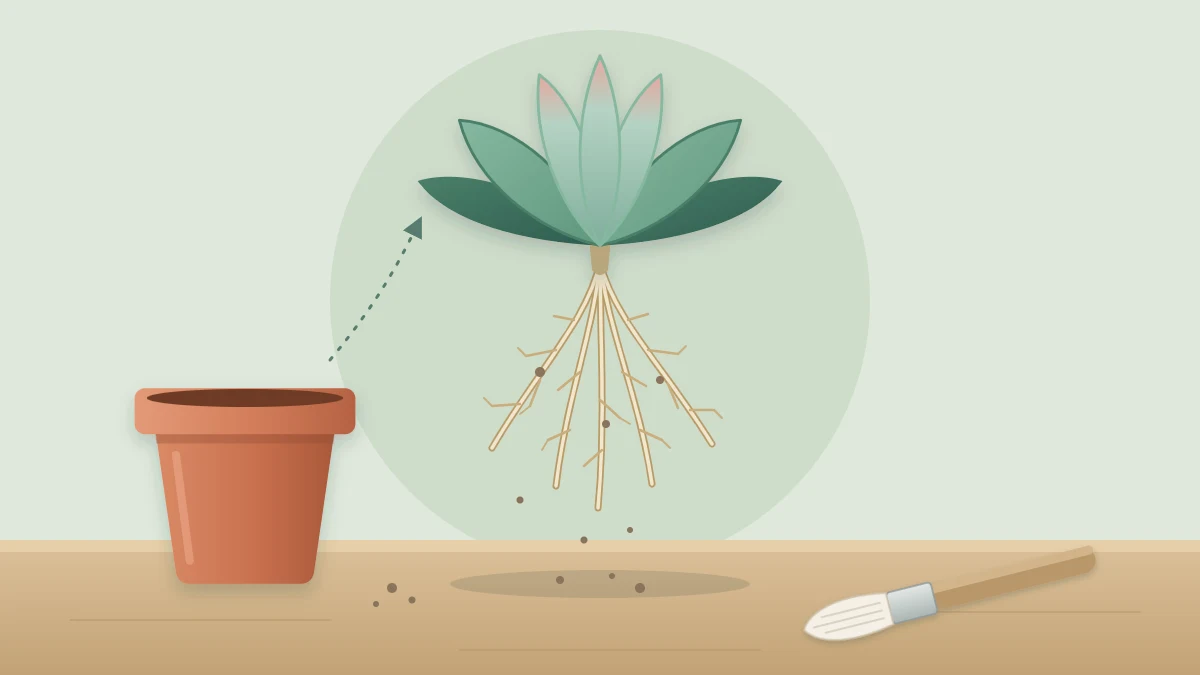
- Brush loose soil away with a soft brush or your fingers until you can see roots on the outside of the root ball. You rarely need to bare them completely.
What healthy roots look like
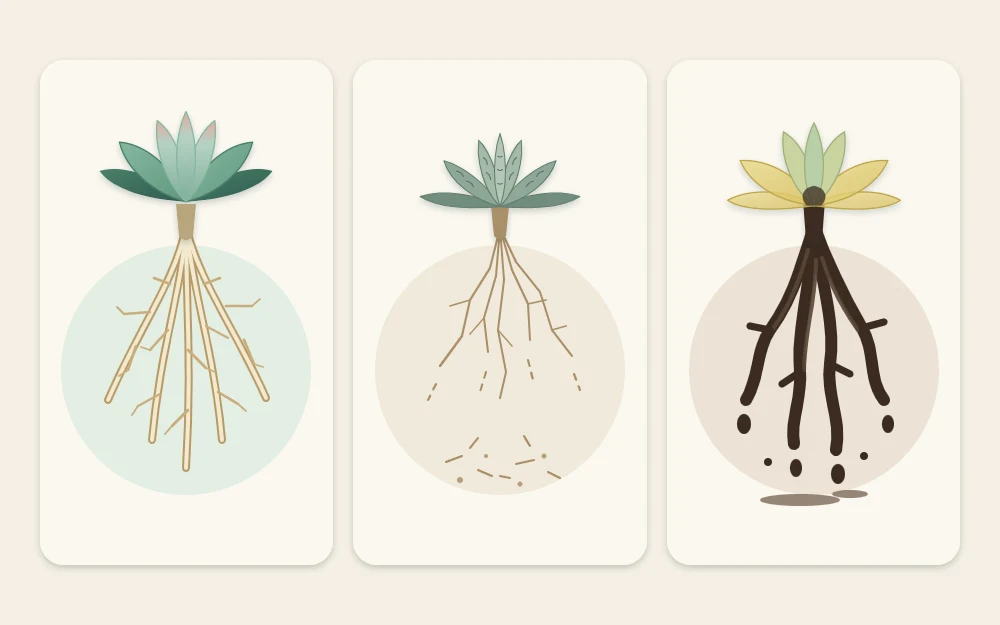
Healthy roots are firm. They are usually pale, from white through cream to tan, and they branch into finer roots with tiny hairs near the tips. They hold the soil together loosely, and when you bend one gently it flexes rather than crumbling or smearing.
Color varies by species and by soil, so judge by firmness first. Some succulents have naturally thick, fleshy roots, and roots stained by dark potting mix can still be perfectly sound. If the roots are firm and the plant is anchored, the cause of your problem is more likely light, temperature or pests than anything in the pot.
Dry, brittle roots
Thin roots that are tan to brown, feel papery and snap when bent have usually dried out and died back. This often goes with a long dry spell, a mix that has become so dry it repels water, or a pot left in strong heat. The soil around them tends to be dusty and light.
It can also be partly normal, since fine roots often die back during a dry rest. What matters is whether there are firm roots closer to the stem. If there are, the plant can usually recover once water reaches the whole root ball again.
Dark, soft roots
Roots that are brown to black, limp and wet-looking are the ones to take seriously. A common test is to pinch one lightly and slide your fingers along it: on a rotting root the outer layer often slips off and leaves a thin thread behind. A sour smell and soil that is still wet at the center of the root ball commonly go with this.
Check the base of the stem as well. If it is firm and its normal color, the damage may be limited to the roots. If it is dark, soft or translucent, the trouble has moved up into the plant. Either way, the next steps are covered in the guide to dealing with succulent root rot, and the wider signs of too much water are in the article on recognizing an overwatered succulent.
A few dark roots among many firm ones are not an emergency. Old roots die off over time in any pot.
A tight, circling mass
If the root ball comes out holding the exact shape of the pot, with roots wrapped around the outside and little loose soil left, the plant is root-bound. That reflects vigor, not disease, but water may run down the sides without soaking in, and growth can slow.
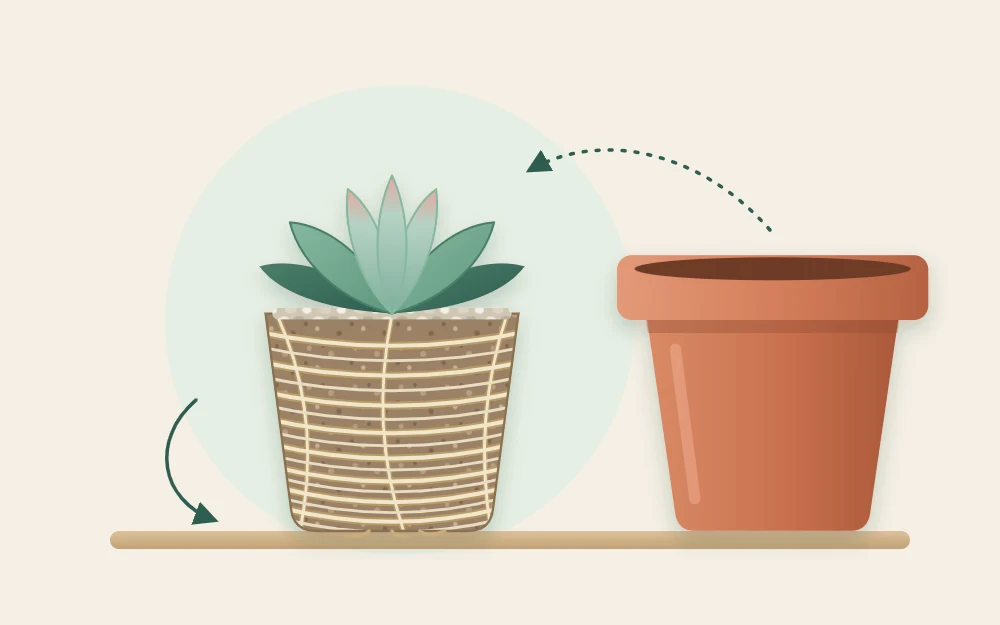
A root-bound succulent with firm roots is a candidate for a slightly larger pot and fresh mix. The step-by-step method is in the guide on how to repot succulents.
White cottony clusters
Small white, cottony or waxy patches on the roots or on the inside wall of the pot can be root mealybugs, which are insects that feed on roots out of sight. Look closely before deciding, because two harmless things look similar: bits of perlite, which are hard and gritty when pressed, and white mineral crust, which is dry and chalky. Mealybug wax is soft and smears, and you may see tiny pale oval insects in it.
If you think you have found them, keep the plant apart from others while you deal with it. Physical steps come first: remove the old soil, rinse the roots, and clean the pot before reuse. See University of California IPM on mealybugs for more detail.
Putting the plant back
If the roots look sound, the best thing you can do is return the plant with as little fuss as possible. Set the root ball back at the same depth, with the lowest leaves above the soil, and tap the pot so the mix settles around it. Top up with a little dry fast-draining mix if some was lost.
Do not water straight away if any roots broke; a few dry days let small wounds seal. Avoid checking again for a while, since each lift costs the plant some fine roots.
Frequently asked questions
What color should healthy succulent roots be?
Usually pale, anywhere from white through cream to tan, though color varies with the species and can be stained by dark potting mix. Firmness is the more reliable guide. A root that feels solid and flexes when bent is generally sound, whatever its exact shade.
Is it bad to take a succulent out of its pot just to look?
It costs the plant some fine roots each time, so it is not something to do out of curiosity. When a plant is declining, wobbling or sitting in soil that stays wet, the information you gain is usually worth the small disturbance, especially if you work with dry soil and support the base.
Should I water after checking the roots?
If no roots broke and the soil was due for water anyway, you can water as you normally would. If some roots snapped or you trimmed any, leaving the plant dry for a few days gives the wounds time to seal before moisture returns.