Succulent Soil: What Makes a Good Mix
What a succulent mix should contain and why: the ingredients that hold water, the ones that open the mix, a starting ratio to adjust for your home, and two quick tests for drainage.
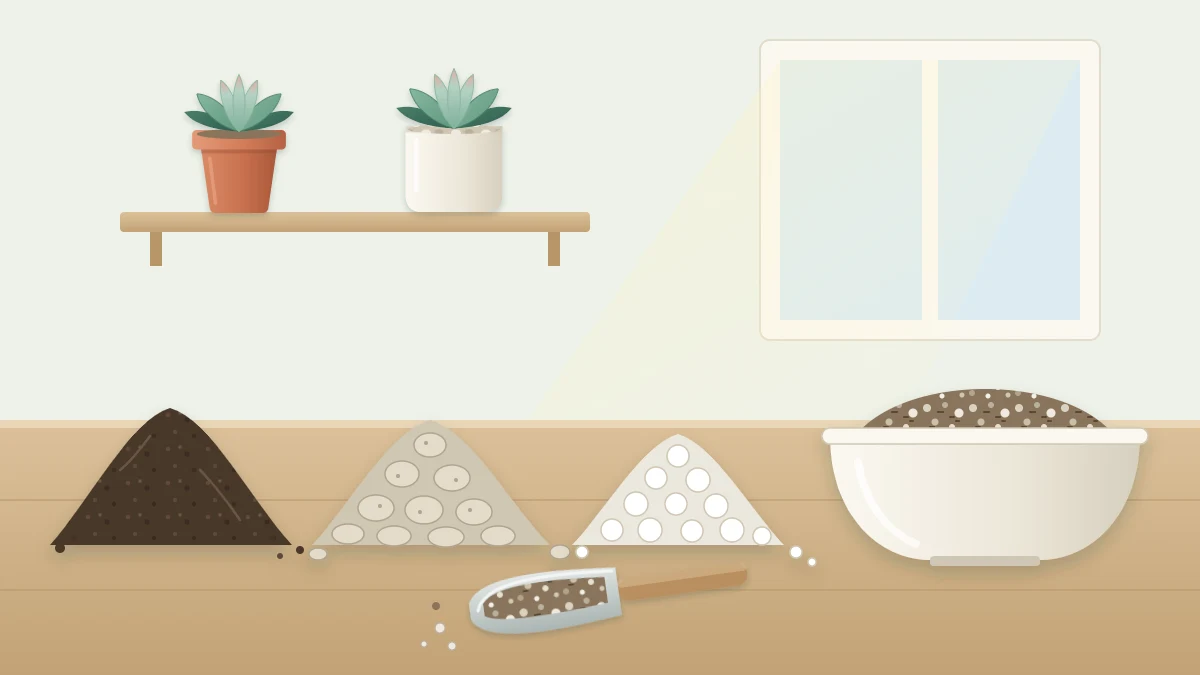
Regular potting soil is designed to do one thing well: hold water for thirsty, leafy plants. That is the opposite of what most succulents need, which is why a plant can struggle in a good-quality general mix even when everything else is right.
Good succulent soil drains quickly, dries within a reasonable time and leaves air around the roots. This guide explains what the common ingredients do, how to use a bagged mix as a base, a starting ratio you can adjust, and two quick tests for the mix you already have.
Why drainage and air matter more than nutrients
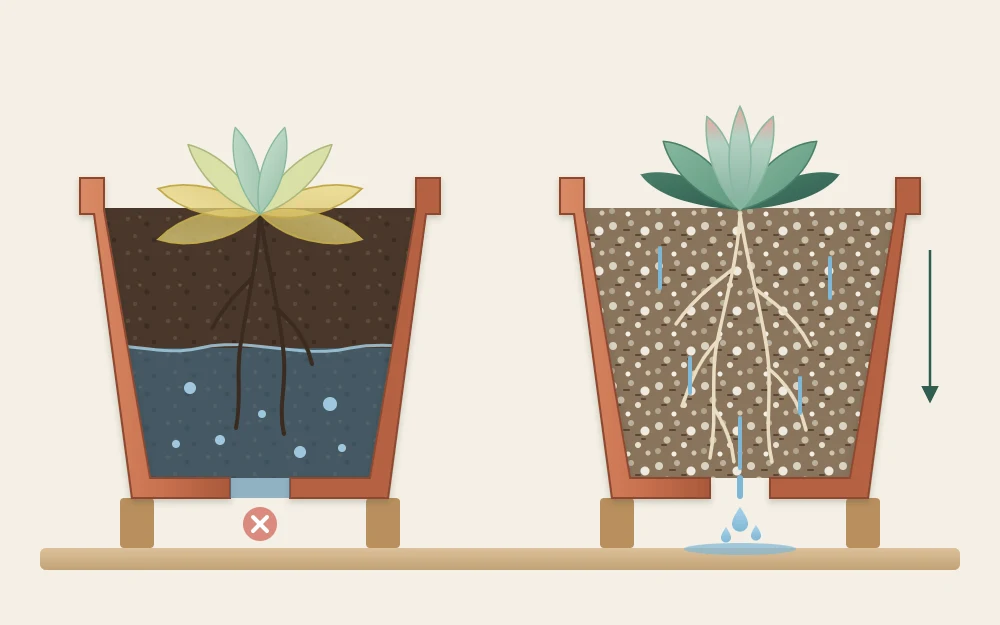
Roots need air as well as water. In a dense, fine-textured mix, water fills the small spaces between particles and stays there, so the roots sit wet with little air for days or weeks. Succulent roots are adapted to soil that dries between rains, and prolonged wetness is commonly associated with root rot.
A mix made of larger, irregular particles behaves differently. Water runs through, a thin film stays on the particles and the gaps between them refill with air. The plant can take up what it needs, and the pot dries in good time.
Nutrients come second. Succulents grow slowly and need little feeding.
What the common ingredients do
Every succulent mix combines something that holds water with something that opens the mix up. Knowing which is which lets you read a label or adjust a blend.
Ingredients that hold water
- Potting soil. Usually based on peat or composted bark. It holds moisture and some nutrients. Peat-heavy mixes can be hard to re-wet once they dry out completely.
- Coir. Coconut fiber, used in a similar way to peat. It holds water and generally re-wets more easily.
Ingredients that open the mix
- Pumice. A porous volcanic rock. It adds air spaces, stays in place and does not break down, which makes it a favorite for a gritty mix.
- Perlite. A light, white, expanded volcanic material. It opens the mix well and is easy to find, though it tends to float to the surface when you water.
- Coarse sand or fine gravel. Sharp, gritty particles roughly the size of the pumice pieces. They add weight, which helps steady top-heavy plants.
Particle size matters as much as the ingredient. Pieces around 1/8 to 1/4 in (3 to 6 mm) open a mix. Dust and very fine particles fill the gaps instead, so sift or rinse dusty material if you can.
Starting with a bagged cactus and succulent mix
A bagged cactus and succulent mix is a sensible starting point. It is usually grittier than general potting soil and often works as it comes for forgiving plants in bright, warm spots.
Bagged mixes vary a lot, though. Some are still mostly peat or fine bark with only a little grit. If the mix looks dark and fluffy, with few visible coarse pieces, or stays damp for a long time after watering, blend in more pumice or perlite. For general background on potting mix ingredients, see Clemson Cooperative Extension on indoor plant soil mixes.
A simple starting ratio
If you want to mix your own, or improve a bag, a common place to begin is:
- 1 part potting soil, coir-based mix or bagged succulent mix
- 1 part pumice, perlite or other coarse grit
Measure by volume with any container, such as a cup or a scoop. Treat this as a starting point, not a recipe to follow exactly, because the right blend depends on where the pot will live.
- Add more grit, up to about two parts grit to one part soil, in humid, cool or low-light homes, where pots dry slowly. Do the same for large pots, glazed or plastic pots, and plants that are especially prone to rot.
- Keep a little more soil in hot, dry, sunny conditions, in small or unglazed terracotta pots, and outdoors in summer, where a very gritty mix can dry out faster than is practical.
Tip
Change one thing at a time. If a pot stays wet too long, add grit at the next repot and see how the drying time changes before you adjust again.
Two quick tests for any mix
The squeeze test
Moisten a handful of mix so it is damp but not dripping, squeeze it firmly, then open your hand. A fast-draining mix falls apart or crumbles at a light touch. If it holds together in a tight, smooth ball, it contains too much fine material and needs more grit.
The drain test
Fill a pot that has a drainage hole with the mix and water it. The water should sink in quickly and start running from the hole within a few seconds. If it pools on the surface or trickles out slowly, the mix is too dense. If dry mix sheds water at first, wet it and test again before you judge.
Then watch how long the pot takes to dry at depth in its usual spot. That drying time decides when the plant needs water again, as explained in the guide to watering succulents.
What to avoid
- Fine beach or play sand. Fine grains pack into the gaps between larger particles and make the mix denser, not looser. Beach sand may also carry salt.
- Garden soil. Soil from the yard compacts in a pot and drains poorly there, and it can bring in weed seeds, insects and disease.
- A gravel layer in the bottom of the pot. A layer of stones does not replace a drainage hole, and it does not improve drainage. Water tends to stay in the finer soil above the coarse layer, so the wet zone simply sits higher, closer to the roots.
Soil and container work together, so a gritty mix cannot fully make up for a pot that traps water. Size, material and drainage are covered in the guide to choosing pots for succulents.
When to refresh the soil
Potting mix does not last indefinitely. The organic part breaks down into finer particles over time, and the mix gradually holds more water and less air. Signs that it may be due for a change include water sitting on the surface before soaking in, soil that has shrunk into a hard block, and a pot that stays wet much longer than it used to.
Fresh mix goes in when you repot, ideally as the plant comes into active growth. The steps, including how to handle the roots and when to water afterward, are in the guide on how to repot succulents.
Frequently asked questions
Can I use regular potting soil for succulents?
On its own it usually holds too much water for too long, especially indoors. It works much better as one part of a blend. Mixing it roughly half and half with pumice, perlite or other coarse grit gives a faster-draining mix that you can then adjust to your conditions.
Is pumice or perlite better for succulent soil?
Both open up a mix and add air around the roots. Pumice is heavier, stays where you put it and does not break down. Perlite is lighter, widely available and tends to float to the top over time. Either works, so use whichever you can find, or a blend of the two.
Do succulents need rocks in the bottom of the pot?
No. A layer of rocks under the soil does not improve drainage, and water tends to stay in the finer soil sitting above it. A pot with a drainage hole and a gritty mix all the way down does the job. A piece of mesh over the hole keeps the mix in.