Echeveria Care: Keeping Rosettes Compact and Colorful
A plant guide to echeveria: the strong light that keeps rosettes tight, how to water without marking the powdery leaves, the right soil and pot, and what flowers, offsets and fading bottom leaves mean.
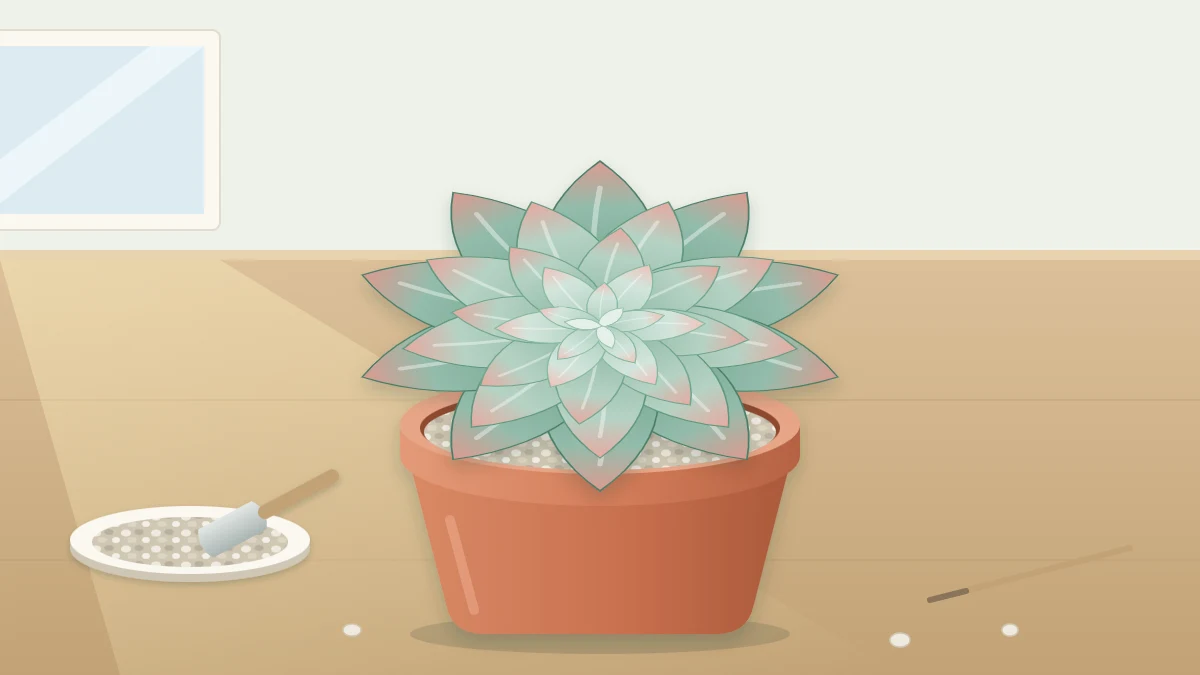
An echeveria in good shape looks almost unreal: a low, symmetrical rosette of thick leaves in blue-green, silver, pink or deep purple. Kept in the wrong conditions, the same plant turns green, opens flat and climbs out of its pot on a bare stem within a few months.
Echeveria care is mostly about preventing that change. Light does the largest share of the work, and watering, soil and temperature support it. This guide covers each in turn, with the small habits that keep a rosette tight and colorful.
What echeverias are
Echeveria is a large group of rosette-forming succulents native mainly to Mexico and Central America. There are many species and a great many hybrids, which is why two plants sold under the same name can differ in color, leaf shape and size. Some stay a couple of inches across; others grow as wide as a dinner plate.
They share the features that matter for care. The leaves store water, the roots are fine and dislike wet soil, and many kinds carry farina, a pale powdery coating on the leaves. Because the group is so varied, treat any care advice as a starting point and watch how your own plant responds. The NC State Extension profile of echeveria gives a general description of the group.
Light: the key to a compact rosette
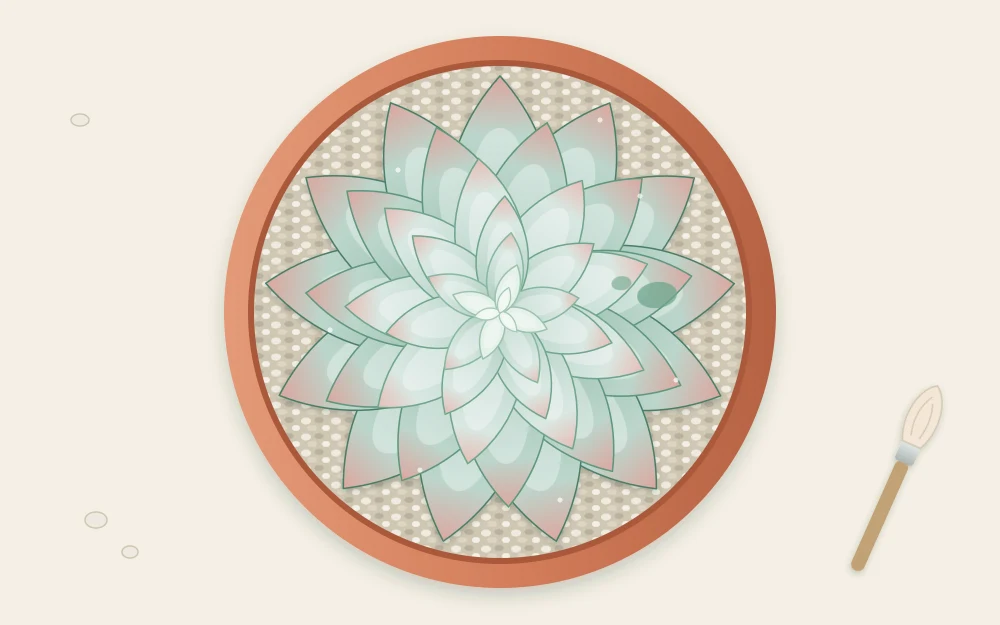
Echeverias are among the more light-hungry succulents commonly sold. Indoors they need the brightest spot you have, usually a sill with several hours of direct sun, and many growers add a lamp made for plants for the darker months. The general guide to succulent light requirements explains how to judge whether a spot is bright enough.
When light falls short, an echeveria reacts fast. The leaves tilt downward and space out, the center turns paler and the stem lengthens toward the window. That stretched growth does not tighten up again, though the plant can be reset; the guide to fixing leggy succulents shows the options.
Color follows light as well. The pink, red or purple tones on many kinds deepen in strong light and cool nights and fade to plain green in dimmer, warmer conditions. A plant that loses its color indoors is often healthy but under-lit.
Good to know
More light must come gradually. A plant moved straight from a shop shelf to hot afternoon sun can develop pale or brown scorched patches that do not heal. Increase its exposure over a week or two.
Watering without spoiling the rosette
Use the soak and dry method: water thoroughly until it runs from the drainage hole, then wait until the soil has dried through before you water again. How long that takes depends on the pot, the mix, the season and the light, so check the soil with a finger or a wooden skewer rather than counting days. The full method is in the guide on how to water succulents.
Two details are specific to rosettes:
- Keep water out of the center where you can. Water pooled in the cup of the rosette, especially in still indoor air, can encourage rot or leave marks. Aim a narrow spout at the soil under the leaves, or water from below by standing the pot in a shallow dish until the surface turns moist.
- Do not rub the farina. The powdery coating marks when touched and does not grow back on old leaves. Handle the plant by its pot or its lowest leaves.
The leaves offer a useful cue. Firm, plump leaves mean the plant has water in reserve. Lower leaves that feel slightly soft or look faintly wrinkled, in soil that is dry at depth, often mean it is time to water.
Soil, pot and temperature
Echeveria roots need air as much as water. Plant in a gritty, fast-draining mix; many growers blend a bagged succulent mix with extra pumice or perlite. The guide to succulent soil covers ingredients and proportions.
Choose a pot with a drainage hole, only a little wider than the rosette. A wide, shallow pot suits the fine roots well, and unglazed terracotta helps the mix dry faster. A top dressing of fine gravel keeps the lowest leaves off damp soil.
Echeverias are not frost hardy. As a rough guide, bring outdoor pots inside before nights fall toward 40°F (4°C), and never leave them out in freezing weather. They are comfortable at ordinary room temperatures. In very hot spells, some afternoon shade and good airflow help.
Normal changes: bottom leaves, flowers and offsets
An echeveria grows from the center and retires its oldest leaves at the bottom. A few lower leaves that dry to thin, papery crisps over several weeks are normal. Pull them away gently once they are fully dry, since dead leaves around the stem can shelter pests.
Mature plants send up long, arching stalks carrying small bell-shaped flowers, often in coral, orange, pink or yellow. Flowering does not end the life of the rosette. Enjoy the stalk, then cut it off near the base when the flowers fade.
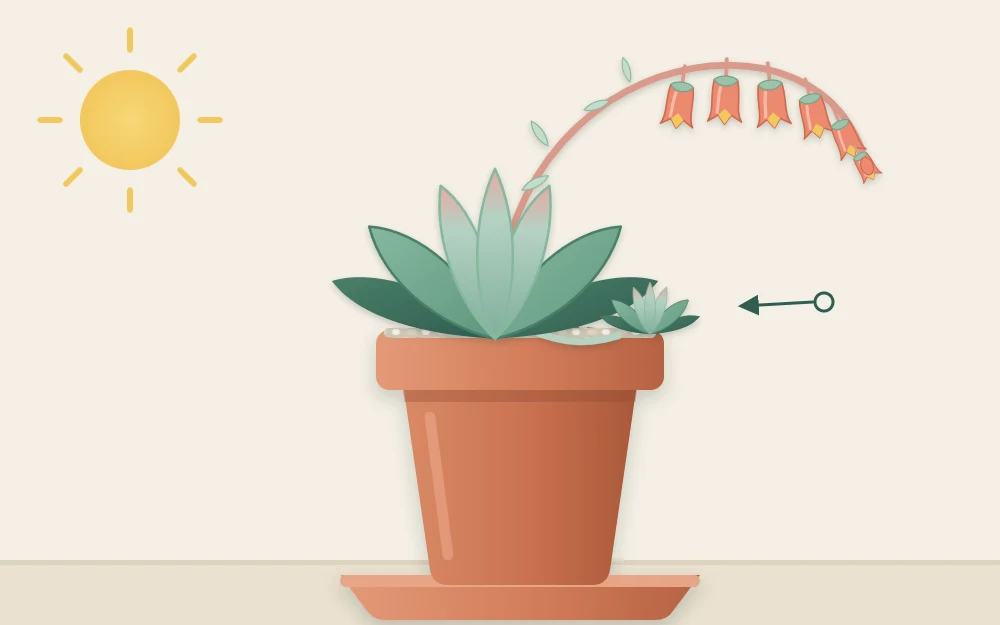
Many kinds also produce offsets, small rosettes that appear around the base. You can leave them to form a clump, or separate them into their own pots once they have a few roots.
Common troubles
Each symptom below has more than one possible cause, so check the soil at depth, the light and any recent changes before you decide.
- Stretched, flattened or pale growth. Most often associated with too little light.
- Soft, translucent or yellowing leaves, starting low. Commonly linked with soil that stays wet. Check the roots and the stem base, and let the mix dry.
- Wrinkled, limp leaves. Often thirst, but damaged roots that can no longer take up water produce the same look, so check the soil first.
- Dry brown patches on upper leaves. One possibility is sunburn after a sudden increase in sun.
- White cottony tufts between leaves. Often mealybugs. Isolate the plant and remove what you can by hand.
Echeveria and pets
The ASPCA lists blue echeveria as non-toxic to dogs, cats and horses; see the ASPCA entry for blue echeveria. That listing does not make the plant food, and any plant can upset a stomach if chewed. Keep rosettes out of reach, which also protects the farina from curious paws, and contact a veterinarian or poison control if a pet or child eats part of a plant.
Frequently asked questions
Why is my echeveria growing tall instead of staying flat?
A lengthening stem with widely spaced leaves is most often a response to low light: the plant stretches toward the brightest source. Check how much direct sun the spot really gets. Moving it gradually to a brighter position keeps new growth compact, though the stretched section will not shrink back.
Is it normal for the bottom leaves of an echeveria to die?
A few of the lowest leaves drying to thin, papery crisps over several weeks is part of normal growth, as the plant replaces old leaves from the center. Many leaves turning soft, yellow or translucent at once is different and is worth investigating, starting with how wet the soil is at depth.
Can echeveria stay outside in winter?
Only where winters are frost-free. Echeverias are not frost hardy and can be badly damaged by freezing temperatures. In colder regions, bring pots indoors to the brightest window you have before nights turn cold, and expect the plant to need water far less often until spring.