How to Clean Succulents: Dust, Dead Leaves and Water Spots
A gentle routine for dusting succulents, removing dry leaves and handling water spots, with the right method for smooth, powdery and fuzzy leaves.
At a glance
What you need
- Soft dry brush
- Rubber blower bulb
- Long tweezers
- Soft damp cloth for smooth leaves
- Tray or paper to catch debris
Dust settles on succulents just as it does on shelves, and old leaves collect at the base of a rosette as the plant grows. Neither is an emergency, but both are worth dealing with a few times a year. Learning how to clean succulents takes a few minutes, a couple of soft tools and a light hand.
The main thing to know before you start is that not every leaf can be wiped. Some succulents wear a powdery coating or fine hairs that mark easily, so the method depends on the plant in front of you.
Why cleaning helps
A layer of dust sits between the leaf and the light. Indoors, where light is already weaker than outside, a dusty plant has a little less to work with.
Dead leaves matter more. Dry leaves packed around the stem hold moisture against it after watering and slow the drying of the soil surface. They also make a sheltered hiding place for insects. Clearing them lets air reach the base of the plant and lets you see what is going on there.
Tools to gather
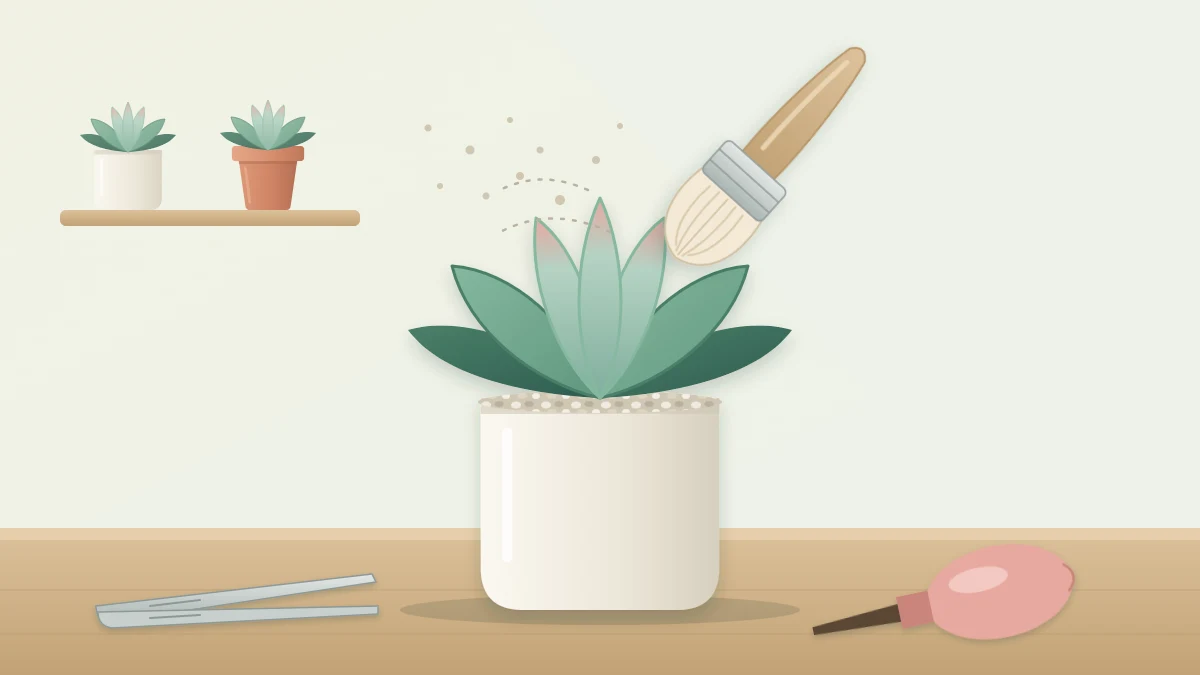
- A soft, dry brush, such as a clean makeup brush or small paintbrush, for sweeping dust off leaves.
- A rubber blower bulb, the kind used for camera lenses, for puffing dust out of tight rosettes without touching them.
- Long tweezers for lifting dead leaves from between healthy ones.
- A soft damp cloth, for smooth, glossy leaves only.
- A tray or sheet of paper to catch debris.
Check the leaf surface first
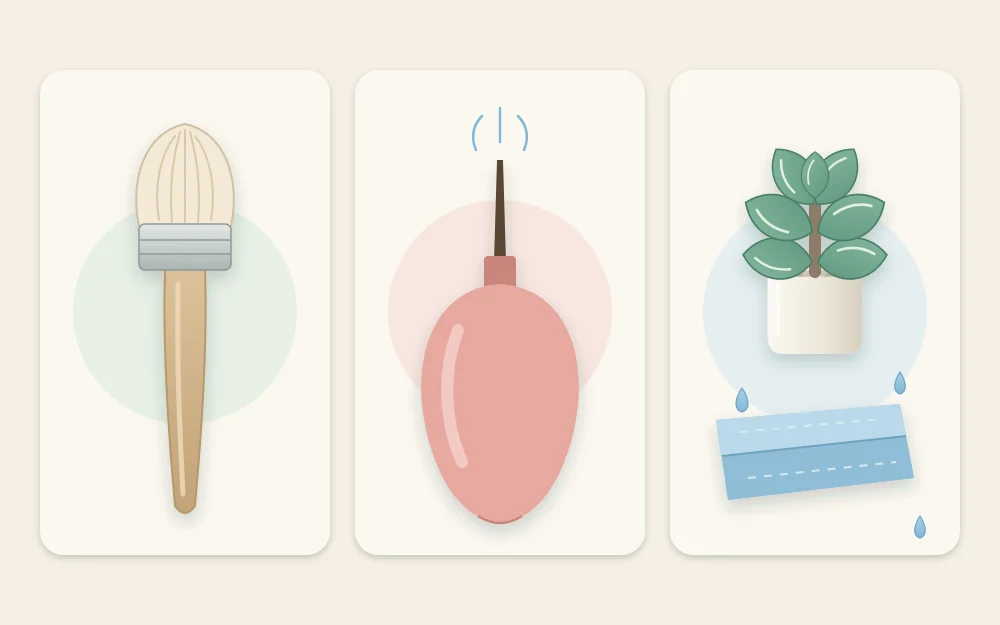
Look closely at the leaves before you touch them. Three surface types need different handling.
| Leaf surface | Examples | How to clean |
|---|---|---|
| Smooth and glossy | Jade plant, snake plant, many haworthias | Brush, or wipe gently with a damp cloth |
| Powdery coating (farina) | Many echeverias, ghost plant | Blower or the lightest brushing; do not wipe |
| Fuzzy or hairy | Panda plant and other fuzzy kalanchoes | Dry brush or blower only; keep dry |
Farina is the pale, waxy bloom that gives some rosettes their frosted look. It rubs off under a fingertip or cloth, and marks on it generally stay for the life of that leaf. The plant is not harmed by a fingerprint, but the mark will not polish out, so handle these plants by the pot.
Removing dust
- Wait until the plant is dry. Dust on wet leaves turns into smears.
- Support the pot with one hand and tip it slightly so the dust falls away from the center of the rosette.
- Sweep each leaf from base to tip with the dry brush, using almost no pressure.
- Use the blower bulb for the tight center and for any plant with farina or hairs.
- On smooth leaves only, finish with a damp cloth, supporting each leaf from below with your fingers as you wipe.
Skip leaf-shine products. Clemson Cooperative Extension has more on cleaning indoor plants in general.
Removing dead leaves
The lowest leaves of a rosette dry up as the plant grows; this is normal turnover. A leaf is ready to remove once it is fully dry and papery. Hold it with tweezers or fingertips and pull gently sideways, not straight up. A leaf that has finished will release with almost no effort.
If a leaf resists, leave it. A leaf that is still partly plump is still attached and still passing its water back to the plant, and tugging can tear the stem. Come back to it in a week or two.
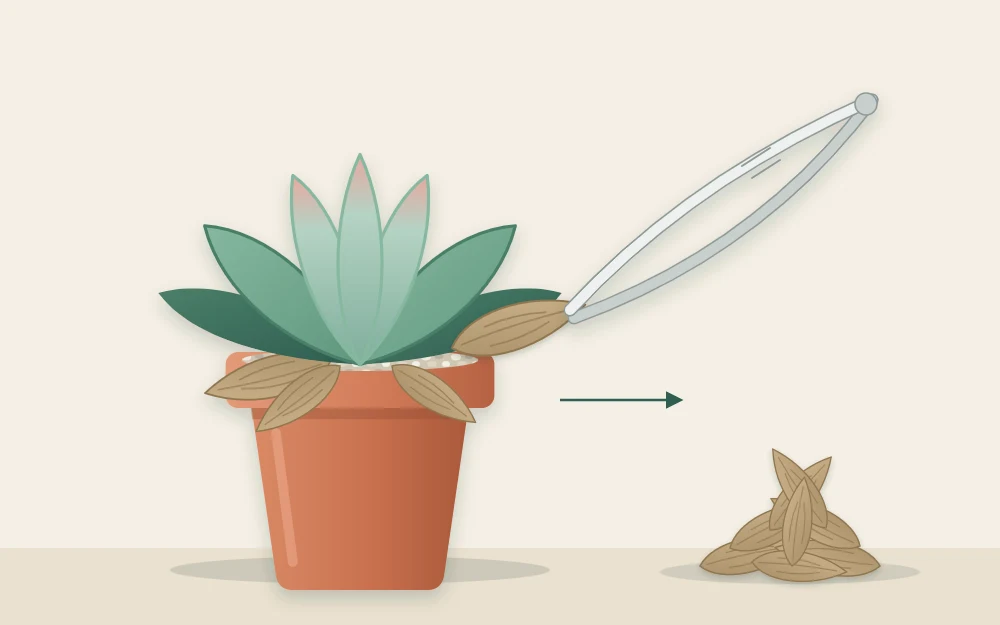
Dry lower leaves are different from leaves that are soft, translucent or dropping from higher up the plant. If that is what you are finding, the guide to succulent leaves falling off covers the possible causes and the checks that tell them apart.
Dealing with water spots
White rings or chalky dots on leaves are commonly mineral deposits left behind when hard tap water dries on the surface. They are mostly a cosmetic issue.
On smooth leaves, a cloth dampened with rainwater or distilled water will often lift fresh spots. Older deposits can be stubborn, and scrubbing does more damage than the spots do, so stop if they do not come away easily. On leaves with farina, leave the spots alone; removing them takes the coating with them.
Prevention is easier. Water the soil, not the leaves, and blow or blot away any drops that land in a rosette.
Tip
White marks that look fluffy or cottony, sit in leaf joints and can be picked off are not mineral spots. Take a closer look before you carry on cleaning.
Rinsing sturdy plants
Tough, smooth-leaved succulents with a lot of dust can be rinsed instead of wiped. Do it only when the plant is due for water anyway, since the soil will get wet. Use a gentle stream of lukewarm water, tilt the pot so water runs off the leaves, and shake off what you can afterward.
Then let the plant dry in moving air, out of direct sun. Water that sits in the center of a rosette for long periods is associated with rot, and droplets in strong sun can leave marks. Do not rinse fuzzy plants or those with farina.
The pot, the top dressing and a quick inspection
Wipe the outside of the pot and the saucer with a damp cloth, and brush off any crust around the rim. Pick fallen leaves and debris out of the top dressing; if the gravel is very dirty, lift it off, rinse it, let it dry and put it back.
Cleaning is also the best moment to inspect. With the plant in your hands, look into the leaf joints, under the leaves and along the stem for white fluff, fine webbing, small bumps or sticky patches. If you find any of these, set the plant apart from the others and read the guide to identifying succulent pests.
How often you clean depends on how dusty your home is. Many people simply add it to their regular indoor succulent care whenever the leaves start to look dull.
Frequently asked questions
Can I wipe succulent leaves with a damp cloth?
Only if the leaves are smooth and glossy, as on a jade plant or snake plant. Leaves with a powdery coating, called farina, or with fine hairs should not be wiped, because the surface marks easily and the marks stay. Use a soft dry brush or a blower bulb on those plants instead.
Should I remove the dry leaves at the bottom of a succulent?
Yes, once they are fully dry and papery. Old lower leaves drying up is normal, and removing them lets air reach the stem and takes away a hiding place for insects. Pull gently sideways; if a leaf does not release easily, leave it for another week or two.
How do I get rid of white water spots on succulent leaves?
On smooth leaves, try a soft cloth dampened with rainwater or distilled water, and stop if the spots do not lift easily. On leaves with a powdery coating, leave them alone, since rubbing removes the coating too. Watering the soil directly helps prevent new spots from forming.