Succulent Care for Beginners: A Simple Starting Guide
New to succulents? Learn the four things that decide most outcomes (light, watering by soil dryness, gritty soil and a drainage hole) and what to do in the first two weeks with a new plant.
A succulent is one of the easier houseplants to live with, but it does not behave like a fern or a trailing vine. Most of the trouble new owners run into comes from treating it like a leafy tropical plant: frequent small drinks, a dim shelf and rich, dense soil.
This guide to succulent care for beginners covers the few things that decide most outcomes and what to do in the first two weeks with a new plant. Each topic has its own detailed guide, linked where it comes up, so you can go deeper when you need to.
What makes a succulent different
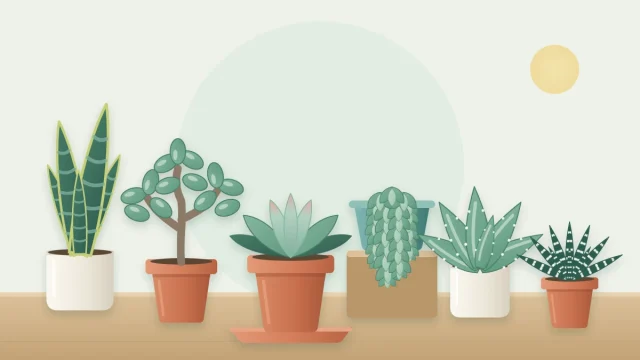
“Succulent” is a description, not a single plant family. It covers plants from many unrelated groups that store water in thick leaves, stems or roots, which lets them get through dry spells. Echeveria, jade plant, haworthia, aloe and hens and chicks are all succulents. Cacti are too, although they are usually treated as a subject of their own.
That stored water changes care in two ways. First, the plant can wait: a short dry period does little harm to an established succulent. Second, the roots are adapted to soil that dries out between rains, and they tend to rot when they sit in wet soil with little air around them. In most homes, soil that stays wet for too long is a more common problem than soil that gets too dry.
The four things that decide most outcomes
You do not need special equipment or a complicated routine. Four choices do most of the work, and they depend on each other.
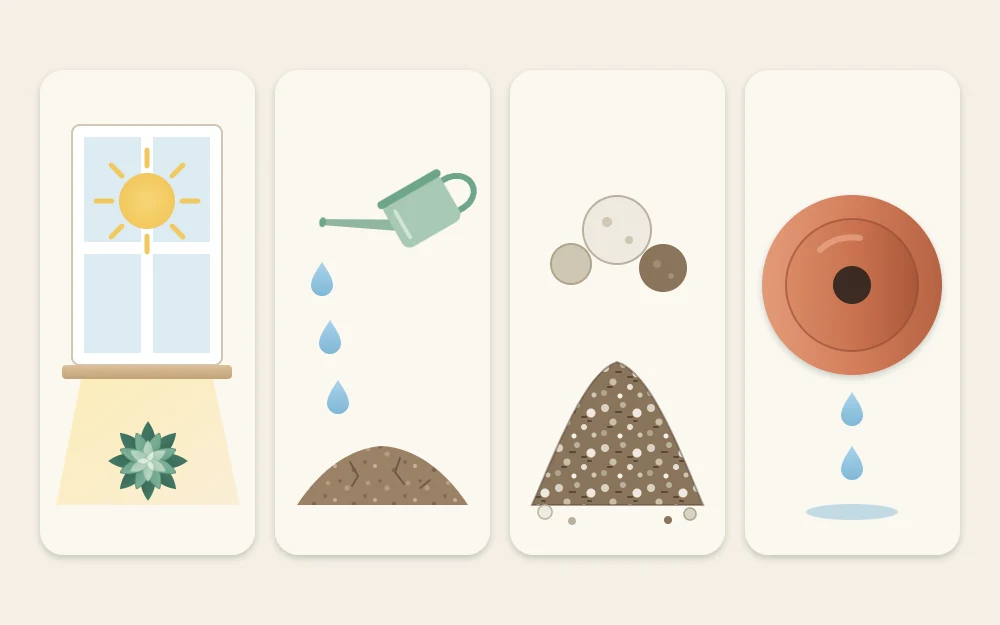
1. Enough light
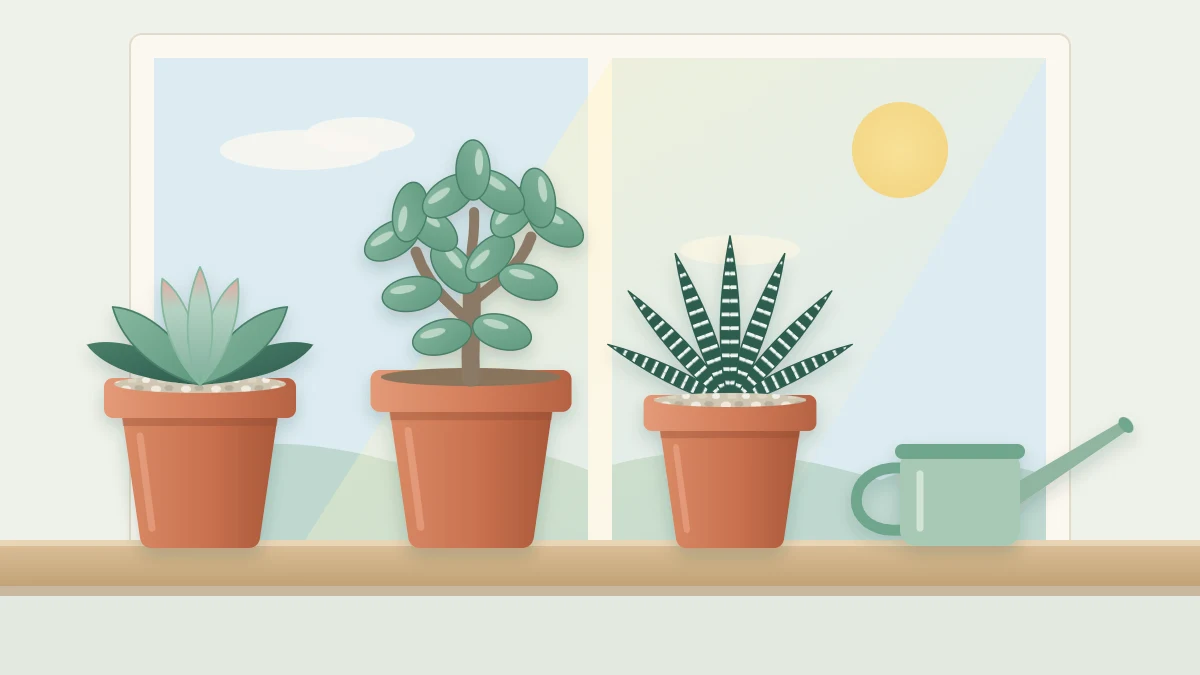
Most succulents want more light than a typical room offers a few feet back from the window. Indoors, the brightest windowsill you have is usually the right place to start. A plant that gets too little light stretches toward the glass, with paler leaves spaced farther apart on the stem.
Needs do differ by species, and a few kinds, such as haworthia and snake plant, cope with less. The guide to how much light succulents need explains how to judge your own windows.
2. Watering by soil dryness
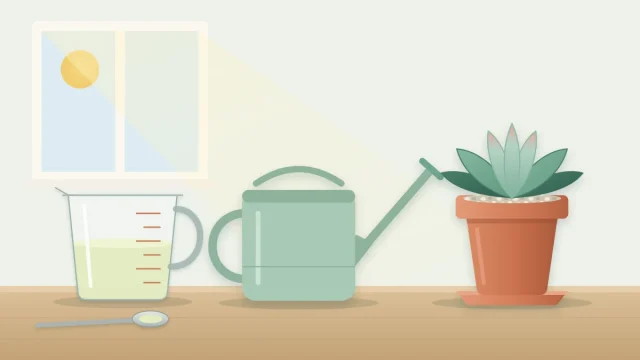
There is no calendar that works for every plant. How fast a pot dries depends on the plant, the pot, the soil, the light, the temperature and the time of year. The reliable approach is soak and dry: water thoroughly, then wait until the soil has dried through before you water again.
That means checking the soil below the surface, not just looking at the top. The full method, including how to test moisture at depth, is in the guide on how to water succulents.
3. Fast-draining soil
Regular potting soil is made to hold moisture, which suits leafy houseplants and works against succulents. A gritty mix, with coarse material such as pumice or perlite blended in, lets water run through and leaves air spaces around the roots. See what a good succulent soil contains before you repot.
4. A pot with a drainage hole
A drainage hole lets extra water leave the pot. Without one, water collects at the bottom where you cannot see it, and the roots sit in it. If you love a decorative pot with no hole, use it as a cachepot: keep the plant in a plain pot with holes, set it inside, and lift it out to water and drain.
Your first two weeks with a new plant
For the first two weeks, the goal is to look closely and change little.
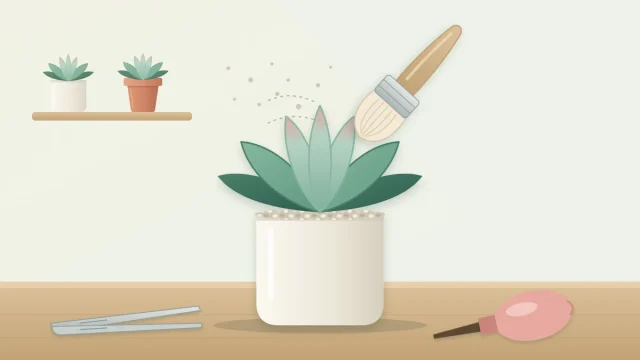
- Inspect it. Look under the leaves, in the center of the rosette and where leaves meet the stem for white cottony tufts, fine webbing or small insects. Check that the stem is firm at the soil line.
- Keep it apart. If you have other houseplants, give the newcomer its own spot for a couple of weeks so any pests do not spread.
- Check the pot. Confirm there is a drainage hole, and remove any decorative wrapper or outer pot that could hold water.
- Give it bright light, gently. Put it somewhere bright, but do not move it straight into hours of hot direct sun. A plant grown under shade cloth or store lighting can scorch, so increase direct sun gradually.
- Check the soil before watering. Push a finger or a wooden skewer down into the pot. If it is still damp below the surface, wait. If it is dry all the way down, water thoroughly and let the pot drain.
- Leave it to settle. Unless the soil is soggy or the pot has no hole, repotting can wait a few weeks. So can fertilizer.
Good to know
Some popular succulents are a concern around animals: the ASPCA lists jade plant and aloe vera as toxic to dogs, cats and horses. Check the ASPCA plant list before you buy, keep plants out of reach, and contact a veterinarian or poison control if a pet or child eats part of one.
What healthy growth looks like
A succulent that is doing well stays compact. New leaves come in close together, and the leaves feel firm and full.
Some changes are normal and need no action. The lowest leaves of a rosette dry up and fall as the plant grows, which is how the stem forms. Growth is slow compared with many houseplants, and most succulents slow down or rest for part of the year, often in the cooler, darker months.
What can wait
Fertilizer matters far less than light and water. If you feed at all, do it only while the plant is actively growing, dilute well below the label rate for other houseplants, and follow the product label. A resting or struggling plant does not need feeding.
Repotting is an occasional job, done when the plant has outgrown its pot or the soil no longer drains well.
When something looks wrong
Yellow, soft, wrinkled or dropping leaves each have more than one possible cause, so a single symptom rarely tells you what happened. Before you change anything, check the basics in order: is the soil wet or dry at depth, how much light does the spot really get, does the pot drain, and has anything changed recently, such as a move, a repot or a shift in the weather?
Change one thing at a time and give the plant a few weeks to respond. If trouble keeps coming back, compare your routine with the list of common beginner mistakes.
Frequently asked questions
Are succulents easy for beginners?
Many are forgiving, as long as you give them what they are adapted to: strong light, soil that drains quickly and time to dry out between waterings. Most early losses come from care that suits leafy houseplants, such as frequent watering and dim spots, not from the plants being difficult.
Should I repot a succulent as soon as I bring it home?
Usually not. Let the plant settle for a few weeks in its new light and temperature first. The exceptions are a pot with no drainage hole or soil that is soggy and stays that way, where moving the plant into a gritty mix and a pot that drains is worth doing sooner.
Do I need to water a new succulent right away?
Check first. Push a finger or wooden skewer down into the soil. If it is still damp below the surface, wait and check again in a few days. If it is dry to the bottom, water thoroughly until water runs from the drainage hole, then empty the saucer.