Succulent Care Mistakes: 10 Common Beginner Errors
Ten common beginner errors with succulents, from watering by the calendar to ignoring early pest signs, with the reason each one matters and what to do instead.
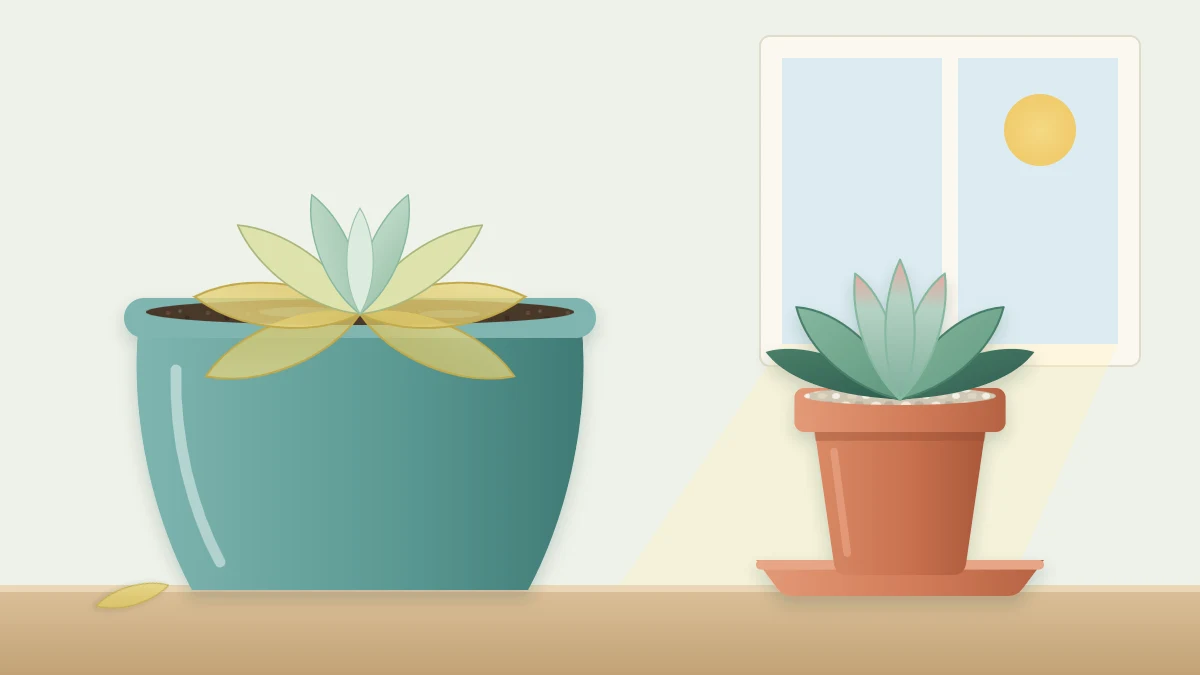
When a succulent keeps struggling, the cause is rarely bad luck or a difficult plant. More often it is an ordinary habit carried over from other houseplants, repeated week after week.
The ten succulent care mistakes below are the ones beginners make most often. Each entry explains why it matters and what to do instead, with links to the full guides. If you are starting from scratch, the beginner’s guide to succulent care covers the basics first.
Watering mistakes
1. Watering by the calendar
A fixed day ignores how fast the soil actually dries, which changes with the pot, the mix, the light, the temperature and the season. A routine that fits in a bright summer window can leave the same pot wet for weeks in winter.
Instead: check before you water. Push a finger or a wooden skewer down into the pot and water only when the soil is dry at depth. If the soil has been staying damp and the leaves are turning soft or translucent, compare what you see with the guide to an overwatered succulent.
2. Misting instead of watering
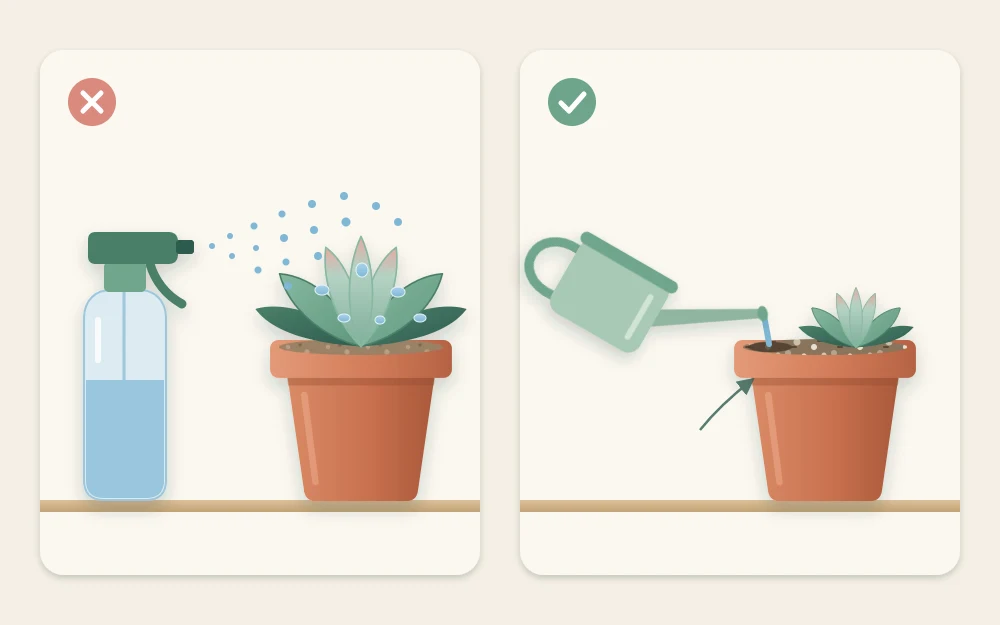
A spray bottle wets the leaves and the top of the soil, and very little reaches the roots. The plant stays short of water at the roots while the leaves stay damp, which is commonly associated with rot and marks on the foliage.
Instead: use soak and dry. Pour water at soil level until it runs from the drainage hole, empty the saucer, then let the soil dry through.
Pot and soil mistakes
3. A pot with no drainage
Without a drainage hole, extra water has nowhere to go. It collects at the bottom, out of sight, and the lower roots sit in it. A layer of gravel under the soil does not solve this.
Instead: choose a pot with a hole, or keep the plant in a plain draining pot inside a decorative cachepot. If you are set on a sealed container, read the guide to pots without drainage holes first.
4. Dense soil
General potting soil is made to hold moisture. Around succulent roots it stays wet too long and leaves little air.
Instead: use a gritty, fast-draining mix, such as a bagged succulent mix with extra pumice or perlite blended in.
5. An oversized pot
Soil that has no roots in it dries very slowly, so the plant sits in a mass of wet mix.
Instead: pick a pot only a little wider than the root ball, roughly 1 to 2 in (2.5 to 5 cm), and move up gradually as the plant grows.
Light mistakes
6. Too little light
A spot that feels bright to you can be dim for a succulent, especially a few feet back from the window. Over a few weeks the plant often stretches toward the light, with paler leaves spaced farther apart.
Instead: move the plant to your brightest window, as close to the glass as is practical. Stretched growth will not shrink back, but there are ways to tidy it up, explained in the guide to leggy succulents.
7. Moving a plant into strong sun suddenly
The opposite error is to fix low light in a single day. A plant that has been living indoors or in shade can scorch when it is put straight into hours of direct sun. Sunburn commonly appears as bleached or brown dry patches on the exposed side, and those marks stay.
Instead: increase direct sun in small steps over a couple of weeks or more, starting with gentler morning sun.
Timing mistakes
8. Fertilizing a resting or stressed plant
Fertilizer is not medicine. A plant that is resting in a cool, dim season, or struggling with wet roots, pests or a recent move, is not growing and cannot make use of it. Unused fertilizer builds up in the soil and can damage roots.
Instead: sort out light, water and soil first. Feed only during active growth, dilute well below the label rate for other houseplants, and follow the product label.
9. Repotting and watering the same day when roots were damaged
Watering straight after repotting is a houseplant habit. If roots were broken, trimmed or cut away during the move, the fresh wounds sit in wet soil before they have had a chance to dry and seal, which can let rot in.
Instead: when roots were damaged, plant into dry or barely moist mix and wait several days to a week or so before you water, keeping the plant in bright light out of harsh sun. If the root ball came out intact, the wait matters less.
Ignoring early pest signs
10. Waiting until pests are obvious
Pests are far easier to deal with when there are only a few. Mealybugs, one of the most common on succulents, look like small tufts of white cotton tucked where leaves meet the stem or deep in a rosette. Fine webbing, sticky residue and small bumps on stems are also worth a closer look.
Instead: look closely each time you check the soil.
- Isolate the affected plant from your others right away.
- Remove what you can see by hand, or rinse it off with a gentle stream of water.
- Check the plant again every few days, because eggs and young insects are easy to miss.
- Let the soil dry properly between waterings, since constantly damp soil suits several pests.
If you decide to use a pesticide, check that the label lists both your pest and your plant, and follow the label exactly. For identification help, see University of Maryland Extension on mealybugs.
How to work out which mistake applies
Several of these errors produce similar symptoms. Soft, yellow, wrinkled or dropping leaves each have more than one possible cause, so avoid deciding from a single sign. Work through the basics in order:
- Soil moisture at depth. Is it wet or dry at the bottom of the pot, and how long has it been that way?
- Drainage. Does the pot have an open hole, and does water run through the mix freely?
- Light. How much does the spot really get, and has the plant changed shape or color?
- Roots and stem. Is the stem firm at the soil line? If you slide the plant out, are the roots pale and firm, or dark and soft?
- Recent changes. Has there been a move, a repot, a feeding or a shift in the weather?
Then correct the most likely problem only, and give the plant a few weeks. Changing everything at once adds stress and hides which change helped.
Frequently asked questions
What is the most common mistake with succulents?
Keeping the soil wet for too long is the one that comes up most. It usually results from a combination of habits: watering on a fixed day, dense soil, a pot without a drainage hole or a spot with weak light. Checking the soil at depth before watering addresses the largest part of it.
Why do succulents keep dying even when they are barely watered?
Watering rarely does not help if the soil never dries. Dense soil, a sealed pot or low light can keep roots wet for weeks after one watering. Too little light is another possibility. Check moisture at the bottom of the pot, the drainage and how bright the spot really is.
Can a succulent recover from a care mistake?
Often, yes, if the stem and at least some roots are still firm. Correct the most likely cause, then wait a few weeks and watch the new growth. Recovery is slow, and damaged leaves will not repair themselves, so judge progress by what grows next.