Bottom Watering Succulents: When It Helps and How to Do It
Bottom watering helps with very dry soil, tight rosettes and loose top dressing, but it is not a gentler way to water. See when to use it, the steps, and the limits to keep in mind.
At a glance
What you need
- Shallow tray, basin or sink
- Water at room temperature
- Wooden skewer or chopstick
- Wire rack or empty sink for draining
- Saucer
Bottom watering succulents means letting the pot take up water from below instead of pouring it onto the soil. It is a useful technique in a few specific situations, and an unnecessary extra step in others.
It is not a gentler or safer kind of watering. The soil ends up just as wet, and the same rule applies afterward: the mix has to dry through before the plant is watered again. Here is when the method earns its place, how to do it, and where its limits are.
What bottom watering is
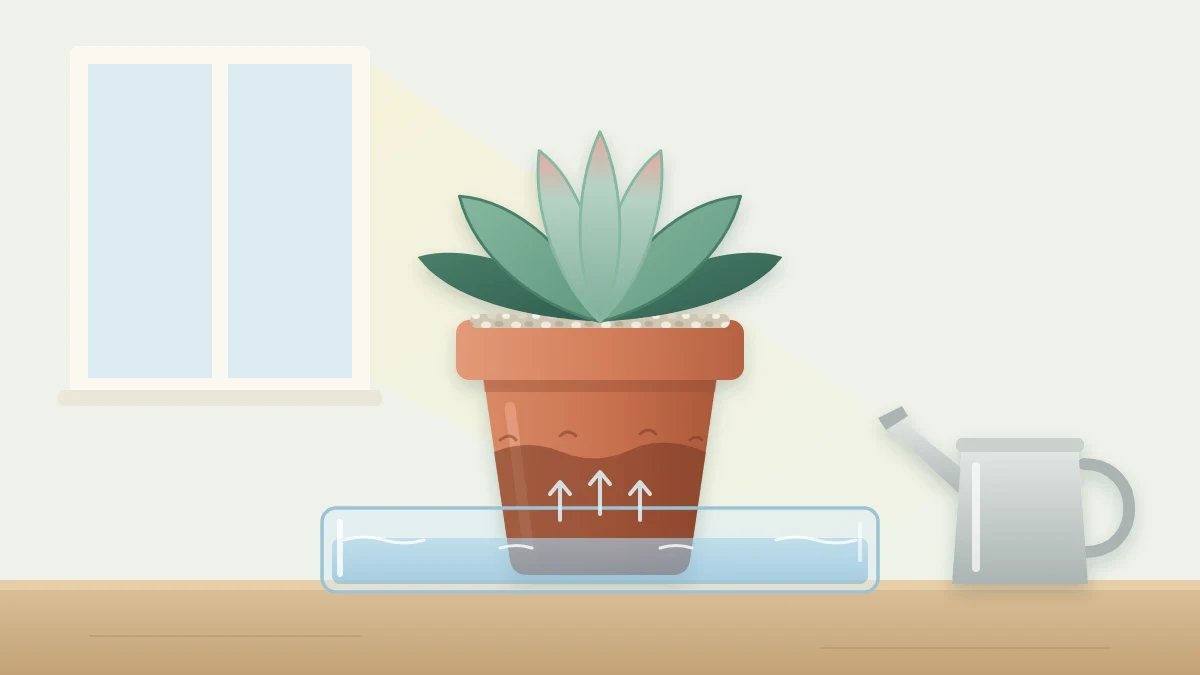
You stand a pot with a drainage hole in a shallow container of water. The dry mix draws moisture upward through the hole, a little like a paper towel dipped in a spill. After a while the whole root ball is moist, and you lift the pot out and let it drain.
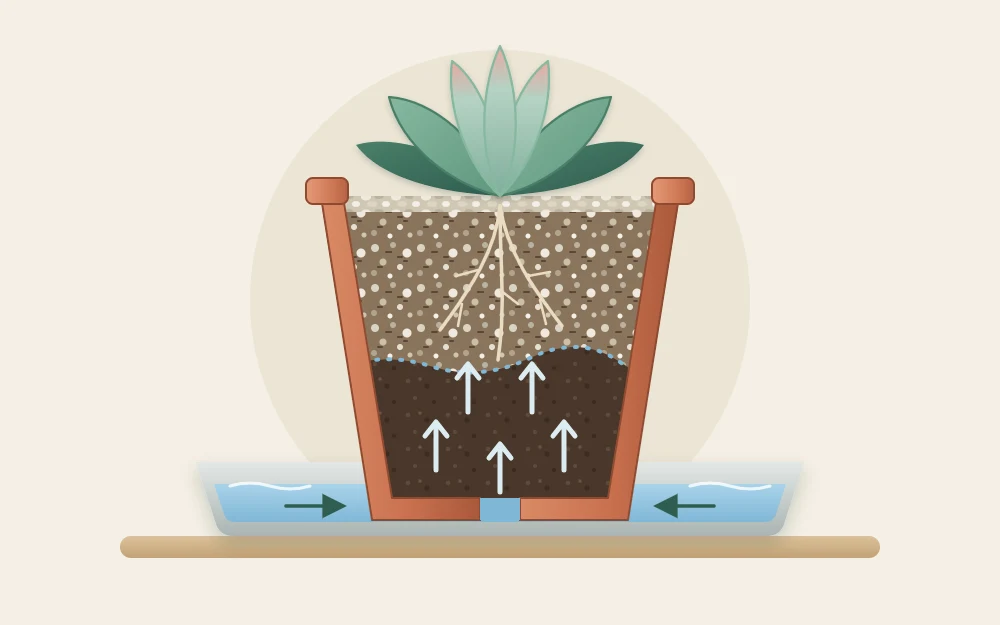
The result is the same soak and dry cycle described in the main guide on how to water succulents. Only the direction of the water changes.
When bottom watering helps
- Very dry soil that sheds water. A mix that has dried out completely, especially a peaty one, can repel water so that it runs down the inside of the pot and out of the hole. Standing the pot in water gives the mix time to absorb it.
- Tight rosettes and crowded pots. When leaves cover the soil, it is hard to pour without filling the rosette. Water trapped between leaves can sit there for a long time, particularly in cool, still air.
- Leaves with farina. The powdery coating on some leaves marks easily when it is splashed or touched.
- Loose top dressing. Fine gravel or grit on the surface can shift or wash out when water is poured from above.
- Very small pots. A tray makes it easier to water a group of small pots evenly.
When top watering is the better choice
Top watering does one thing bottom watering cannot: it flushes the soil. Tap water and fertilizer leave dissolved minerals behind as water evaporates. Water moving down through the pot and out of the drainage hole carries some of them away.
When a pot is only ever watered from below, those minerals tend to move upward and collect near the surface, where they can show as a white or tan crust on the soil or the pot rim. If you bottom water regularly, water from the top now and then and let plenty run through.
Top watering is also simply quicker. For a plant in open, gritty mix with soil you can reach, a narrow-spouted can aimed at the soil does the job well.
What you need
The pot must have a drainage hole, since that is the only way in for the water. Most pots work, and unglazed terracotta also absorbs some water through its walls. If you are choosing containers, the guide to the best pots for succulents compares the materials.
You also need a tray, basin or sink that holds the pot level, and somewhere for the pot to drain afterward, such as a rack or an empty sink.
How to bottom water step by step
- Check that the plant needs water. The soil should be dry at depth. Test with a wooden skewer, or lift the pot and feel how light it is.
- Add a shallow depth of water to the tray. About 1 in (2.5 cm) is a reasonable start for small pots. The water should come only part of the way up the pot, never over the rim.
- Stand the pot in the water. Keep it upright. A very dry, light pot may float or tip at first, so steady it for a moment.
- Wait and watch. Add a little water if the tray empties quickly, which often happens with dry soil.
- Lift the pot when it has taken up enough. The surface of the soil darkens with moisture, or the pot feels clearly heavier than when you started. Under a layer of top dressing, go by weight.
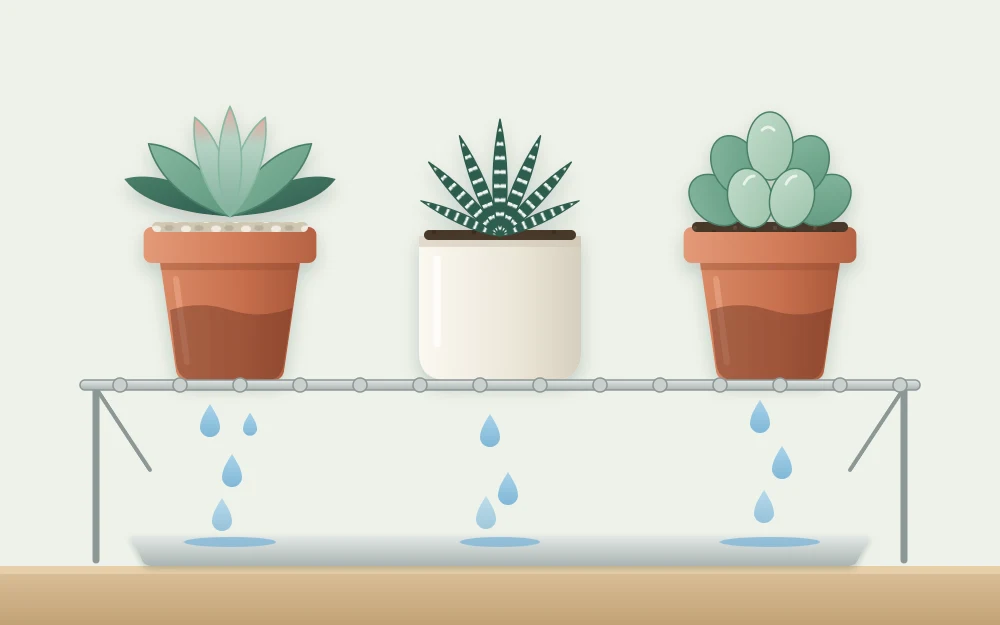
- Drain fully. Set the pot on a rack or in an empty sink until it stops dripping.
- Return it to its place. Empty the saucer or cachepot first, and check it again a little later.
How long to leave the pot
There is no fixed time. Uptake depends on the size of the pot, the mix and how dry it was. A small pot of gritty mix might be moist through in ten to twenty minutes, while a larger pot or a water-repellent mix can take noticeably longer.
Go by the signs, not the clock: a darkened surface and a heavier pot. If the surface is still dry after half an hour or so, the mix may be too coarse to draw water all the way up, or the water too shallow. Finish with a slow pour from the top.
Tip
Weigh the pot in your hand before and after. Learning how a dry pot and a fully watered pot feel is one of the most reliable ways to judge when to water again.
Limits and common mistakes
- Leaving pots standing in water. Bottom watering is a short soak, not a permanent reservoir. Roots left in standing water for hours or days are deprived of air, and that is commonly associated with root rot.
- Using it on a pot without a hole. The method cannot work there. Those containers need a different approach, covered in the guide to pots without drainage holes.
- Treating it as a routine. Bottom watering does not change when to water. Wait until the soil has dried through, however the last watering was done.
- Sharing water between plants. If a plant has pests or looks unwell, give it a separate tray so nothing travels to its neighbors in the water.
- Skipping the drain. A pot returned to its saucer still dripping sits in that water afterward.
Used this way, bottom watering is one more tool. Reach for it when the soil will not take water from above or when you want to keep the leaves dry, and water from the top the rest of the time.
Frequently asked questions
How long should succulents sit in water when bottom watering?
Only until the root ball is moist, which you can tell from a darkened soil surface or a clearly heavier pot. A small pot might take ten to twenty minutes and a larger or very dry one longer. Lift it out then and let it drain. Do not leave it standing for hours.
Is bottom watering better than top watering for succulents?
Neither is better in general. Bottom watering keeps leaves dry and re-wets soil that sheds water. Top watering is quicker and flushes built-up minerals out through the drainage hole. Many growers use both, and with either method the soil should dry through before the next watering.
Can bottom watering cause root rot?
The method alone does not, but leaving a pot standing in water does keep the roots wet and short of air, which is commonly associated with rot. Lift the pot once it has taken up enough, let it drain fully, and wait for the soil to dry through before watering again.