Underwatered Succulent: Signs and How to Rehydrate It
Wrinkled, deflated leaves are commonly associated with thirst, but damaged roots cause the same look. Here is how to check the soil and roots first, then rehydrate a dry plant without overcorrecting.
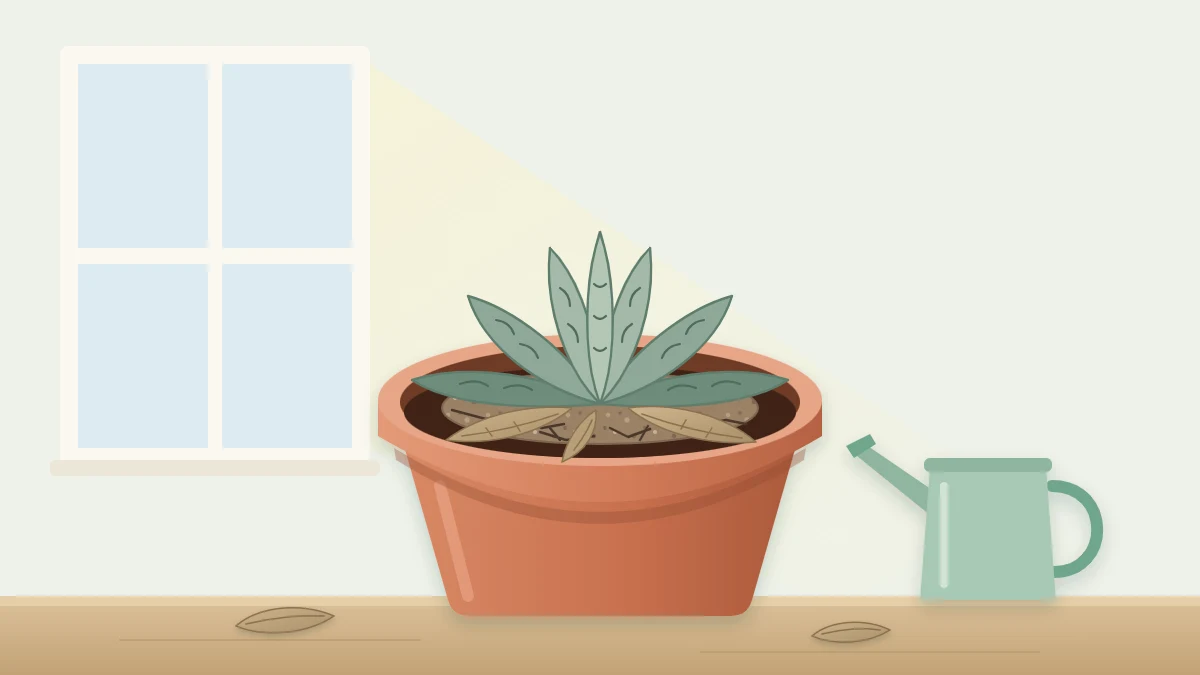
An underwatered succulent usually tells you slowly. The leaves lose their tight, full look, fine wrinkles appear, and the plant seems to deflate a little more each week. Succulents are built to live on stored water for a while, so mild thirst is rarely an emergency.
The catch is that wrinkled leaves do not always mean dry soil. A plant with damaged roots cannot drink either, and it wrinkles in exactly the same way while sitting in wet mix. So the first job is a quick check, and only then a proper drink.
Signs commonly associated with too little water
- Leaves that look wrinkled, puckered or deflated, often starting with the lower ones.
- Leaves that feel thin and bendy instead of firm when you press them gently.
- Leaves curling inward, or a rosette closing up tighter than usual.
- Lower leaves that have dried to a crisp, papery state.
- Soil that has shrunk and pulled away from the pot wall.
- A pot that feels very light for its size.
- Roots that look dry and thin when you slide the plant out.
A few crisp leaves at the very bottom of a healthy plant are normal. Succulents shed their oldest leaves as they grow, and those leaves dry up as the plant reuses what is in them. It is the wrinkling of the main, living leaves that suggests thirst.
Why a thirsty look is not always thirst
Leaves wrinkle when they are giving up more water than the roots bring in. Dry soil is the most common reason, but it is one possibility among several.
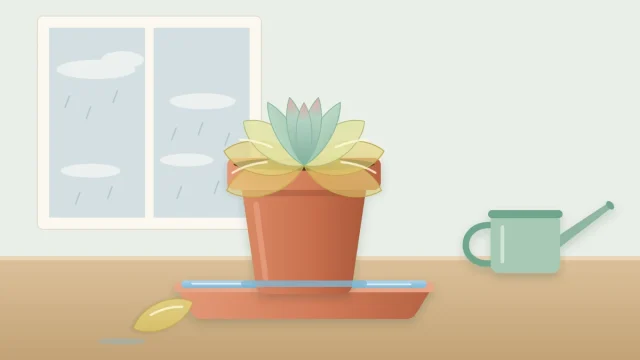
- Root damage. Roots that have rotted in wet soil cannot take up water, so the leaves shrivel even though the pot is damp.
- Recent repotting. Disturbed or trimmed roots need time before they work normally again.
- Heat and strong sun. A plant can lose water faster than it replaces it during a hot spell, even in moist soil.
- A resting period. Some succulents slow down in the hottest or coldest months and look a little drawn while they rest.
Pouring more water on a plant with rotted roots makes things worse, which is why the checks below come first.
Checks to run before you pour
- Test the soil at depth. Push a wooden skewer or a finger at least 2 in (5 cm) down, or nearly to the bottom of a small pot. A skewer that comes out clean and dry supports thirst. One that comes out dark and damp does not.
- Lift the pot. Dry soil weighs very little. With practice you can feel the difference between a dry pot and a watered one.
- Look at the edge. A gap between the soil and the pot wall is commonly associated with a mix that has dried right out.
- Look at the roots if the signs disagree. If the leaves are wrinkled but the soil is damp, ease the plant out. Pale, firm roots are a good sign. Dark, soft roots point to rot, not thirst.
When the soil is dry through and the roots look sound, the plant very likely needs water.
How to rehydrate a dry plant
A thirsty succulent needs one thorough watering, not a series of small splashes. A splash wets only the surface, and the roots lower in the pot stay dry.
- Take the pot to a sink or set it on a tray.
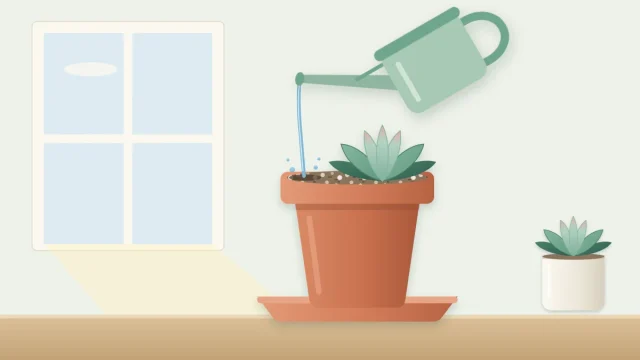
- Water the soil slowly, around the plant and not into the rosette, until water runs from the drainage hole.
- Wait a few minutes, then water once more so the whole root ball is moistened.
- Let the pot drain fully and empty the saucer.
- Put the plant back in its usual light.
This is the soak and dry approach, and the full method is in the guide on how to water succulents.
Re-wetting soil that sheds water
Very dry soil, especially a peat-based mix, can become water-repellent. You pour, and the water runs down the gap at the pot wall and straight out of the drainage hole. The pot seems watered, but the center of the root ball is still dry.
Check by lifting the pot after watering. If it is barely heavier than before, the water passed through without soaking in. Two things help:
- Water in several slow passes a few minutes apart, so each pass has time to soak in.
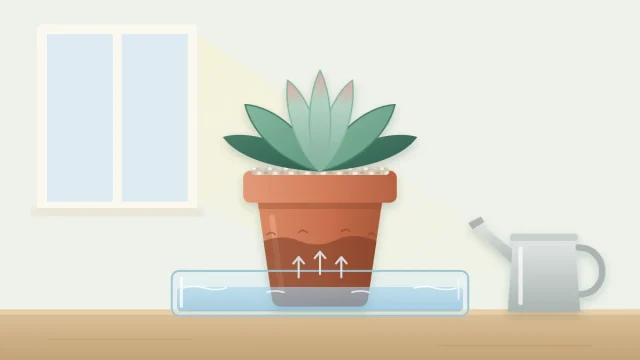
- Stand the pot in a shallow tray of water so the mix absorbs moisture from below. The steps are in the guide to bottom watering succulents.
Tip
Soil that repels water every time it dries is often old or too peaty. Moving the plant into a fresh gritty mix at the next repotting usually solves the problem for good.
What to expect over the next few days
Leaves do not refill at once. Roots that have been dry for a long time can take a while to become active again, and the leaves plump up gradually after that. Many plants look clearly fuller within several days to a week or so, though the pace depends on the plant and the season.
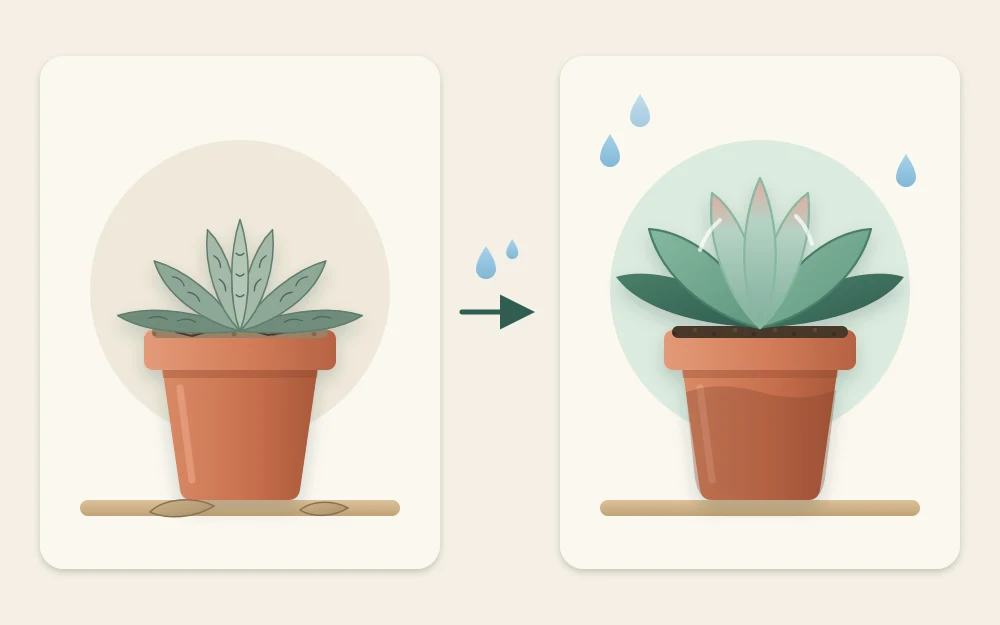
Leaves that have dried to a crisp will not recover. They can be removed once they come away easily. If healthy-looking leaves keep dropping after watering, something else may be going on, and the article on why succulent leaves fall off walks through the other causes.
If the leaves have not improved after a week or two and the soil is still damp, stop and check the roots. A plant that stays wrinkled in wet soil is not short of water.
Avoid overcorrecting
After a scare it is tempting to keep the soil moist. That swaps one problem for a more serious one, because succulents tolerate dry soil much better than wet soil.
Once the plant has had its soak, go back to checking. Let the soil dry through, confirm it with the skewer and the weight of the pot, and then water thoroughly again. If the mix dries out very fast, the pot may be small for the plant or the spot very hot and bright. In that case the answer is to check more often, not to give smaller, more frequent sips.
Frequently asked questions
How long does an underwatered succulent take to plump up?
It varies with the plant, the season and how dry the roots were. Many succulents look fuller within several days to a week or so after a thorough soak. If the leaves are still wrinkled after a couple of weeks and the soil is damp, check the roots, because the cause may not be thirst.
Is it better to underwater or overwater a succulent?
Erring on the dry side is generally the lower risk. Succulents store water and usually recover from a dry spell once they are soaked properly, while roots kept in wet soil can rot and may not recover. The aim is neither extreme: water thoroughly, then wait until the soil has dried through.
Why is a succulent still wrinkled after watering?
There are a few possibilities. The water may have run past soil that has become water-repellent, so lift the pot to see whether it gained weight. The roots may need more time to become active. Or the roots may be damaged and unable to take up water, which you can check by easing the plant out.