Overwatered Succulent: Signs, Causes and What to Do
Soft, translucent or dropping leaves are commonly associated with too much water, but no single sign proves it. Learn how to check the soil and roots, why soil stays wet, and what to do next.
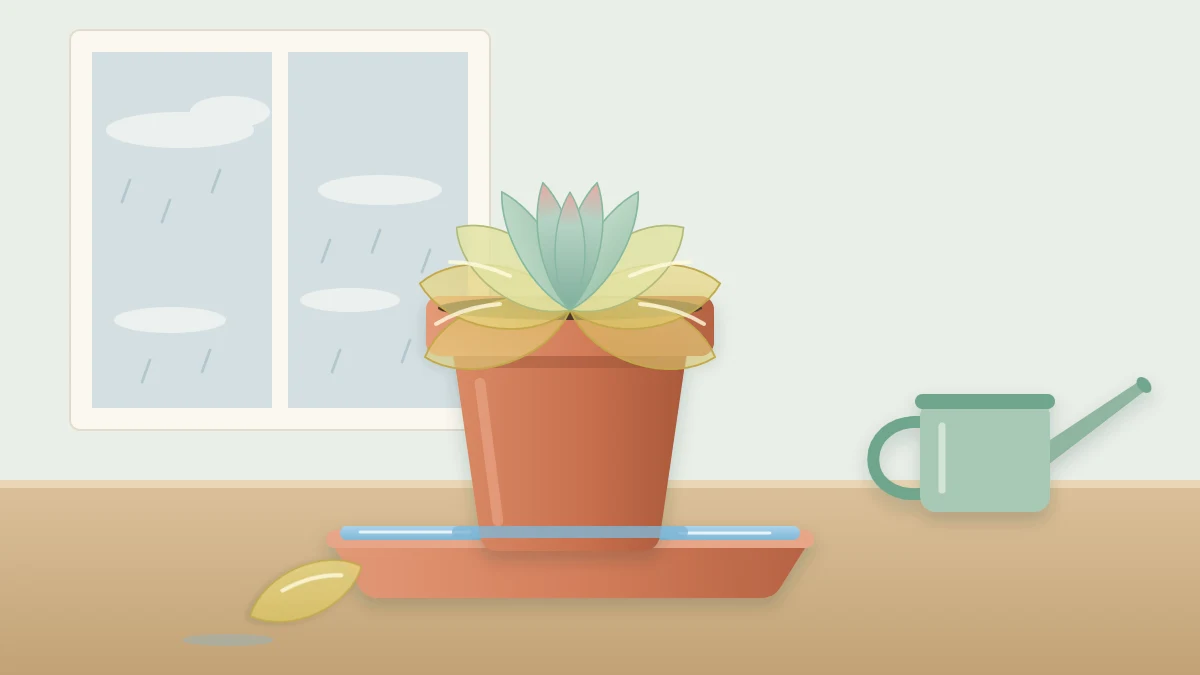
An overwatered succulent rarely looks dramatic at first. A few lower leaves turn soft or pale, one drops when you brush past it, and the rest of the plant seems fine. Because succulents store water in their leaves and stems, trouble from wet soil tends to build quietly and then show all at once.
The difficulty is that none of these signs proves the cause by itself. Soft or yellow leaves can also follow cold, low light, natural aging or damaged roots. What follows covers what too much water commonly looks like, how to confirm it by checking the soil and roots, and what to do next.
What overwatering really means
Overwatering is less about how much you pour and more about how long the roots sit in wet soil. Succulent roots need air as well as water. In a mix that stays saturated, the air spaces fill with water and the roots begin to fail.
Failing roots cannot supply the plant, even though the soil around them is wet. That is why a plant in soggy soil can look thirsty. A thorough watering followed by a quick dry-down is normal. Soil that stays wet for a long stretch is the problem.
Signs commonly associated with too much water
- Lower leaves that feel soft, swollen or mushy instead of firm.
- Leaves turning pale yellow or translucent, as if you could see through them.
- Leaves that drop at a light touch, often while still plump.
- Soil that is still damp many days after watering, sometimes with a musty smell.
- A stem base that feels soft or looks dark and shrunken.
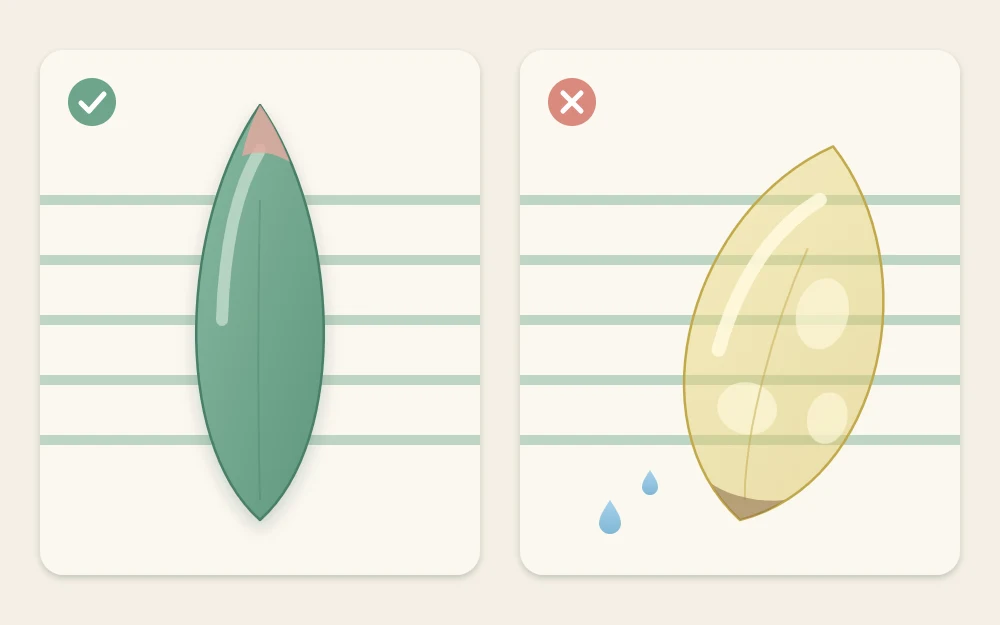
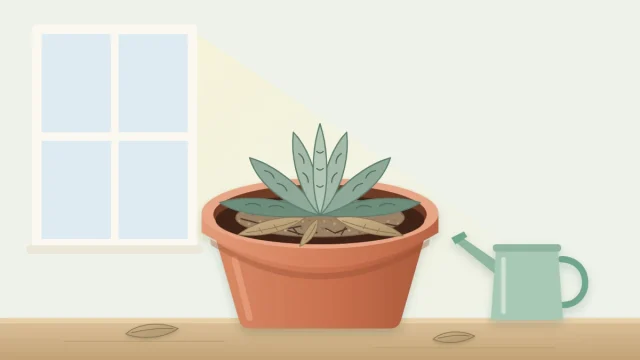
Each of these has other explanations. One old leaf drying or yellowing at the bottom of a rosette is usually normal aging. Translucent leaves after a cold night may be chill damage. Leaves can also drop after a knock, a move or a sudden change in light.
The pattern matters more than any one leaf. Several of these signs together, in soil that is still wet at depth, make too much water a likely explanation. The same leaves above dry soil point somewhere else.
How to check before you act
- Test the soil at depth. Push a wooden skewer or your finger at least 2 in (5 cm) down, or close to the bottom of a small pot. If it comes out dark and damp with soil clinging to it long after the last watering, the mix is holding water.
- Lift the pot. A pot that still feels heavy for its size is still wet inside, whatever the surface looks like.
- Look underneath. Check that there is a drainage hole, that it is not blocked, and that no water is standing in the saucer or cachepot.
- Feel the stem base. It should be firm. Softness or dark discoloration at soil level is a reason to look at the roots today.
- Think about recent changes. A move to a dimmer spot, cooler weather or a new, larger pot all slow down how fast the soil dries.
If the soil is dry all the way through, wet soil is unlikely to be the cause, and more water may be what the plant needs. The guide on how to water succulents with the soak and dry method explains how to judge that.
Why soil stays wet: more than watering too often
Watering before the soil has dried is one cause, but the setup often matters as much as the habit.
- Dense soil. Peaty, fine-textured potting soil holds water far longer than a gritty mix with pumice or perlite.
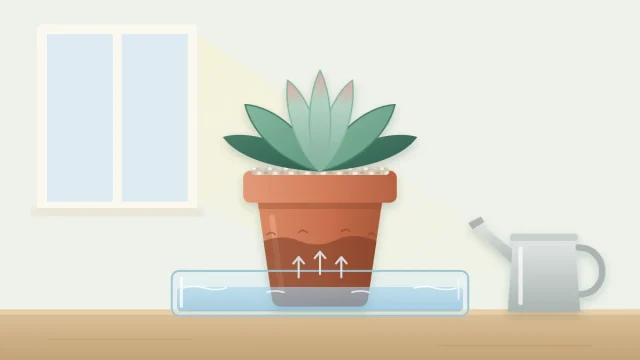
- No drainage. A pot without a drainage hole, or a saucer left full, keeps the bottom of the root ball wet.
- A pot that is too big. A small root system cannot use the water held in a large volume of soil.
- Low light. A plant in dim light grows slowly and uses little water.
- Cool weather. Soil dries slowly in cool rooms, and many succulents grow very little in winter.
This is why the same watering habit can suit a plant in a sunny summer window and harm it in a dim room in winter.
What to do first
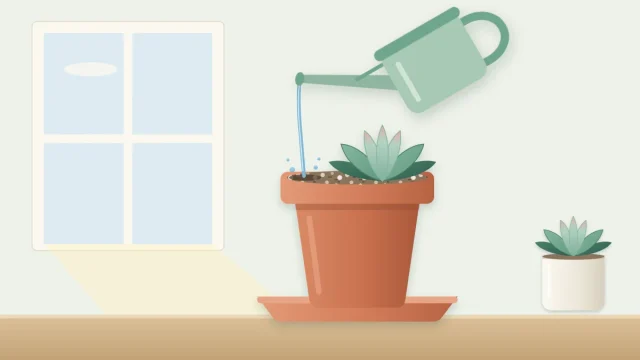
- Stop watering and empty any saucer or cachepot.
- Move the plant somewhere with good air movement and bright indirect light. Avoid a sudden move into strong direct sun, which adds a second stress.
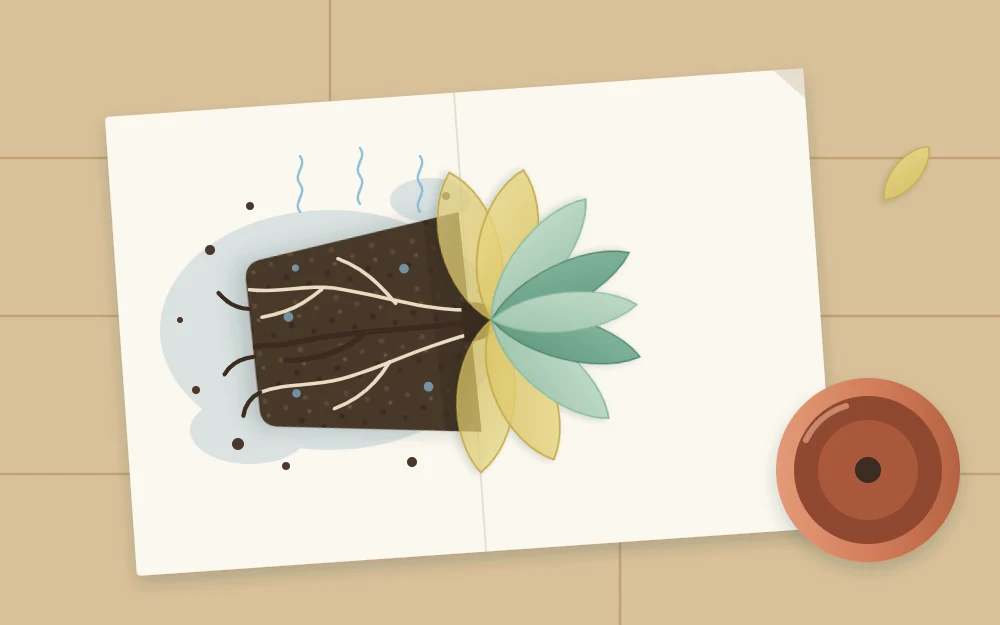
- Slide the plant out of its pot and look. Healthy roots are usually pale and firm. Roots that are dark, soft or slimy, or that smell sour, have probably rotted. The article on what healthy succulent roots look like shows what to compare against.
- If the roots look sound and the soil is simply wet, rest the root ball on paper in a shaded, airy place for a day or so, then return it to the pot.
- Remove fallen and mushy leaves so they do not sit against the stem.
When to repot into dry mix
Letting the soil dry is enough when the roots are firm and the mix drains well. Repot instead when the soil is dense and slow to dry, the pot has no drainage hole, or some of the roots are dark and soft.
Crumble away the wet soil, cut off roots that are clearly rotted with clean scissors, and leave the plant out of soil in bright shade for a few days so the cuts can dry. Then set it in dry, fast-draining mix in a pot with a drainage hole, only a little wider than the root ball. Wait several days to a week or so before watering lightly.
If the stem itself is affected, follow the steps for dealing with succulent root rot.
Tip
Leaves that have already turned soft or translucent will not firm up again. Judge recovery by the new growth at the center of the plant, which should stay firm and well colored.
When a plant cannot be saved
Not every plant recovers. If the stem is soft and dark all the way through at the base and most of the roots have gone, the lower part of the plant is unlikely to come back. Sometimes a firm, healthy top can be cut off well above the damage, left to dry and rooted in fresh mix, but that is a new start, not a rescue of the old plant.
Frequently asked questions
Can an overwatered succulent recover?
Often it can, if the roots and stem are still firm. Stop watering, let the soil dry through, and improve light and air movement. Leaves that are already soft will not recover, so watch the new growth at the center. A plant whose stem base has turned soft and dark is much less likely to come back.
How long does it take for wet succulent soil to dry out?
It depends on the soil, pot size, pot material, light and temperature. A small terracotta pot of gritty mix in a warm bright window might dry within a week or so, while dense soil in a cool dim room can stay damp for several weeks. Check at depth with a skewer instead of counting days.
Should I remove the soft leaves from an overwatered succulent?
Remove leaves that have fallen or turned mushy, since they hold moisture against the stem. Leaves that are only slightly soft can stay while you check the soil and roots. A gentle sideways wiggle usually releases a failing leaf; if it resists, leave it in place for now.