Succulent Root Rot: How to Spot It and What to Try
What root rot is, why the signs above the soil are not proof, how to confirm it at the roots and stem base, and the steps growers commonly try, with honest limits.
A succulent that turns soft, pale and unsteady in its pot makes most growers think of one thing. Succulent root rot is a real and fairly common way for these plants to fail, and it can move quickly once it reaches the stem. It is also over-suspected: several other problems look similar from above.
The honest answer to “can it be saved?” is that it depends on how far the damage has gone, and you can only find that out by looking. This guide explains what rot is, how to confirm it, what growers commonly try, and where the limits are.
What root rot is
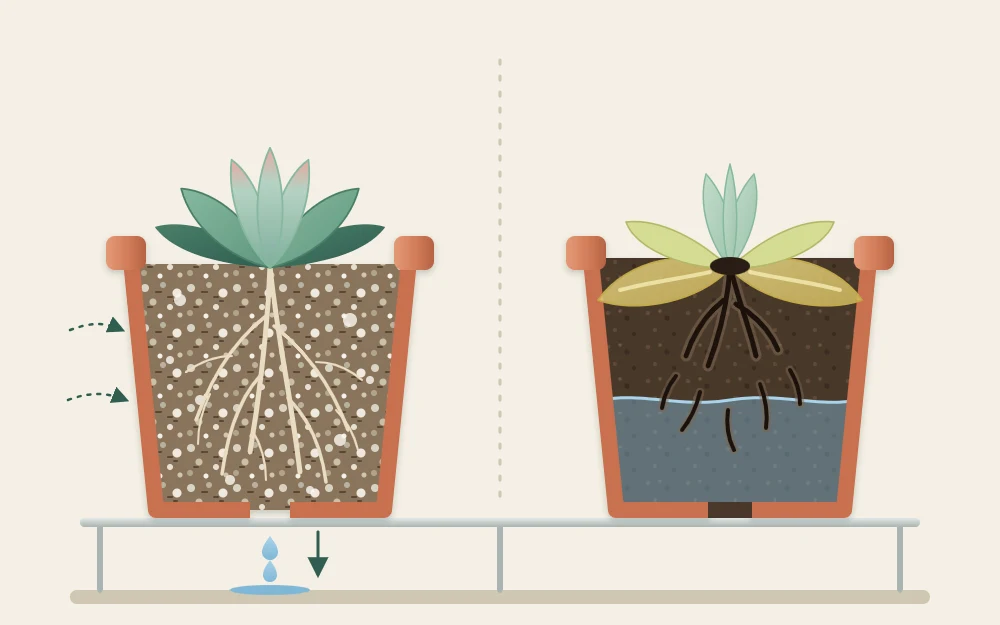
Roots need air as well as water. In a mix that drains well, water runs through and air returns to the spaces between particles within a short time. In soil that stays saturated, those spaces stay full of water, the roots are starved of oxygen and they begin to die.
Dead and weakened roots are then readily colonized by fungi and bacteria that live in wet soil, and the decay spreads. Succulents are especially prone because they are built for soil that dries out between rains. The damage can travel from the roots into the base of the stem.
The conditions behind it
Rot is usually less about one heavy watering and more about soil that stays wet for too long. The usual contributors:
- Watering again before the soil has dried through.
- Dense, moisture-holding potting soil with little grit in it.
- A pot with no drainage hole, or a blocked one.
- Water left standing in a saucer or cachepot.
- A pot much larger than the root ball, so that a big volume of soil stays damp.
- Low light and cool temperatures, when the plant uses little water and the soil dries slowly.
Signs above the soil, and why they are not proof
These are the changes that commonly go with rotting roots:
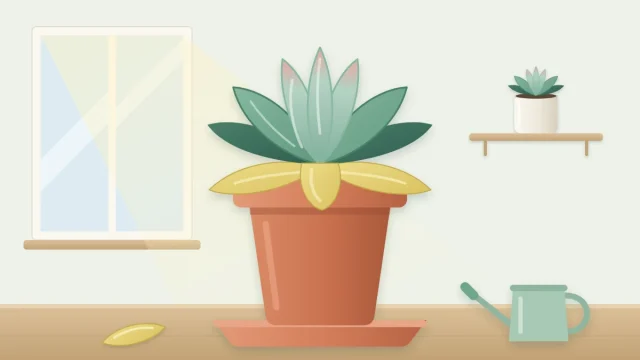
- Lower leaves turning yellow, soft and translucent, and dropping easily.
- Leaves wrinkling even though the soil is wet, because damaged roots cannot take water up.
- A stem base that darkens and feels soft.
- A plant that rocks or lifts out of the soil with little resistance.
- A sour or musty smell from the pot.
Each of them has other explanations. Soft translucent leaves can follow cold damage. Wrinkled leaves are more often simple thirst. Yellow lower leaves may be old ones being shed. A recently repotted plant wobbles because it has not rooted in yet. The article on an overwatered succulent covers the earlier stage, when the soil is too wet but the roots may still be sound. Treat the signs above as a reason to look, not as a conclusion.
Confirming it at the roots and stem base
Slide the plant out of its pot and examine it. Healthy roots are firm and usually pale. Rotted roots are brown to black, limp and often slimy; when you pinch one and pull lightly, the outer layer tends to slip off and leave a thin thread. The soil at the center of the root ball is often wet and may smell sour. The guide to checking succulent roots describes how to do this gently and what each root condition suggests.
Then look at the stem base. Press it: firm is good. If it is dark, soft or wet-looking, the rot has moved into the stem, which changes the outlook.
What growers commonly try
There is no treatment that reverses rot. The approach below removes dead tissue and gives the remaining healthy roots dry, airy conditions. It often works when the stem is still firm, and it is not certain to.
- Remove the wet soil. Crumble it away from the roots with your fingers. Discard it; do not reuse it.
- Cut away soft, dark roots. Use scissors or a blade wiped clean beforehand. Cut back to firm, pale tissue, and clean the blade again afterward so nothing is carried to another plant.
- Remove soft leaves that are touching the stem base.
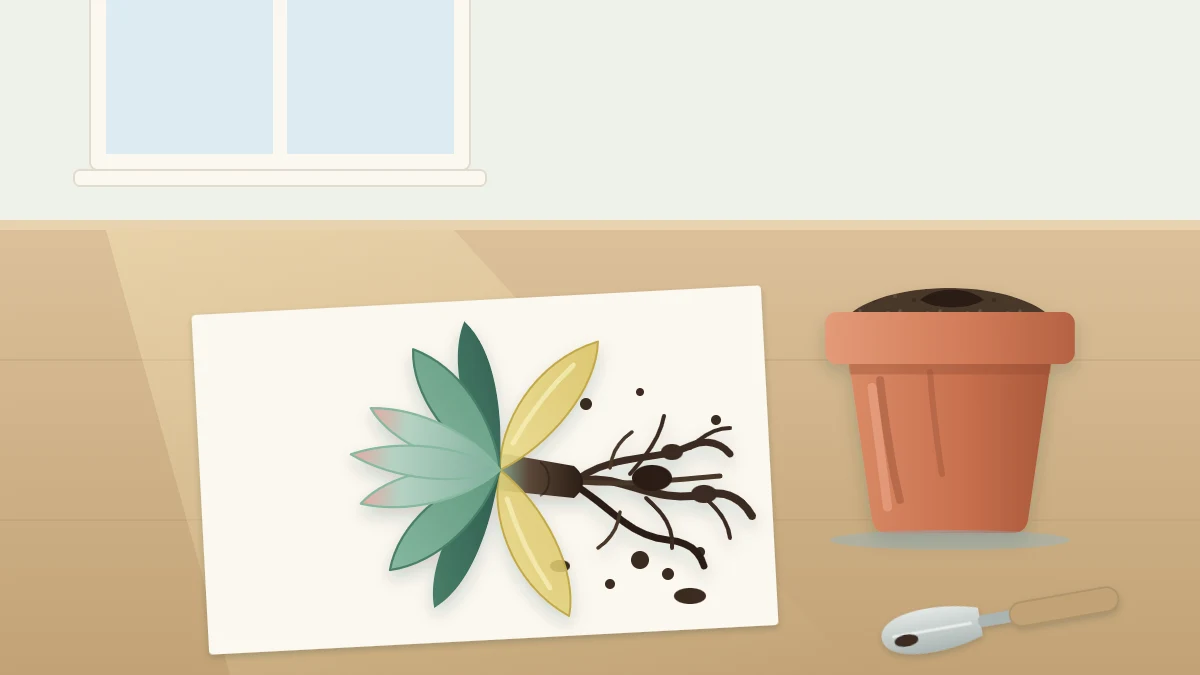
- Let the plant dry. Set it bare-root on paper in bright shade, out of direct sun, with moving air, until the cut ends have dried and sealed. This commonly takes a few days and longer for thick stems.
- Repot in dry gritty mix. Use a clean pot with a drainage hole, sized to the reduced root ball. The method is in the guide on how to repot succulents.
- Wait before watering. Leave the plant dry for roughly a week or more so that it can begin making new roots, then water lightly and let the soil dry through before the next watering.
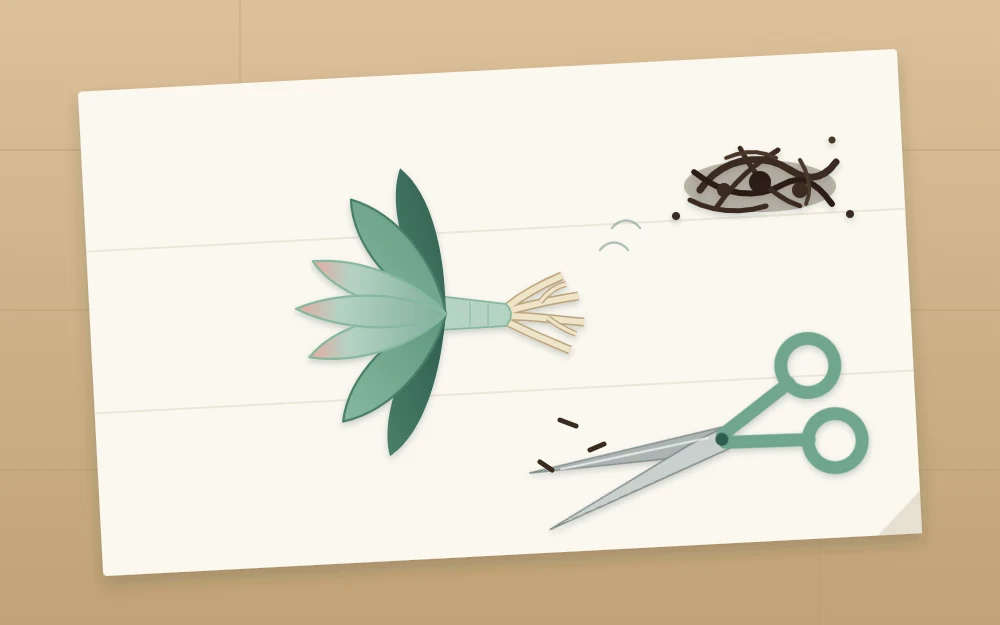
Keep the plant in bright indirect light while it re-establishes. Expect it to look worse before it looks better: with fewer roots it will drop some lower leaves. Firmness in the stem and new growth at the center are the signs to watch for.
Honest limits
If the stem base is dark and soft, cut across it with a clean blade and look at the cut surface. Clean, evenly colored tissue is healthy. Brown or black staining inside means rot is in the stem, and the part below that point is unlikely to recover.
When the top of the plant is still firm, some growers cut the stem above all discoloration, let the cutting dry until the end seals, and root it in dry gritty mix as a fresh start. It does not always succeed, particularly if any staining remains in the cutting.
If the whole stem is soft and the leaves are collapsing, the plant is usually past saving. Discard it with its soil, and wash the pot thoroughly before using it again.
Prevention
Everything that prevents rot comes down to letting the root zone dry and breathe between waterings.
- Check that the soil is dry at depth with a finger or skewer before you water, instead of watering by the calendar.
- Use a fast-draining mix with plenty of mineral grit such as pumice or perlite. The guide to succulent soil explains what to look for.
- Choose pots with a drainage hole, only a little wider than the root ball.
- Empty saucers and cachepots after watering.
- Water less often in cool, dim months, when the soil stays damp far longer.
Tip
Lift the pot right after watering and again when the soil is fully dry. Learning the difference in weight gives you a quick second check alongside the skewer.
Frequently asked questions
Can a succulent recover from root rot?
Sometimes. If the stem base is still firm and some pale, firm roots remain, removing the dead roots and replanting in dry gritty mix gives the plant a reasonable chance. If the inside of the stem is dark and soft, the lower part is unlikely to recover, although a healthy top may root as a cutting.
How can I tell root rot from underwatering?
Both can cause wrinkled leaves, so check the soil at depth. Dry soil to the bottom and a light pot suggest thirst. Wet soil with wrinkled or soft leaves suggests the roots are not working, and looking at them directly is the way to confirm. Rotted roots are dark and limp; thirsty roots are dry but firm near the stem.
Should I water a succulent right after trimming rotted roots?
It is generally better to wait. Freshly cut roots placed in damp soil are open to further decay, so growers usually let the cuts dry and seal, repot into dry mix, and hold off for roughly a week or more before giving a light watering.