Common Succulent Problems: A Symptom-by-Symptom Guide
A symptom table and a six-step assessment routine for working out what could be wrong with a succulent, from yellow leaves and leaf drop to stretching, dark stems and white fluff.

A succulent that looked fine last month now has yellow leaves, or a bent stem, or a strange white patch, and you want to know what went wrong. Most succulent problems trace back to a small set of conditions: water, light, soil and drainage, temperature, and pests. The difficulty is that different causes can produce the same symptom.
Use this page as a starting point. The table lists what you may be seeing, the causes commonly behind it, and the first thing to check. The routine after it helps you narrow things down before you change anything.
Symptoms, possible causes and first checks
| What you see | Common possibilities | Check first |
|---|---|---|
| Yellow leaves | Excess water, low light, normal aging of old leaves, sudden strong sun, tired soil | Which leaves are affected, and whether they are soft or dry |
| Soft, translucent leaves | Excess water or soil that stays wet; sometimes cold damage | Soil moisture at depth and the stem base |
| Wrinkled, thin leaves | Too little water; or roots that are damaged and cannot take water up | Whether the soil is dry or wet at depth |
| Leaves dropping | Excess water, drought, a fragile species being bumped, a sudden change | What the fallen leaves look and feel like |
| Stretching and leaning | Not enough light | Distance from the window and hours of light |
| Brown, dry patches | Sunburn after a quick move into direct sun; old scars; sometimes pests | Whether the patches face the light source |
| Black or dark stem base | Rot moving up from wet soil; sometimes cold injury | Whether the stem is soft, and the roots |
| White fluff | Mealybugs; mold on damp soil; mineral crust | Whether it is soft and waxy, and where it sits |
| Tiny flies | Fungus gnats breeding in soil that stays moist | How long the top of the soil stays damp |
| No growth | Seasonal rest, low light, a root-bound or struggling root system, cool temperatures | Season, light and roots |
One symptom rarely has one cause, and two causes often act together, such as low light slowing the plant down so that the soil stays wet for longer.
The six-step assessment routine
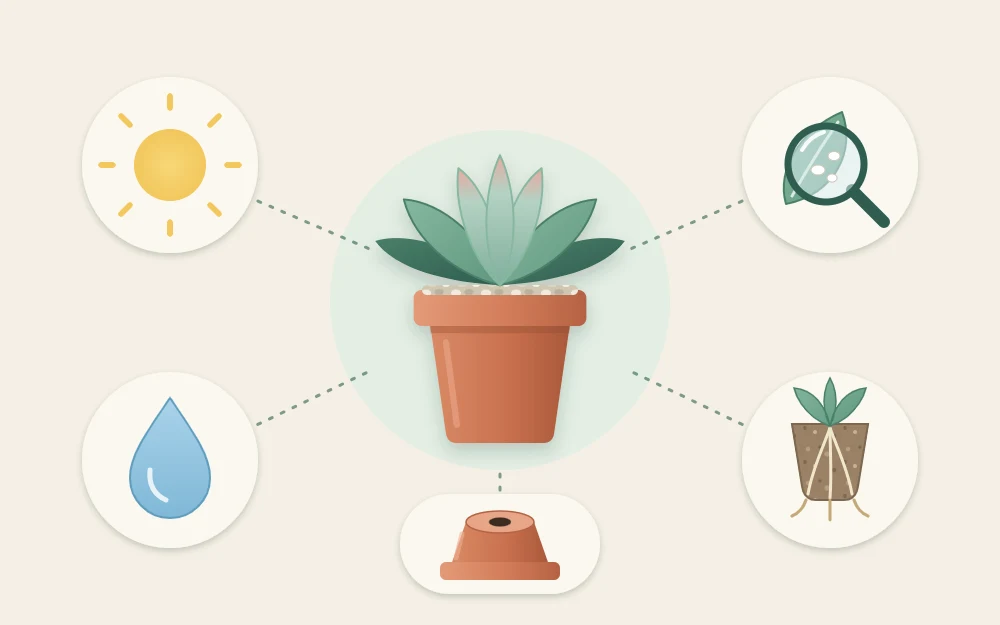
Work through these in order.
- Look at the light. Note how far the plant sits from the window, which way the window faces, and whether the plant has been moved lately.
- Feel the soil at depth. Push a finger or a wooden skewer down toward the bottom of the pot. The surface can be dry while the lower half is still wet.
- Check the drainage hole. Confirm there is one, that it is not blocked, and that the pot is not standing in water in a saucer or cachepot.
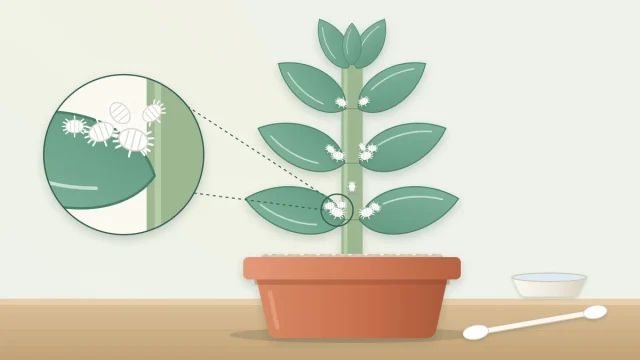
- Look under the leaves. Inspect leaf undersides, the stem and the points where leaves join it for anything white, sticky or moving.
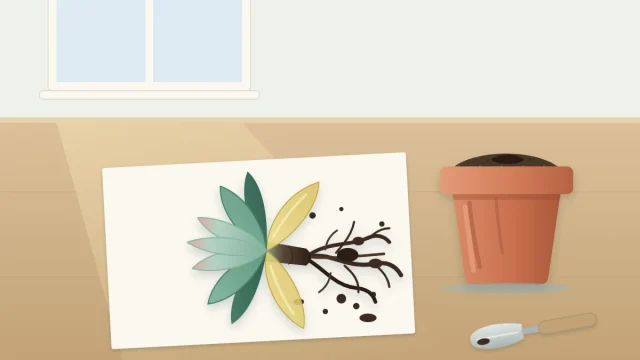
- Slide the plant out and look at the roots if the first four steps have not explained things.
- Recall recent changes. A new spot, a repot, a change in season, a heater turned on or a different watering habit in the past few weeks is often the missing piece.
Leaf color and texture changes
Yellowing is the symptom with the longest list of causes. Soft yellow lower leaves in damp soil point one way; a plant that is pale all over and reaching toward the window points another. The guide to succulent leaves turning yellow walks through each possibility and how to tell them apart.
Soft, translucent leaves and wrinkled leaves look like opposites, but both can come from roots that are no longer working. A plant in wet soil with rotted roots can wrinkle because it cannot drink. That is why feeling the soil at depth matters more than the look of the leaves.
Leaf drop, and the kind that is normal
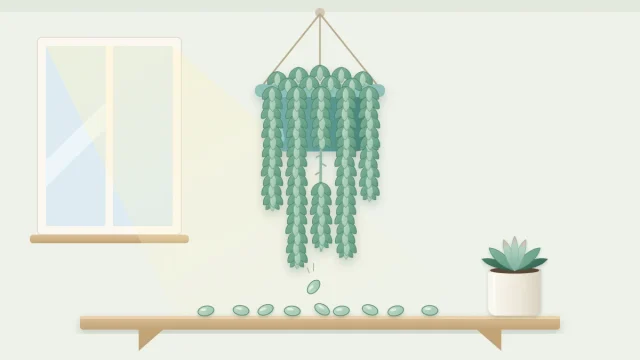
Leaves that fall at a touch can be swollen with water, dried out, or perfectly healthy and simply knocked loose. The article on succulent leaves falling off sorts leaf drop by what the fallen leaves look like.
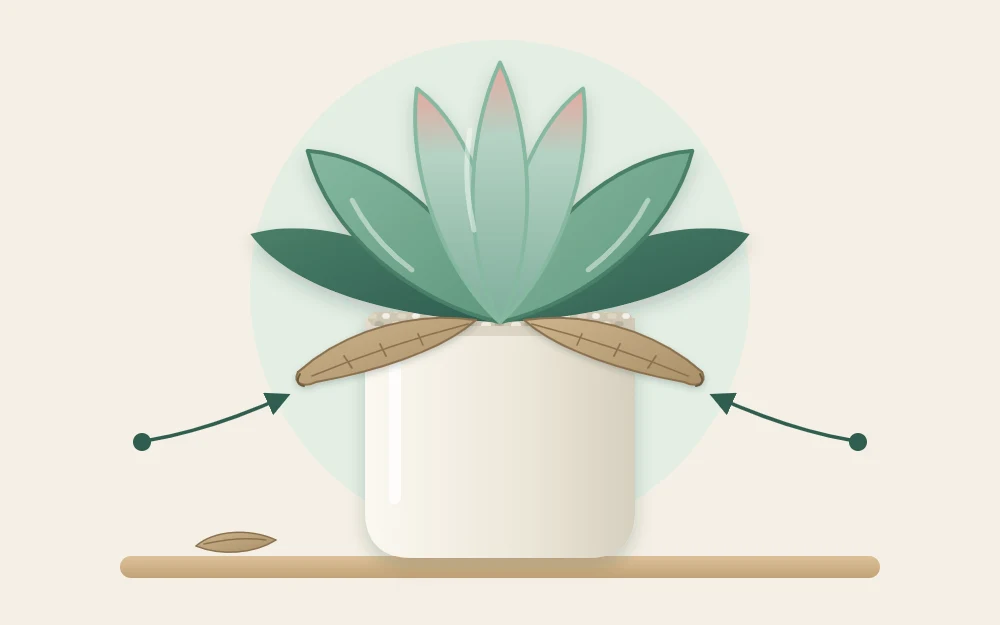
One kind of leaf loss is not a problem at all. Rosette succulents grow new leaves from the center and retire the oldest ones at the bottom. Those leaves thin out, dry to a papery tan and can be pulled away easily. If it happens slowly, a leaf or two at a time, while the rest of the plant is firm, the plant is doing what it should.
Stretching and stalled growth
A stem that lengthens with wide gaps between leaves, or a rosette that flattens and leans, is showing etiolation. Low light is the usual cause. The stretched section will not shrink back, though better light changes how new growth comes in. See the guide to leggy succulents for what to do about it.
No growth at all is harder to read. Many succulents slow down or rest for part of the year, and which season depends on the species. If the plant is firm and well colored, waiting is reasonable. If it is also losing leaves or shrinking, go to the roots.
Stem and root trouble
A stem base that turns dark and soft is the symptom to act on soonest, because rot can move upward from wet soil into the plant. Press the stem gently. Firm, dry, brownish bark on an older stem is normal for many species; soft, wet or translucent tissue is not. If it is soft, slide the plant out and look at the roots the same day.
Insects and white fluff
Soft white tufts tucked where leaves meet the stem are often mealybugs. White fuzz lying on the soil surface is more likely mold on damp mix, and a hard chalky crust is usually mineral residue from water. Do not confuse any of these with farina, the even powdery coating some species carry on their leaves, which is natural and best left untouched.
Tiny dark flies that rise from the pot when you water are commonly fungus gnats, which breed in soil that stays moist. Identification and physical control steps are in the guide to succulent pests.
Change one thing at a time
Once the checks point somewhere, make one change and then give the plant a few weeks. Succulents respond slowly, and moving, repotting, watering and feeding all at once makes it impossible to know what helped. Damaged leaves seldom recover, so judge progress by the new growth at the center.
Frequently asked questions
How do I know if a succulent is dying or just resting?
A resting plant stays firm and keeps its color while it simply stops growing for a while. A plant in trouble usually changes: leaves soften, shrivel, drop or discolor, or the stem darkens. If you see ongoing change along with no growth, check the soil at depth and then the roots.
Can a succulent recover once its leaves are damaged?
Often the plant can, even though the individual leaves usually cannot. Scarred, burned or badly wrinkled leaves tend to stay that way, so watch the center of the plant instead. Clean, firm new growth over the following weeks suggests the conditions are now right.
Why does one succulent show several symptoms at once?
Because causes tend to overlap. Low light slows growth, which keeps soil wet for longer, which can stress roots, which then shows up in the leaves. Working through light, soil moisture, drainage, pests and roots in order helps you find the condition that started the chain.