Succulent Leaves Turning Yellow: Possible Causes and Checks
Yellow succulent leaves can come from excess water, low light, normal aging, sudden sun, tired soil, pests or root trouble. Here is what goes with each and how to check.
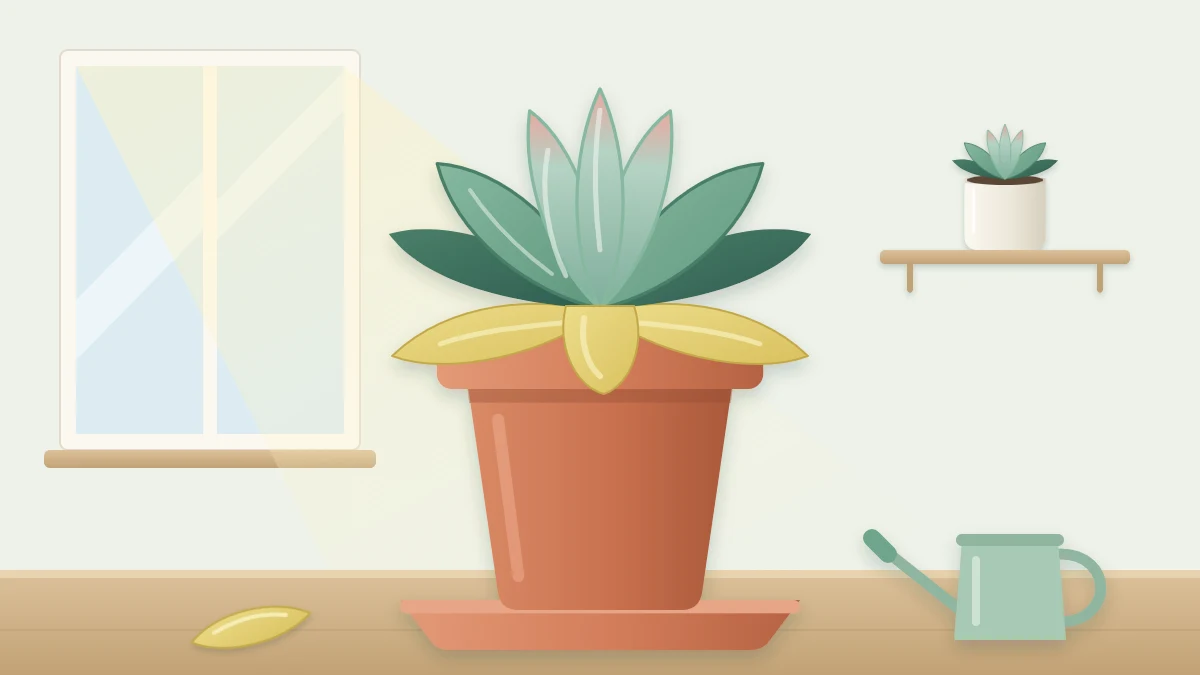
Finding succulent leaves turning yellow is unsettling, mostly because the usual advice jumps straight to one answer. Yellowing is a general response, not a specific one. A leaf loses its green when it is waterlogged, starved of light, scorched, short of nutrients, or simply old and being retired by the plant.
What separates these is the detail: which leaves are yellow, how they feel, and what the soil and light are like.
Start with three observations
Before reading about causes, note these three things.
- Where the yellow leaves are. Only at the bottom, on one side, or spread over the whole plant.
- How they feel. Soft and swollen, thin and dry, or firm like the rest.
- How fast it happened. Several leaves within days, or a slow change over weeks or months.
Excess water: soft, translucent, lower leaves first
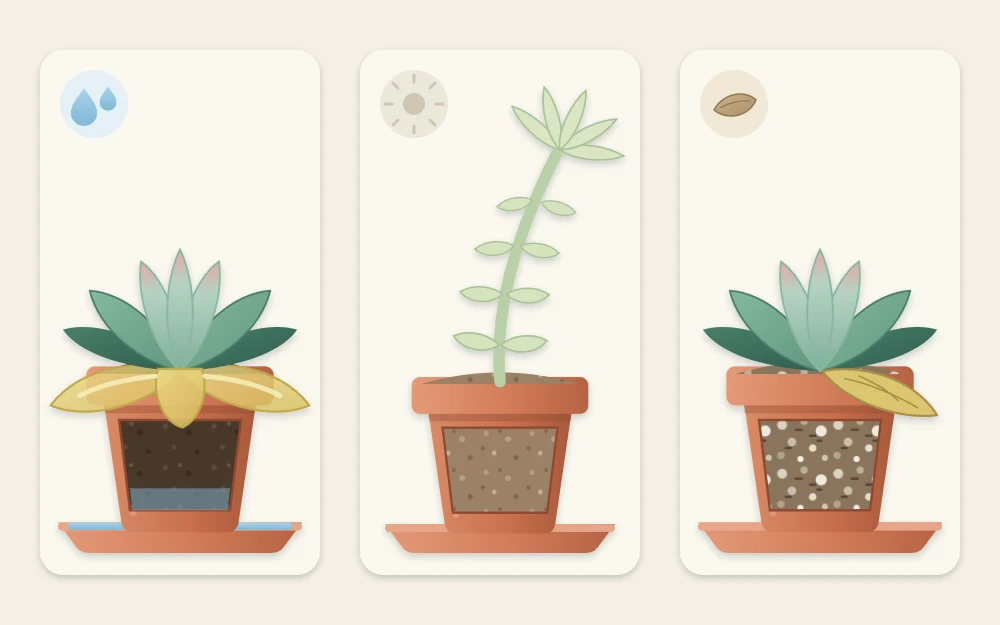
Too much water is one of the more common reasons, and it has a recognizable pattern. The lower leaves usually go first. They turn pale yellow, look slightly see-through, feel soft or squishy, and often fall at a light touch. The soil tends to be dark and damp well below the surface.
How to check: push a wooden skewer or your finger down toward the bottom of the pot. If it comes out damp and it has been a good while since you last watered, the soil is holding water longer than the roots can tolerate. Confirm that the pot has a drainage hole and is not standing in water inside a saucer or cachepot. Press the stem base as well; it should be firm.
The pattern is suggestive rather than conclusive, since cold damage can also leave leaves soft and pale. If the soil check agrees, the full set of signs and the next steps are in the guide to an overwatered succulent.
Too little light: pale all over, with stretching
A succulent kept in dim conditions often fades evenly. Instead of a few yellow leaves you see a general washed-out, yellow-green look, and strong colors such as red edges or blue-gray tones fade to plain green. The leaves stay firm.
The giveaway is shape. Low light commonly brings etiolation: the stem lengthens, gaps open between the leaves, rosettes flatten or point their leaves downward, and the plant leans toward the window.
How to check: look at the plant from the side and compare its newest growth with its older growth. Wider spacing and paler color at the top point to light. How much light different succulents need is covered in the guide to succulent light requirements.
Old leaves being reabsorbed: dry, at the base, one at a time
Succulents shed their oldest leaves as they grow. The plant draws water and nutrients back out of a bottom leaf, which turns yellow, then thins, then dries to a papery tan or brown. It happens slowly and to one or two leaves at a time, always at the very base.
How to check: feel the leaf. An aging leaf is thin and dry, not swollen. Look at the rest of the plant: if the upper leaves are firm and the center is producing new growth, nothing needs fixing. You can leave dry leaves to fall or gently remove them once they come away without resistance.
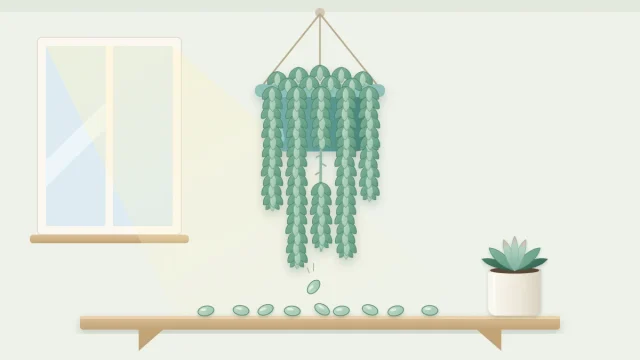
If lower leaves are going quickly and the rest are wrinkled, the plant may be short of water. Dry soil all the way down would support that.
Sudden strong sun: a bleached side facing the light
A plant moved quickly from indoors or shade into direct sun can bleach. The affected patches are pale yellow, white or tan, and they sit on the surfaces that face the sun. Shaded leaves and the far side of the plant stay green. Badly affected areas may turn brown and dry later.
How to check: match the pattern to the direction of the light, and think back over the past week or two. A recent move outdoors, to a sunnier sill, or a stretch of hot clear weather fits this cause.
Good to know
Sunburned patches do not turn green again. Move the plant back to bright indirect light and increase its sun gradually over a couple of weeks or so. Judge recovery by the new leaves.
Nutrient shortage in very old soil: slow and general
A succulent that has sat in the same soil for years can run low on nutrients. This tends to look like a slow, general paling, often starting with older leaves, along with smaller new growth. It is a less common cause than water or light, so consider it only after you have ruled those out.
How to check: ask how long the plant has been in its current mix and whether it has ever been fed. If the light is good, the soil dries normally and the roots are firm, tired soil becomes a reasonable possibility. Fresh mix often helps on its own. The basics of feeding are in the guide to fertilizing succulents.
Pests or root trouble
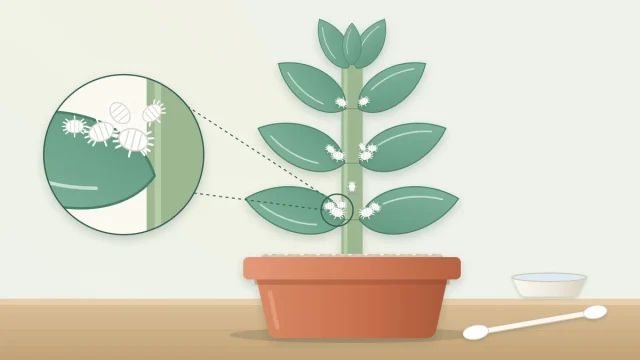
Sap-feeding insects can cause yellow speckling or patchy yellowing. Look closely at leaf undersides, the stem and the tight spaces where leaves attach for white cottony tufts, fine webbing, tiny moving dots or sticky residue.
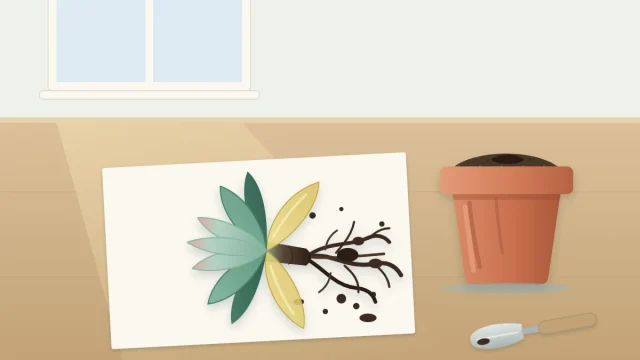
Damaged roots produce yellowing too, because a plant that cannot take up water or nutrients shows it in the leaves whatever the soil holds. If nothing above explains what you see, slide the plant out with the soil dry and look for roots that are firm and pale rather than dark and soft.
A short decision routine
- Feel a yellow leaf. Thin and dry at the base of the plant suggests aging, or drought if many leaves are involved.
- If it is soft or translucent, check the soil at depth and the stem base.
- If it is firm, look at the pattern. One-sided bleaching suggests sun; even paling with stretching suggests low light.
- If light and water both seem right, inspect for pests, then the roots, then consider the age of the soil.
Whatever you conclude, change one thing and wait. Moving the plant, repotting it, and altering how you water all in the same week leaves you unable to tell what worked, and each change is a fresh stress. Yellow leaves seldom turn green again, so watch the new growth over the following weeks. For other symptoms that appear alongside yellowing, see the overview of common succulent problems.
Frequently asked questions
Should I remove yellow leaves from a succulent?
Leaves that are dry and come away with no resistance can be removed, and clearing them keeps the base of the plant tidy and airy. Soft, mushy leaves are also worth removing so they do not sit against the stem. Avoid tugging off leaves that are still firmly attached.
Will yellow succulent leaves turn green again?
Rarely. A leaf that paled slightly from low light may regain some color in better conditions, but leaves that are waterlogged, sunburned or being reabsorbed generally do not recover. The useful measure is the new growth at the center, which shows whether the change you made is working.
Is one yellow leaf at the bottom a problem?
Usually not. Succulents retire their oldest leaves as new ones form, and a single lower leaf that yellows slowly, thins and dries is typical of that process. It deserves a closer look only if the leaf is soft and swollen, or if several leaves follow in quick succession.