Succulent Pests: Mealybugs, Fungus Gnats and Other Visitors
How to tell mealybugs, fungus gnats, spider mites, scale and aphids apart on succulents, and the calm first steps to take: isolate, remove by hand and adjust conditions.
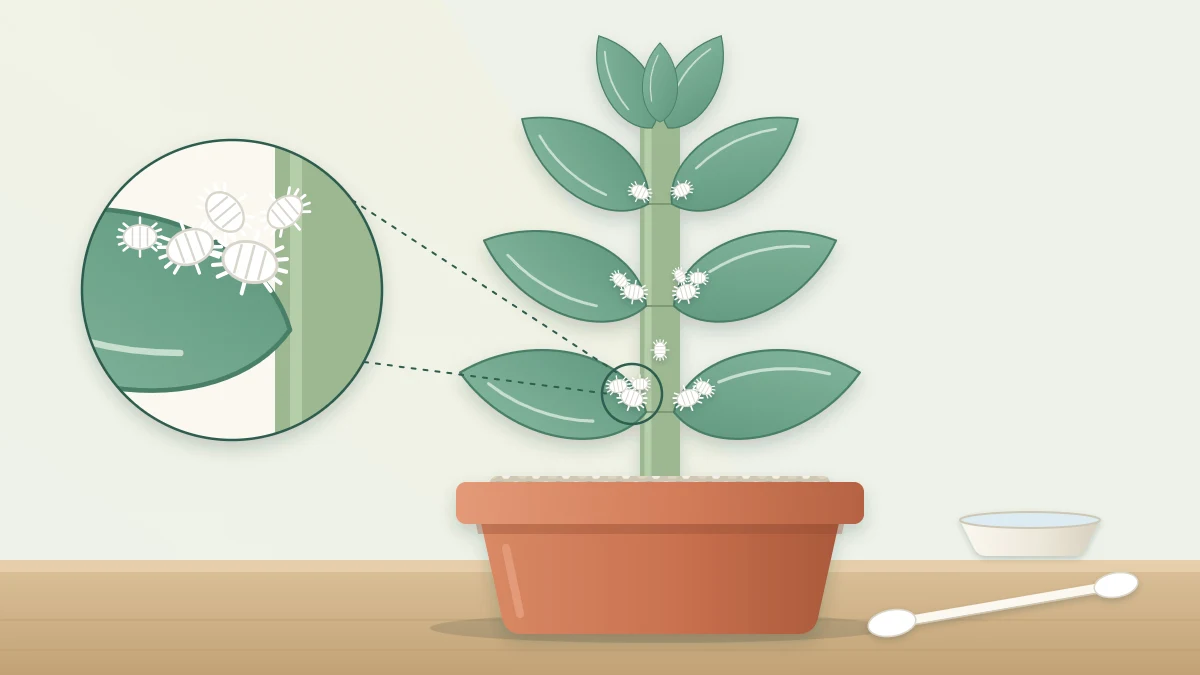
White fluff in a leaf joint, tiny flies lifting off the soil, pale specks on leaves that were clean last month: finding succulent pests is unsettling, but it is a common part of keeping plants and it is usually manageable when caught early.
Start by working out what you are looking at. Different insects call for different responses, and some marks that look like pests are not pests at all. Then act in order: separate the plant, remove what you can by hand, and fix the conditions that helped the problem along.
Identify what you are seeing
A magnifying glass or a phone camera zoomed in helps a great deal. Check the leaf joints, the undersides of leaves, the stem, the soil surface and any flower stalks.
| Pest | What you see | Where to look |
|---|---|---|
| Mealybugs | White, cottony clusters; small, soft, pale oval insects | Leaf joints, rosette centers, under leaves, sometimes on roots |
| Fungus gnats | Small, dark, slow-flying flies | Around soil that stays moist |
| Spider mites | Fine webbing; leaves with tiny pale speckles | Between leaves and on new growth |
| Scale | Small, fixed tan or brown bumps | Stems and leaf surfaces |
| Aphids | Clusters of small, soft, pear-shaped insects | Flower stalks, buds and soft new growth |
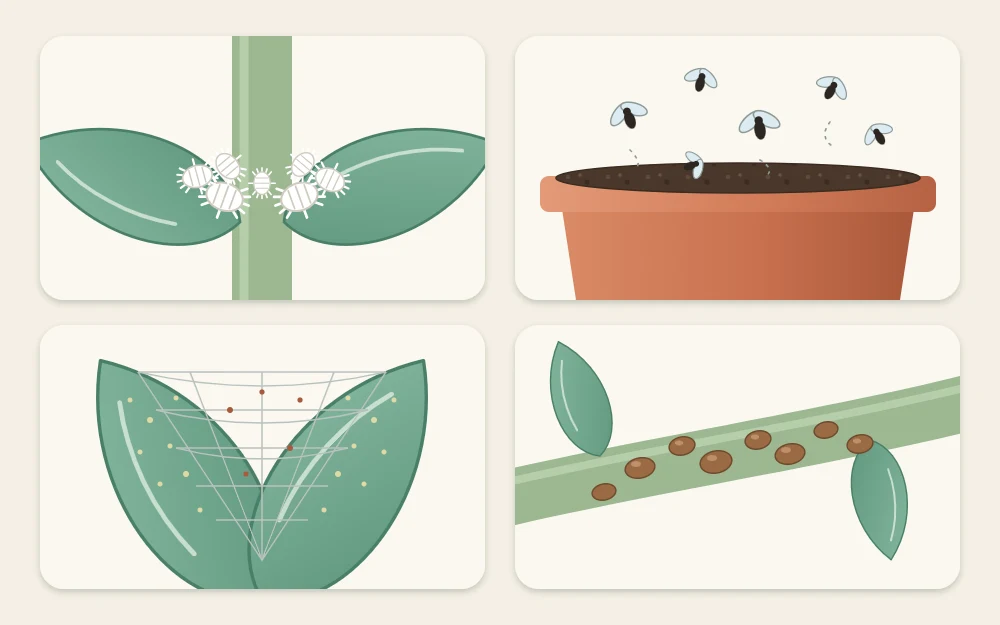
Not every mark is an insect. Farina is an even, powdery coating that covers the whole leaf; mealybug fluff is lumpy, sits in crevices and comes away when you touch it. Corky brown scars do not scrape off the way scale insects do. Mineral spots are flat and chalky. A sticky film on leaves is often associated with sap-feeding insects, so it is a reason to look harder.
First response for any pest
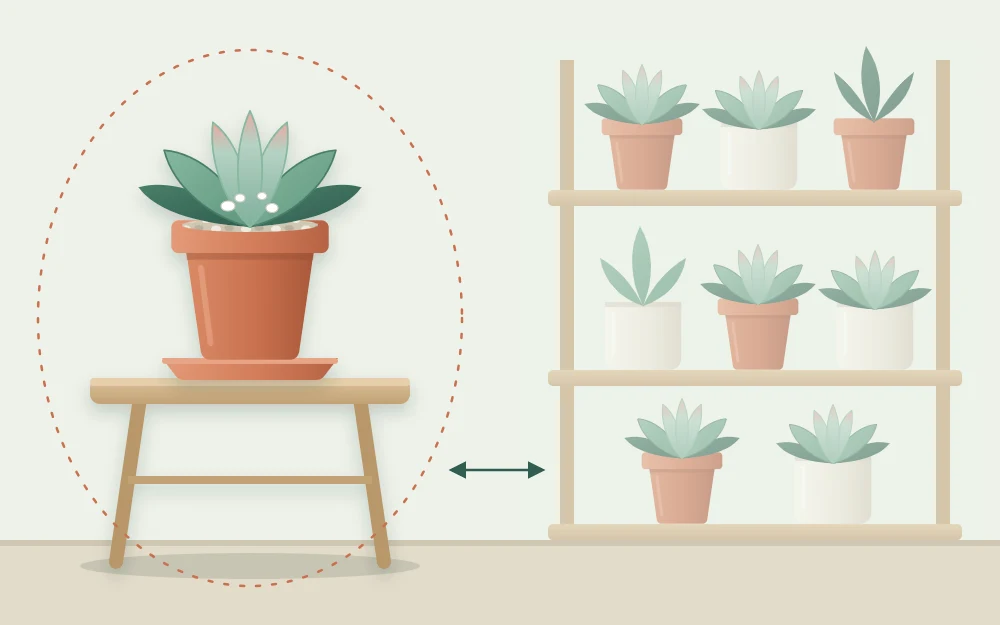
- Isolate the plant. Move it well away from the others, so that leaves do not touch.
- Check its neighbors. Look over every plant that stood near it, including under the pot rims.
- Remove what you can. Pick off insects with tweezers or a swab, cut off a badly infested flower stalk, and clear dead leaves from the base.
- Rinse if the plant allows it. A gentle stream of water dislodges many insects from sturdy, smooth-leaved plants. Let the plant dry in moving air afterward.
- Clean the area. Wipe the shelf, saucer and outside of the pot.
- Keep checking. Look again every few days for several weeks. Eggs and young insects are easy to miss, so one clean-up is rarely the end of it.
Mealybugs
Mealybugs are the pest succulent owners meet most often. They feed on sap and tuck themselves deep into leaf joints and the tight center of a rosette, where they are hard to reach.
Extension services describe dabbing individual mealybugs with a cotton swab dipped in rubbing alcohol. Test a small, hidden area first and wait a few days before going further, because some succulents mark, and the swab will remove farina wherever it touches. Keep the plant out of direct sun while it dries. For more detail, see University of Maryland Extension on mealybugs and the University of California IPM mealybug page.
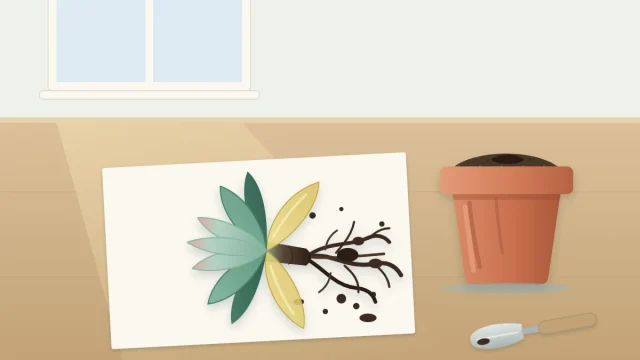
If a plant keeps declining with nothing visible on the leaves, slide it out of the pot. White, cottony patches on the roots or the inside of the pot are associated with mealybugs that live in the soil. Removing the old mix, rinsing the roots, letting them dry and replanting in fresh mix and a clean pot is the usual physical response.
Fungus gnats
The adult flies are a nuisance more than a threat. Their larvae live in the top layer of damp soil, where they feed mainly on decaying organic matter and fungi and sometimes on fine roots. Gnats in a succulent pot are therefore a useful warning that the soil is staying moist for too long.
- Let the soil dry more thoroughly between waterings; larvae do poorly in dry soil.
- Empty saucers and cachepots so nothing stands in water.
- Remove dead leaves from the soil surface.
- Place yellow sticky traps near the soil to catch adults and to show whether numbers are falling.
- If the mix is dense and holds water, repot into a grittier one.
Spider mites, scale and aphids
Spider mites
Mites are barely visible; the webbing and speckled leaves are what you notice. They are commonly associated with warm, dry, still air. Rinsing sturdy plants, repeated over several weeks, knocks numbers down. Speckling has other causes too, so look for webbing or moving dots before deciding.
Scale
Adult scale insects sit still under a small shell. Scrape them off gently with a fingernail or a soft toothbrush, then keep watching for new bumps.
Aphids
Aphids gather on flower stalks and tender tips. A rinse or a wipe with your fingers removes most of them, and cutting off a crowded flower stalk removes the colony with it.
If you consider a pesticide
Hand removal and drier conditions are enough for many small infestations. If you decide a pesticide is needed, this applies to every kind, including products described as natural or mild.
Good to know
Before buying or using any pesticide, check that the label lists both your pest and your type of plant, and that it is intended for where you will use it. Then follow the label exactly, including its directions on protection, storage, children and pets. Do not improvise mixtures.
Succulent leaves can react badly to sprays, especially those with farina, so test on a leaf or two when the label allows. When a plant is heavily infested and inexpensive to replace, discarding it is a reasonable way to protect the rest.
Keeping pests from coming back
- Keep new plants apart for a few weeks and inspect them before they join the others.
- Look into leaf joints whenever you water.
- Make a habit of clearing dead leaves and dust, which removes hiding places.
- Give plants enough light and airflow, and let the soil dry through. The basics of indoor succulent care do much of the prevention for you.
If the plant looks unwell and you find no insects, the cause is probably elsewhere; the overview of common succulent problems will help you narrow it down.
Frequently asked questions
What is the white fluffy stuff on a succulent?
Lumpy, cottony white tufts tucked into leaf joints, which come away when touched, are commonly mealybugs. An even, powdery coating over the whole leaf is more likely farina, a natural part of the plant, and flat chalky dots are often mineral spots. Look closely with a magnifier before you act.
Why are there tiny flies around the soil of a succulent?
Small dark flies hovering near the pot are often fungus gnats, whose larvae live in soil that stays moist. Letting the soil dry more thoroughly, emptying saucers, clearing dead leaves and using yellow sticky traps for the adults usually reduces them. Persistent gnats suggest the mix holds too much water.
Should I throw away a succulent that has pests?
Not necessarily. Many small infestations respond to isolation, hand removal, rinsing and repeated checks over several weeks. Discarding makes sense when a plant is heavily infested, easy to replace and close to others you want to protect. Clean the pot and the shelf afterward either way.