Where to Put Succulents Indoors: Windows, Shelves and Desks
A room-by-room placement guide: which windowsills, tables, shelves and desks suit a succulent, which spots to avoid, and how to keep plants out of reach of pets and small children.
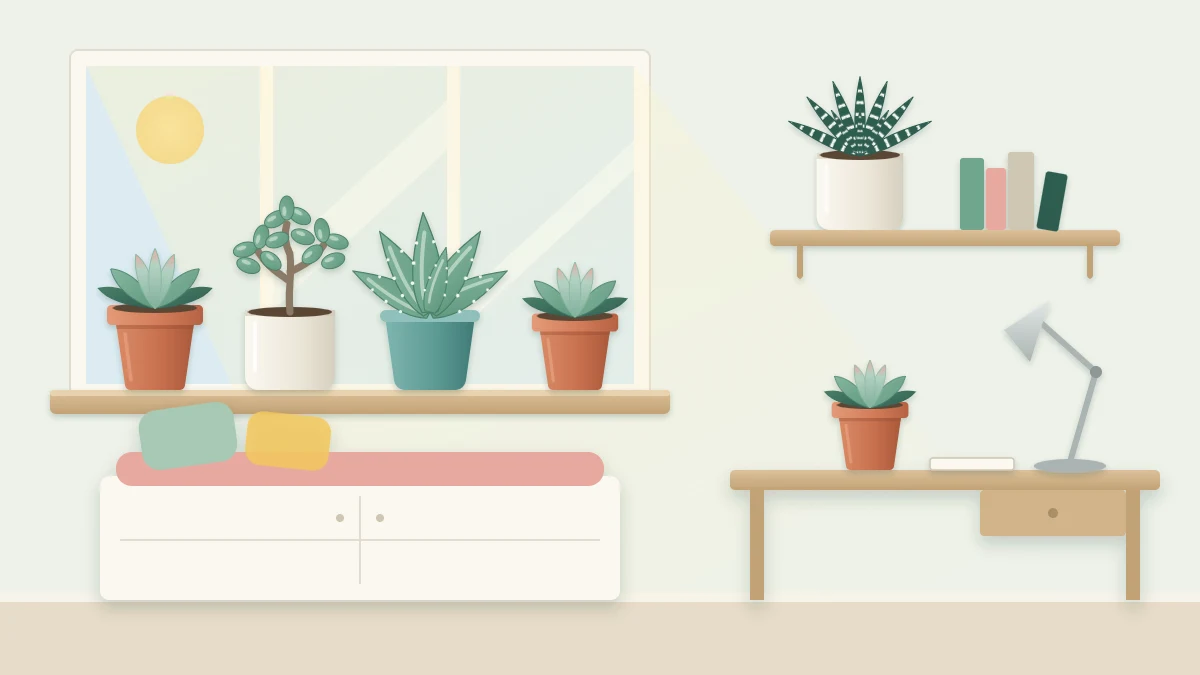
Most indoor succulent trouble starts with the spot, not the care. A plant that sits in the right light is easy to water well and holds its shape; the same plant six feet deeper into the room slowly stretches and sulks, however carefully you look after it.
So the question of where to put succulents indoors is worth settling before you buy another pot. This guide walks through the usual places in a home, from the sunniest sill to the far end of a bookshelf, and says what each one suits.
Start with the light, then everything else
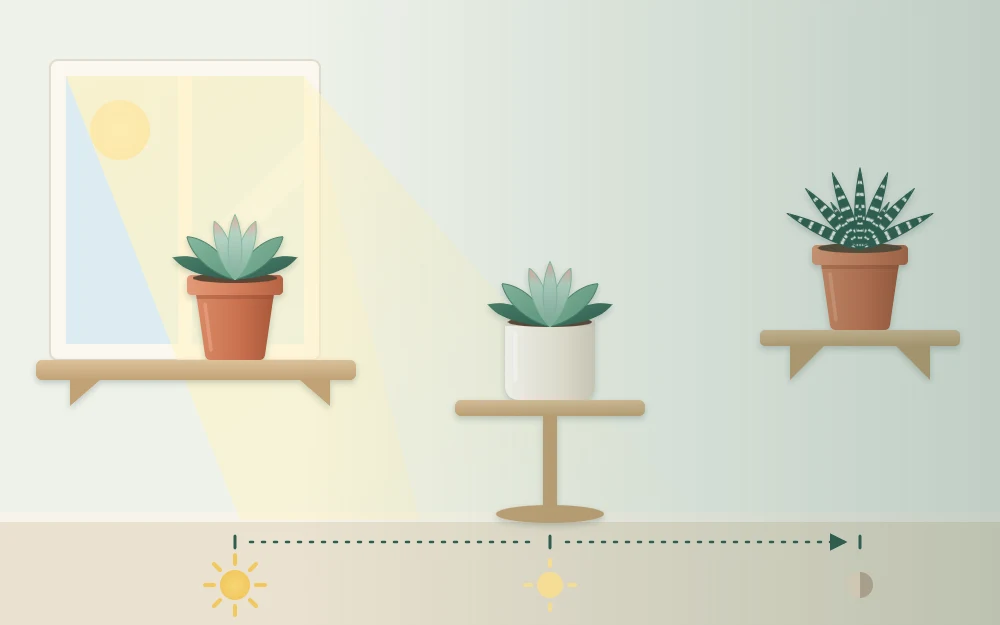
Light indoors falls away much faster than your eyes suggest. Your eyes adjust, so a room looks evenly lit, but a plant a few steps from the glass receives only a fraction of what reaches the sill. That is why distance from a window matters more than almost any other choice you make.
Window directions here assume the Northern Hemisphere. South- and west-facing windows are usually the brightest, east-facing windows give gentler morning sun, and north-facing windows give the least. Trees, buildings, overhangs and sheer curtains all change the picture, so judge the actual spot rather than the compass alone. For how much light different kinds need, see the guide to succulent light requirements; University of Maryland Extension also has a clear overview of light for indoor plants.
Sunny windowsills
A sill in a bright window is the best indoor home for most succulents, and close to essential for rosette types such as echeveria, which stretch quickly when light is short. If you have one good sill, give it to the plants that need it most.
Two things to watch for, and both change with the season:
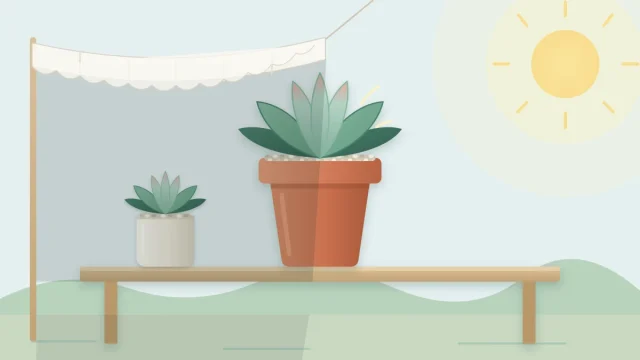
- Hot glass in summer. Direct sun through glass can heat leaves that touch or sit very close to the pane. A plant moved suddenly from a dim shop into full afternoon sun can also scorch. Move it closer over a week or two, and pull pots back a few inches in a heat wave.
- Cold glass in winter. On freezing nights the air beside a window, especially behind a closed curtain, can be far colder than the room. Leaves pressed against the pane are most at risk. Slide pots inward at night during cold snaps; the guide to caring for succulents in winter covers the rest.
Bright rooms, a few feet back
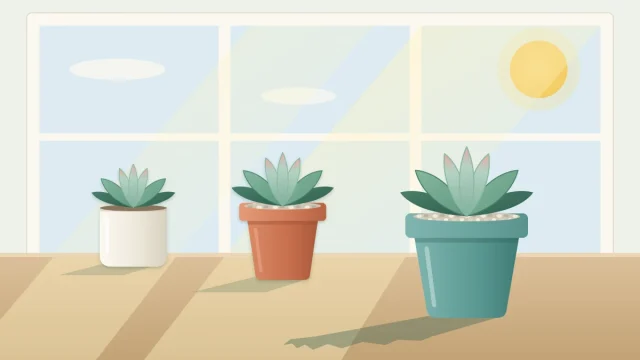
A table or plant stand within roughly 2 to 3 ft (60 to 90 cm) of a large, bright window gives bright indirect light for much of the day. Plenty of succulents do reasonably well here, particularly the ones that dislike harsh sun: haworthias, gasterias and snake plants are common choices.
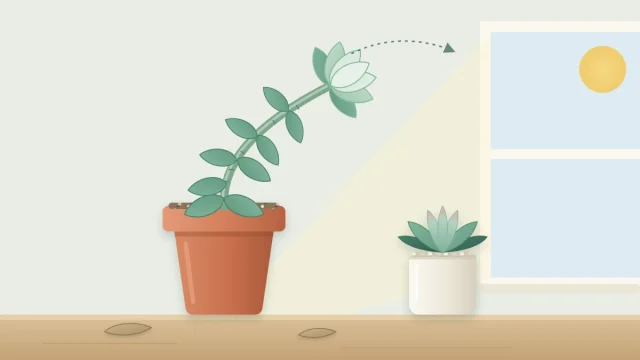
Sun-loving rosettes may hold on in this zone but often lose some color and open up. Watch the new growth. If the center of the plant turns paler, the leaves tilt downward or the stem lengthens between leaves, the plant is asking to move closer to the glass.
Shelves and desks far from a window
This is where most disappointment happens. A bookshelf across the room or a desk in an interior corner is usually too dim for rosette succulents, even when the room feels bright to you.
You have two honest options for these spots:
- Choose a lower-light species. Snake plants and haworthias tolerate dimmer positions better than most, though they still grow best with good light and will grow very slowly without it.
- Add a lamp made for plants. A grow light set above the plant and run for a good part of the day can turn a dim shelf into a workable spot. Ordinary room lamps are generally too weak and too far away to make a difference.
Tip
If you love a plant on your desk but the desk is dim, keep two matching pots and swap them between the desk and a sunny sill from time to time, so neither spends long in poor light.
Bathrooms and kitchens
Bathrooms are popular in decorating pictures and difficult in practice. Many have small or frosted windows, so light is low, and the air is humid after every shower, which slows the soil from drying. Low light and slow-drying soil together are a poor match for plants built for sun and drought. A bathroom with a large, clear, sunny window is a different matter; judge it by its light like any other room.
Kitchens are often better, because many have a bright window over the sink or counter. Keep pots away from the stove, where heat and grease settle on leaves, and out of the splash zone of the tap.
Heaters, vents and drafty doors
Succulents cope with dry indoor air well, but not with blasts of it. A pot directly above a radiator or in the stream of a heating or cooling vent dries unevenly and can be stressed by the swings in temperature. The same goes for a spot beside an outside door that lets in freezing air each time it opens.
You rarely need to move far. Shifting a pot a foot or two out of the direct airflow is usually enough.
Small habits that make any spot work better
- Rotate the pot. Indoor light comes from one side, so plants lean toward it. Give each pot a quarter turn whenever you check the soil.
- Group by need. Put the sun lovers together on the brightest sill and the shade-tolerant kinds together further back. Plants with similar needs dry at a similar pace, which makes watering simpler.
- Review twice a year. The sun’s path shifts between summer and winter, so a spot that was ideal in June may be dim in December.
Placement is only one part of growing inside; the broader guide to indoor succulent care covers soil, pots and watering under a roof.
Keep plants away from pets and small children
Height matters as well as light. Some popular succulents, including jade plant, aloe vera and snake plant, are listed by the ASPCA as toxic to cats and dogs, and any plant can upset a stomach if it is chewed. Check the ASPCA plant list before you choose a spot within reach.
Good to know
A high shelf near a window, a hanging planter or a room the pet does not use are the usual answers. If a pet or child eats part of a plant, contact a veterinarian or poison control rather than waiting to see what happens.
Frequently asked questions
Can succulents live in a room without windows?
Not on room lighting alone. Succulents need far more light than ceiling lamps provide, and in a windowless room they stretch and weaken over time. The workable option is a lamp made for plants, placed close above the pot and run for a good part of the day, or keeping the plant somewhere brighter.
Which window direction is best for succulents?
In the Northern Hemisphere, south- and west-facing windows are usually the brightest and suit sun-loving rosette types. East-facing windows give gentler morning sun that many kinds accept. North-facing windows are the dimmest and suit only the more shade-tolerant species. Trees, buildings and curtains can change any of this, so judge the actual spot.
Is a windowsill too hot for succulents in summer?
It can be for some plants. Direct sun through glass heats leaves that sit against the pane, and a plant moved abruptly from dim conditions may scorch. Introduce stronger sun gradually, leave a small gap between leaves and glass, and pull pots back a little during very hot spells.